

..States Commitment to Peace
The Benue State Governor, Reverend Father Hyacinth Alia has stated his commitment to addressing conflict and promoting peace. He said, “Benue State will not accept conflict as their destiny”. The Governor highlighted the need for deliberate and systematic efforts to tackle insecurity, particularly farmer-herder tensions and land disputes.
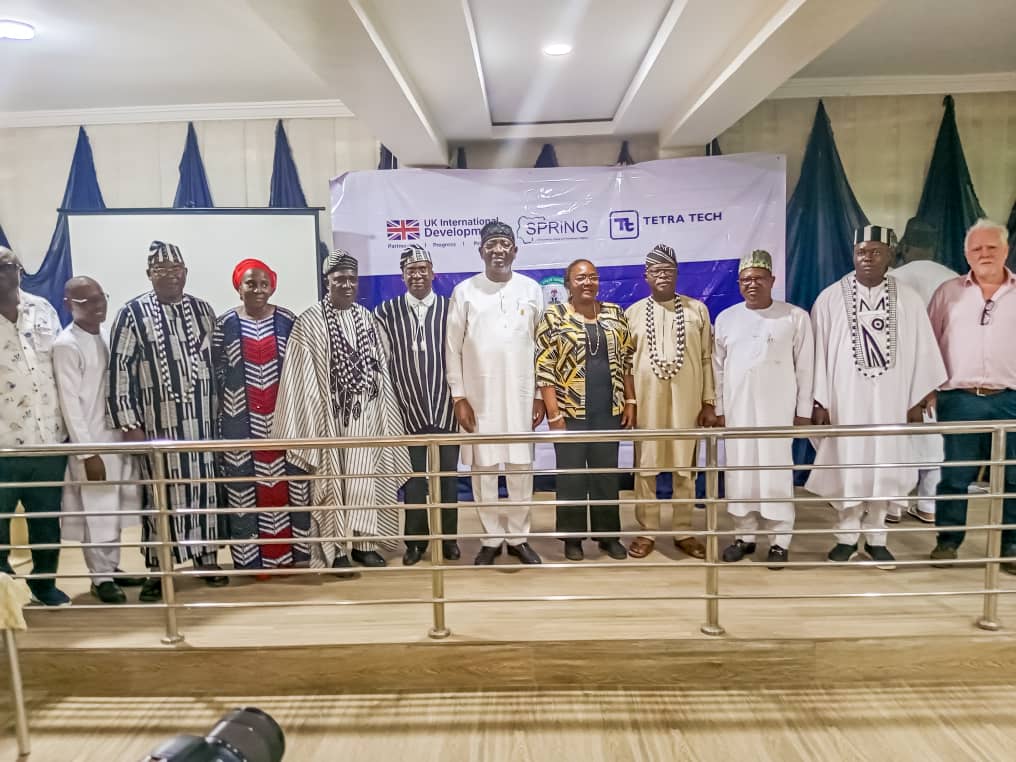
Governor Alia, at a ceremony held on Tuesday at Doo Palace Hotel in Makurdi, highlighted key steps that would lead to the success of the programme to include high-level political ownership and coordination across government ministries, departments, and agencies, as well as traditional institutions.
The Governor represented by his deputy, Dr. Sam Ode emphasized the importance of policy alignment to ensure SPRING-supported interventions that complement state priorities, alongside access, engagement, and accountability, with a focus on inclusivity for women, youth, persons with disabilities, and affected communities in peacebuilding efforts.
The SPRING Programme is an initiative of the United Kingdom Foreign, Commonwealth and Development Office (FCDO) to support efforts at promoting peace stability and resilience to the effects of climate change in Nigeria.
According to the governor, the State Government values partnerships that are practical, respectful, and measurable, and are committed to supporting, scaling, and institutionalizing effective initiatives for the benefit of Benue’s people whose identity and economic mainstay is agriculture.
He expressed gratitude to the SPRING Programme team and the UK Government for their support noting that peace and resilience require deliberate efforts.
“To the SPRING Programme team and the Government of the United Kingdom, I express our appreciation for standing with Benue at a time when peace and resilience must be built deliberately. We look forward to sustained engagement, mutual accountability, and results that citizens can feel safer communities, restored livelihoods, improved cooperation, and stronger resilience to climate shocks”, he stated
“We cannot continue to only react after lives and livelihoods are lost. That is why interventions such as strengthening Early Warning and Early Response systems, particularly through the Centre for Humanitarian Dialogue align with our priority to prevent escalation, manage local triggers, and respond rapidly when tensions rise.”, he said
“To our communities, I say this: peace is not a favour to government; it is a collective duty. Dialogue must replace retaliation. Information must replace rumours. Justice must replace impunity. Where disputes arise over land, routes, farms, or grazing, let us resolve them through lawful and trusted mechanisms.”, he added
In a goodwill message, Secretary to the Benue State Government, Barrister Deborah Aber reaffirmed the administration’s commitment to supporting initiatives that promote peace, development, and the welfare of Benue State’s citizens. She hailed the SPRING programme as a valuable investment in peacebuilding and resilience, reinforcing the government’s efforts to create a peaceful and conducive environment for communities to rebuild and thrive.
On his part, Speaker of the Benue State House of Assembly, Hon. Alfred Emberga, represented by Chief Whip, Hon. Cyril Ikon, pledged the legislature’s support for peace and resilience initiatives, emphasizing that the legislative arm would provide a robust legal framework to bolster peace efforts statewide, fostering an environment conducive to agriculture, education, and overall citizen well-being.
The Senior Social Development Adviser to the British High Commission, Abuja, Mr. Graham Gass, highlighted the SPRING programme as a UK Foreign, Commonwealth and Development Office initiative aimed at promoting peace, stability, and climate resilience in Nigeria. He noted that the programme has been active in nine (9) Benue local governments, the highest among the four participating states.
Mr. Gass reaffirmed the British High Commission’s commitment to collaborating with the State Government, outlining the programme’s interventions, including strengthening peace and justice institutions, managing grievances, resolving conflicts, and preventing violence. According him, the programme also supports sustainable natural resource management and environmental conservation efforts.
The SPRING programme, a science-based initiative grounded in research, was presented by Team Leader Dr. Ukoha Ukiwo. Adopting a politically economic approach, the project, according to Dr. Ukiwo, prioritizes conflict sensitivity, gender, and social inclusion, stressing that Benue State was selected due to its agrarian nature and high incidence of violence. He expressed gratitude to Governor Alia, citing stakeholder acceptance and ownership as key programme expectations, alongside strengthened networking and coordination among peacebuilding actors.
Director General of the Benue State Commission for Peace and Reconciliation, Mrs. Josephine Habba, welcomed the UK-backed initiative, praising the state’s resilience amidst challenges. She described the programme as a platform for sharing ideas and fostering relationships towards a prosperous and peaceful Benue.
SPRING is implemented by Tetra Tech International Development in partnership with Centre for Democracy and Development (CDD), Centre for Humanitarian Dialogue (HD) and Nexter SPD.
The programme commenced in May 2024 with scoping studies which informed its strategic focus and targeting approach. From December, 2024 SPRING has initiated partnerships to address identified challenges to peace, stability and resilience in Benue State