

By Emmanuel Togor
North Bank is an integral part of Makurdi, the capital of Benue State, located on the northern flank of the River Benue. It is unarguably the largest section of Makurdi in terms of landmass and population. Long before Makurdi attained capital status, North Bank already existed as one among the thriving settlements predominantly inhabited by the Ihyarev Clan of Tiv extraction. Over time, North Bank has grown into a large and diverse urban community and today accommodates hundreds of thousands of residents drawn from different ethnic, cultural, and socio-economic backgrounds.
Administratively, North Bank falls under Makurdi Local Government Area and is represented at the state level by the Makurdi North Constituency in the Benue State House of Assembly. At the Federal level, it is part of the Makurdi–Guma Federal Constituency and the Benue North-West Senatorial District. The area is also divided into two council wards, North Bank Ward One and Ward Two by the Independent National Electoral Commission (INEC), in recognition of its vast population.
North Bank hosts notable federal institutions such as Joseph Sarwuan Tarka Federal University of Agriculture, the Nigerian Army School of Military Engineering (NASME) Barracks, and the Nigerian Army 72 Special Forces Battalion Barracks. It also contains bustling markets and numerous small and medium-scale businesses that contribute significantly to the local economy.
Despite these advantages, living conditions in North Bank have steadily deteriorated, making daily life increasingly unbearable for residents.
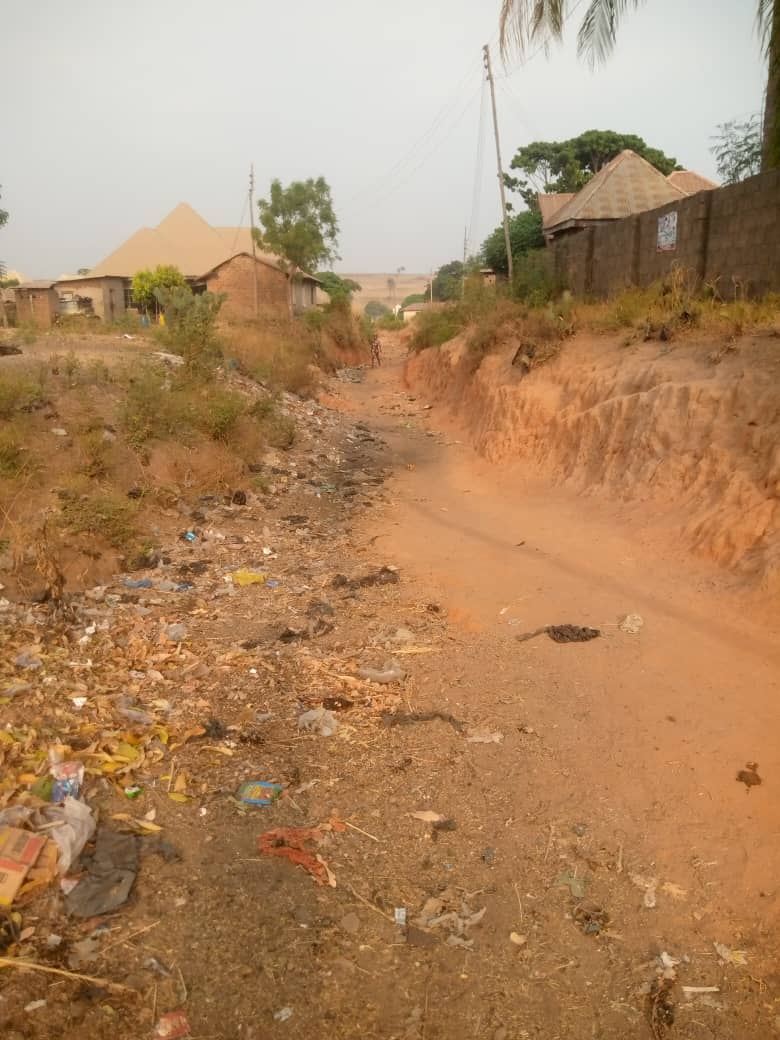
At the heart of this crisis is the deplorable state of roads and streets across the entire North Bank area. Most roads are either severely dilapidated or completely impassable, especially during the rainy season. Gully erosion has eaten deep into many streets, washing them away entirely and cutting off neighbourhoods from one another. What were once access roads have now become dangerous trenches, posing serious risks to pedestrians, motorists, and nearby buildings, some of which have collapsed as a result.
Worse still, many of these eroded and abandoned roads have been converted into refuse dumps and sites for open defecation. The accumulation of waste has created severe environmental and public health concerns, exposing residents to diseases and contaminating the surroundings.
For a capital city environment, the situation in North Bank represents a glaring failure of urban planning, environmental management, and governance.
For decades, residents of North Bank have faithfully participated in local, state, and federal elections, turning out in large numbers with the hope that elected leaders would prioritise basic infrastructure such as motorable roads. Businesses in the area also fulfil their civic obligations by paying taxes to the Benue State Government. Yet, these commitments have not translated into improved living conditions. The neglect of North Bank raises troubling questions about equity, inclusion, and governance.
One cannot help but ask: Do the people of North Bank not deserve asphalted roads like other parts of Makurdi? Why has an area of such size, population, and economic importance been consistently overlooked by successive administrations? From the era of Governor Aper Aku in 1979 to the present administration, the story of North Bank has largely been one of abandonment.
The consequences of this neglect are far-reaching as poor road infrastructure has stifled economic growth, discouraged investment, and limited access to essential services. Insecurity has also worsened, as law enforcement agencies often struggle to access crime scenes due to impassable roads. The damaged road network has inadvertently provided escape routes for criminals and cult groups, contributing to the prevalence of cult-related violence in parts of North Bank. These conditions have also discouraged many prominent Benue citizens from building homes in the area, reinforcing negative stereotypes and deepening urban inequality.
An assessment of road and street construction in North Bank since the return to democratic governance in 1999 reveals minimal progress. While the administration of Governor George Akume (1999–2007) constructed a few streets such as Ter-Guma Street, Jidda Street, and some roads in the Katungu area, vast sections of North Bank were left untouched. The administrations of Governors Gabriel Suswam (2007–2015) and Samuel Ortom (2015–2023) offered little relief to residents of North Bank. No road construction is widely acknowledged to have taken place in the area during Governor Suswam’s eight-year tenure. Under Governor Ortom’s administration, only one short road Okiki Street was constructed throughout his eight years in office. This road is located in an area widely believed to be of particular personal interest to the former governor, a perception that further deepened residents’ feelings of exclusion and selective development across the wider North Bank community.
Under the current administration of Governor Hyacinth Alia, a few streets such as Gandy Street and Bassey Kwembe Street have been constructed, and solar streetlights installed from the New Bridge to Agan and from Makurdi-Lafia Road Junction to the Old Bridge. While these efforts are commendable, they remain grossly insufficient when weighed against the scale of decay across North Bank.
The extensive gully erosion ravaging North Bank also raises serious concern for consideration that should be addressed through the ecological funds allocated to Benue State by the Federal Government over the years. These funds are specifically meant to address environmental challenges such as erosion, flooding, and land degradation. The current state of North Bank suggests that either these funds were inadequately applied, leaving residents to bear the consequences of unchecked environmental disaster.
Beyond all these, North Bank occupies a strategic and symbolic position as the gateway into Makurdi, the Benue State capital, for travellers coming from the northern part of Nigeria. It is the first impression many visitors have of the state capital. Sadly, what greets them is a community plagued by collapsed roads, gully erosion, heaps of refuse, and environmental decay. It is both shameful and deeply disappointing that the entrance into a state capital presents such a disturbing sight. This reality speaks volumes about governance priorities and the value placed on the lives of the people who inhabit this area.
The people of North Bank are not asking for luxury; they are asking for dignity. Motorable roads, effective erosion control, proper waste management, and a safe living environment are basic necessities, not privileges. As a major part of the state capital, North Bank deserves urgent and comprehensive infrastructural intervention. Ultimately, the condition of North Bank raises fundamental issues of governance, equity, and public trust. When a major gateway into a state capital is left in decay, when erosion control and ecological interventions remain absent, and when development appears selective rather than inclusive, citizens are left questioning not just policy choices but the sincerity of leadership itself. Restoring North Bank is therefore not merely an infrastructural task; it is a moral and civic obligation.
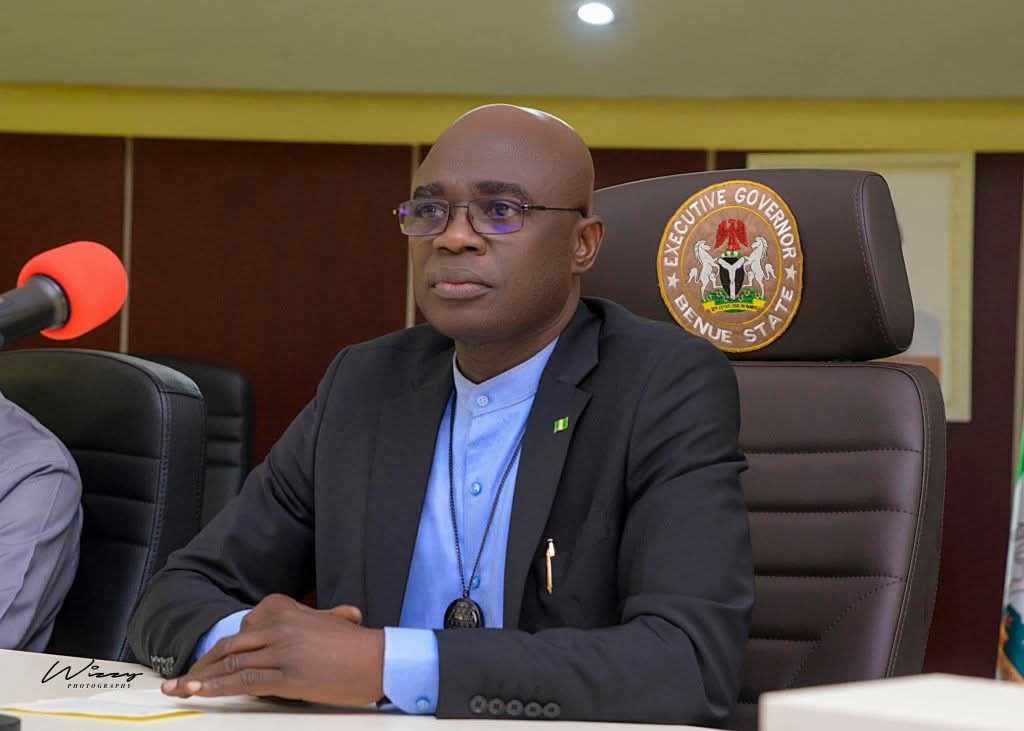
We therefore call on the Governor of Benue State, His Excellency Rev. Fr. Dr. Hyacinth Iormeem Alia, and all relevant authorities to prioritise comprehensive road reconstruction, effective erosion control, and environmental renewal in North Bank. Doing so will reaffirm the principle that all communities matter, rebuild public confidence in governance, and ensure that the entrance into Benue State’s capital reflects dignity, responsibility, and respect for its people. The time to act is now.
Emmanuel Togor, writes from North Bank, Makurdi.