

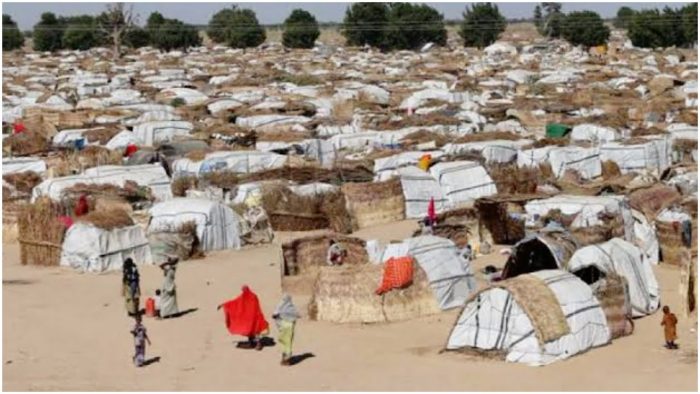
Humanitarian crises simply refer to a situation where the health, safety, and well-being of a large group of people are threatened, often by a singular event or series of events, requiring significant external assistance. These crises are complex and multifaceted, driven by factors like armed conflicts, natural disasters such as floods and droughts, climate change impacts, and public health emergencies. They result in mass displacement, widespread hunger and malnutrition, and a breakdown of essential services, necessitating multi-sectoral responses from international humanitarian actors to provide aid and alleviate suffering.
Benue State, for over two decades, faces significant humanitarian crises driven by farmer-herder conflict and armed banditry, displacing many people. IDPs endure dire conditions in camps and other places where they are taking refuge, lacking adequate food, water, sanitation, and healthcare, especially vulnerable women and children. The crisis disrupts the agrarian economy, cutting off farmers from their land. The humanitarian response remains insufficient for the scale of the suffering.
I took time out recently and visited one out of the many IDPs in the state. I was in one of the IDPs in Naka, the headquarters of Gwer-west Local Government where thousands of displaced persons camped in a primary school for an on the spot assessment, where I interacted with some of them.
The visit revealed that the school pupils were dislodged and merged with another densely populated school in Naka town to pave the way for the numerous IDPs. At least 50 persons including women, children and men were sleeping on the bare floor in each classroom.
The IDPs were using the pupils’ toilet facilities which were pit latrines. Each household in the camp was entitled to a cup of rice, beans, grain, “garri” at intervals depending on the availability of food which could barely satisfy one person. Toothpastes and other toiletries were also given to them as the resources were available.
They further revealed that, to complement what they were receiving from government, donor agencies, spirited organizations and individuals, those who have the stamina go to places where there is relative peace and do menial jobs for family upkeep.
They lamented that getting water at the camp was an uphill task and even when they eventually get it, it is not potable. The food was not sufficient and there was no health care for them.
My curiosity dragged me to where some single parents were perching on the floor with little children. While some women said they lost their husbands to the crisis, some men said their wives divorced them and got married to other men since they were displaced.
Health challenges in the camp could better be imagined than told as outbreak of diseases is probable. The living condition, toilet facilities, their source of water and trauma from the attack could possible affect them health wise.
All those I interacted with but would not want their names in print, expressed the desire to return to their ancestral land and continue with their means of livelihood. The situation of the camp in view is not different from other camps in other local governments like, Guma, Makurdi, Gwer-west, Agatu, Logo and Kwande among others. IDPs that are not staying in the camps are also facing similar humanitarian crises of various degrees. Overcrowding, inadequate shelter, food, water, insecurity, health challenges and inadequate medical services, protection and security concerns in camps are the major humanitarian crises in the IDPs camps. Although, there are humanitarian response efforts by government, NGOs, international organisations and well-meaning individuals, however it is grossly inadequate.
The complex web of challenges faced by this vulnerable population demands immediate attention and concerted efforts from local authorities, humanitarian organizations, and the international community. There is urgent need for multifaceted interventions that go beyond short-term relief efforts. The pervasive impact of conflict on displacement has not only disrupted lives but has also heightened vulnerabilities, exposing IDPs to various risks. The inadequacy of living conditions, as evidenced by the lack of shelter, clean water, and sanitation facilities, exacerbates the plight of those already grappling with the consequences of displacement. Of particular concern is the alarming state of food insecurity among the IDPs. Coordinated efforts between government agencies, non-governmental organizations, and international partners are crucial to implementing comprehensive solutions.
Addressing the humanitarian crises in IDP camps necessitates not only emergency relief measures but also long-term strategies for conflict resolution, infrastructure development, and community empowerment.
In fact, the current humanitarian response is insufficient given the vast needs of the displaced population. There is need for comprehensive and sustainable approaches that go beyond mere relief to address the root causes and rebuild lives.
Let me conclude with a Birthday Song by Michael Utah, PhD titled:
“Nostalgia of my Homeland”
My beloved people of Gwer-West
Whose habitation was a flourishing land
Founded on the rich arable lands of the Benue valley
In north-central Nigeria.
They tended the land in endless tills and toils;
Their labours yielded rich agricultural produce:
Cereals, tubers legumes and honey
For the people of the region and beyond.
My beloved people of Gwer-West
They are now refugees in their own land
Displaced by the big guns
Of marauding herdsmen terrorists
Who have killed tens, hundreds and thousands
And decimated my people beyond description!
My people now roam the inglorious paths of sojourners and vagabonds
In camps and on streets wherever they deem safe
And away from the unceasing fires
Of the canons of blood thirsty Herdsmen terrorists.
Gwer-West has become a ghost of its existence
Like other local government areas
Affected by the Fulani Herdsmen terrorists scourge in Benue state:
Guma, Logo, Makurdi, Kwande, Ukum, Apa, Agatu, Oju,
To mention but a few.
But we have a government
Whose cardinal responsibility
Is the protection
Of lives and property.
With the Murderous Fulani Herdsmen terrorists
Freely patrolling
the deserted enclaves of Gwer-West
In brazen bestiality,
Wielding sophisticated weapons
Instead of their Herdsmen sticks;
Hunting for the souls of my people
To maim, mangle and massacre;
The government has failed the Gwer-West people!
What should my people do?
The Gwer-West people,
Like their fellow victims of Fulani Herdsmen terrorist attacks
Across our country Nigeria
Must take their fates into their hands:
If the government has failed to protect the people
The people must not fail to protect themselves,
Even if the result is
Anarchy!