

The Ministries of Works, Housing and Urban Development, and Water Resources, Environment and Climate Change, WRECC, the Nigerian Environmental Society, NES, civil society organizations, private sector, and citizens have been urged to step up efforts toward building resilient cities for a sustainable future amid climate change.
Speaking at the event to commemorate 2026 World Environment Day held on Friday along Ishaya Bakut Road, Makurdi, Benue State Governor, Rev. Fr. Hyacinth Alia, represented by the Commissioner for Water Resources, Environment and Climate Change, Hon. Ugwu Odoh, urged stakeholders to reflect on their collective responsibility to protect the environment and secure a sustainable future for generations unborn.
“This year’s theme, ‘Urbanization and Climate Change: Building Resilient Cities for a Sustainable Future,’ is timely and relevant to the realities facing our cities, communities, state, and nation,” he said.
“As cities and towns expand, pressure on the environment increases. Rapid urbanization has brought economic growth and social development, but it has also intensified challenges such as flooding, poor waste management, air pollution, loss of green spaces, water scarcity, and increased vulnerability to climate-related disasters.
“In Benue State, we have witnessed climate change impacts through changing rainfall patterns, flooding, land degradation, and other environmental challenges that affect livelihoods, infrastructure, food security, and public health. These realities show that sustainable urban development is no longer an option, it is a necessity.”
Gov. Alia said resilient cities are urgently needed, cities that can withstand environmental shocks, adapt to climate impacts, and provide safe, healthy living conditions for citizens.
He added that building such cities requires deliberate planning, strong institutions, community participation, and investment in climate-smart infrastructure. He reiterated his administration’s commitment to environmental sustainability through policies and programmes that strengthen climate resilience, improve environmental governance, protect water resources, promote afforestation, enhance waste management, and encourage sustainable urban development.
The governor commended stakeholders, sponsors, CSOs, development partners, youths, and women groups for their contributions, and urged them to strengthen environmental stewardship. “Through every tree planted, every drain kept free of waste, and every responsible environmental decision made today, we contribute to a healthier and more resilient Benue tomorrow,” he said.
Earlier, Director of Climate Change, MWRECC, Mrs. Ugboho Seember Mary, in her welcome address, appreciated stakeholders’ commitment to addressing urgent environmental and climate challenges facing the state and the world.
She said the theme underscored the need to rethink how cities and communities are planned, developed, and managed. “As urban areas expand, so do challenges of flooding, waste management, land degradation, and pressure on water and housing infrastructure.
“We recognize that meaningful progress in climate resilience, inclusive environmental sustainability, and urban development can only be achieved through strong collaboration among government institutions, professional bodies, civil society organizations, and community stakeholders,” she said.
Mrs. Ugboho commended organizations and partners for their collective responsibility to protect and restore the environment, and urged participants to commit to actions that will build more resilient and sustainable communities.
Lead paper presenter, Dr. Jesse Nor, highlighted urban planning challenges including expansion beyond city boundaries, poor inclusiveness, inadequate orientation on climate resilience and policies, and the need for increased tree planting.
He recommended adopting a robust regional urbanization framework, preserving satellite towns, and pursuing deliberate, proactive urban planning aligned with the state’s political economy. He urged policymakers to include key actors such as persons with disabilities, market women, and youths to achieve a climate-resilient environment.
Representatives of NESREA, ECCAI, Rev. Fr. Moses Orshio Adasu University, PWD groups, and NES unanimously advocated conscious care of the environment through afforestation, proper waste management, and pollution control. They pledged continued contributions toward building a resilient environment for the future.
In her remarks, Permanent Secretary, MWRECC, Barr. Mrs. Debby Amine, expressed gratitude to partners and stakeholders for support and collaboration that strengthened the shared vision for a cleaner, healthier, and more resilient environment.
She said the event provided an important platform for reflection, learning, and renewed commitment to addressing environmental and climate challenges. “Through presentations, environmental sensitization, and symbolic actions, we have reinforced the fact that environmental protection and climate action are collective responsibilities,” she said, calling for inclusive environmental stewardship.
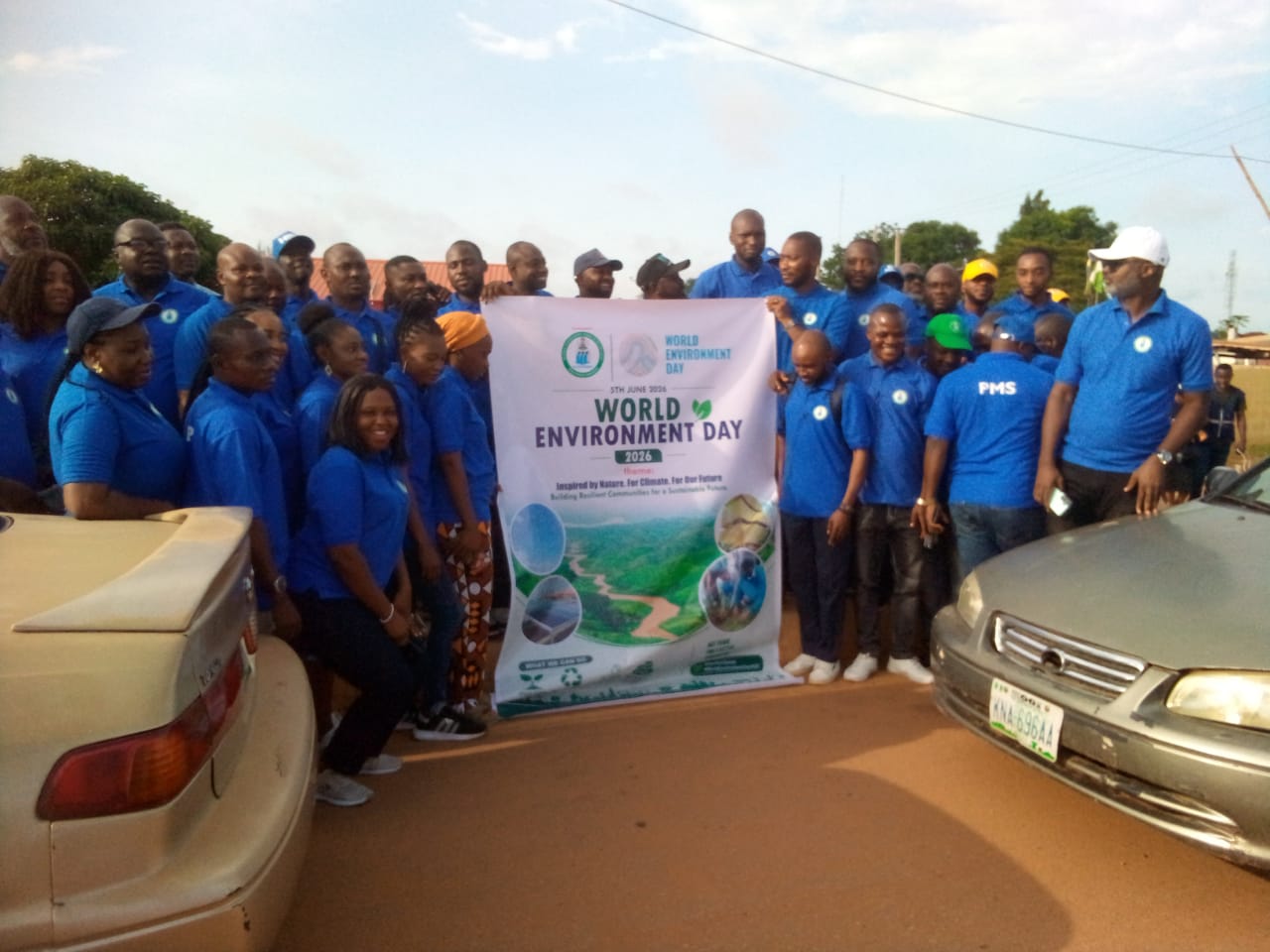
Highlights of the event included an awareness walk, paper presentation, and symbolic tree planting.