


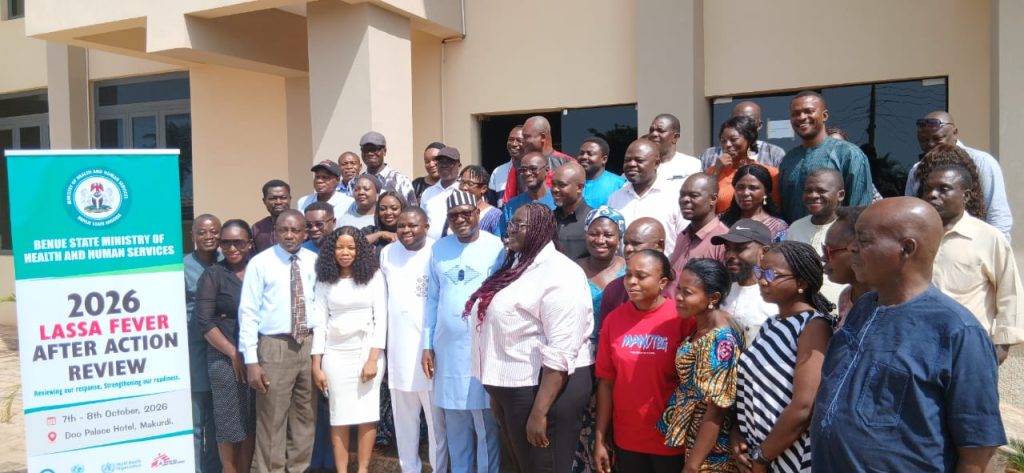
The Benue State Ministry of Health and Human Services has commenced a two-day After Action Review (AAR) of the 2026 Lassa fever outbreak response, with stakeholders pledging to strengthen readiness ahead of future outbreaks.
Declaring the review open on Wednesday at Doo Palace Hotel, Makurdi, the Permanent Secretary of the Ministry, Dr. Cephas Hough, commended frontline workers, surveillance officers, clinicians and partners who worked tirelessly during the outbreak.
Dr. Hough disclosed that the state recorded 620 suspected cases, 70 confirmed cases and 18 deaths across nine Local Government Areas during the 2026 outbreak.
He noted that while the turnaround time for sample collection and testing improved significantly with support from partners, the state still faced challenges including delayed case detection and occasional commodity shortages.
“This After Action Review is not about assigning blame. It is a structured, honest conversation about what we planned to do, what actually happened, why there were differences, and what we should sustain or improve,” Hough said.
He added that the review would examine surveillance and early detection, laboratory diagnosis, case management and infection prevention and control, contact tracing, risk communication and community engagement, coordination and logistics.
“Lassa fever is endemic in our state and it will return. Our goal is not simply to produce a report, but to leave this room with clear, prioritised, time-bound actions, each with a named owner, that will strengthen our readiness before the next season,” he said, assuring participants of the Ministry’s commitment to implement the recommendations.
Giving an overview of the state’s response, the State Epidemiologist, Dr. Asema Msuega, said Benue recorded a case fatality rate of 36 percent in the confirmed cases. According to him, the nine affected LGAs are Makurdi, Buruku, Gboko, Gwer-East, Otukpo, Ogbadibo, Okpokwu and Ukum, with Makurdi as the epicentre, accounting for about 80 percent of the cases.
Dr. Msuega explained that the outbreak started in Epidemiological Week 3, peaked in Week 10, and declined by Week 14, with the last positive case then recorded on March 26, before a resurgence in June.
He said that while 18 LGAs reported suspected cases, nine LGAs recorded confirmed cases. He also raised concern over infection among health workers, noting that 15 health workers tested positive and three died in 2026, compared to one in 2025, 10 in 2024 and five in 2023.
On what went well, he cited improved coordination through engagement of relevant ministries and partners, statewide radio jingles supported by the Ministry of Information and the state government, IPC training for health workers, and improved sample logistics and diagnosis following the installation of a solar power plant at the Federal Medical Centre (FMC) Makurdi Molecular Laboratory by Médecins Sans Frontières (MSF).
He also acknowledged the technical support from the World Health Organization (WHO) and the community engagement efforts by UNICEF.
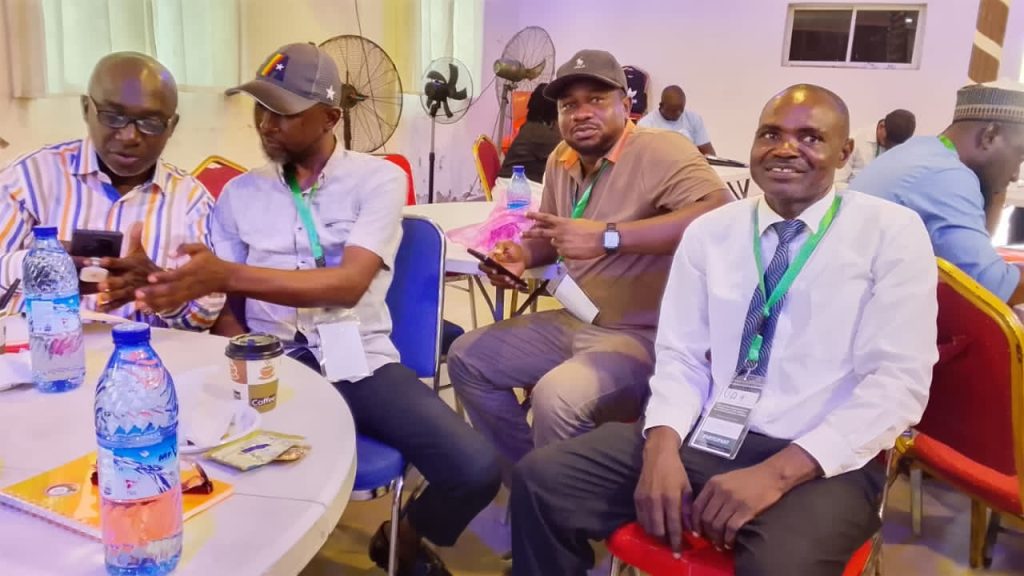
In his goodwill message, the representative of the Nigeria Centre for Disease Control and Prevention (NCDC), Dr. Yambale Jamiyal, commended the state for organising the review and expressed optimism for a productive outcome.
Similarly, the representative of the Nigerian Red Cross, Moses Iligh, thanked the NCDC and the Ministry for convening the review, describing it as an opportunity to reflect, correct gaps and reduce the impact of Lassa fever.
On his part, the representative of the Ministry of Agriculture and Food Security, Dr. Terungwa Ikye-Tor, who conveyed the goodwill message of the Honourable Commissioner, lauded the collaborative efforts of health workers, veterinary officers and community leaders in containing the outbreak.
He stressed that human and animal health are inseparable, noting that Lassa fever disproportionately affects rural farming communities.
“We remain fully committed to sustaining collaboration beyond emergency response. Our Department of Veterinary Services will continue to work closely with the health sector to strengthen surveillance, risk communication to farmers and public health education across the 23 LGAs,” he said.
The review also brought together representatives of the National Primary Health Care Development Agency (NPHCDA), Benue State Primary Health Care Board (BSPHCB), LGA Disease Surveillance and Notification Officers, clinicians and laboratory personnel from the Benue State University Teaching Hospital (BSUTH) and FMC Makurdi, WHO, UNICEF and other development partners.