

By: Okoh Joshua & Tai Msughter Samuel
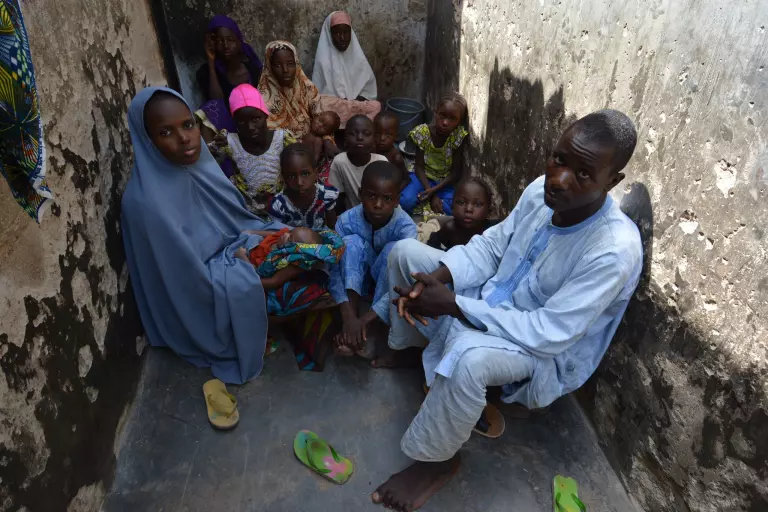
Nigerian households with six or more children remain common, driven by cultural traditions that equate many offspring with wealth and security, religious teachings that encourage “be fruitful,” and the role of extended families as safety nets.
Economically, per-capita spending drops sharply by about 30% in families of eight or more (World Bank, Nigeria Economic Update 2023) as income is spread thin, and overcrowded housing worsens sanitation and rent burdens. Youth unemployment climbs as the labor force outpaces job creation.
In education, secondary-school attendance falls roughly 15% in large households (UNESCO Institute for Statistics, Education in Nigeria 2022), and rural schools often exceed 80 pupils per teacher, reducing learning quality; older siblings frequently leave school to support the family. This leads to a vicious cycle of poverty, as children from large families are more likely to have limited access to quality education, which in turn affects their future earning potential.
Health suffers too: maternal mortality is 545 per 100,000 live births (Nigeria Demographic and Health Survey 2022), and 30% of children under five are stunted due to limited food budgets (UNICEF Nigeria Nutrition Report 2023), while crowded homes ease the spread of malaria, TB, and COVID-19. Malnutrition and poor health outcomes have long-term effects on the cognitive and physical development of children, perpetuating the cycle of poverty.
Environmentally, land fragmentation lowers agricultural yields, and rapid urban migration fuels slum growth and strains water and electricity supplies. The increasing demand for housing and infrastructure puts pressure on the environment, leading to deforestation, pollution, and loss of biodiversity.
The government and NGOs promote family planning, though rural uptake remains low. Conditional cash-transfer programs such as SURE-P link benefits to school attendance and, in some cases, family-size limits. Community leaders are increasingly engaged to discuss the long-term benefits of smaller families.
These figures show that while large families embody cultural values, their rapid growth challenges Nigeria’s economic, educational, health, and environmental capacities. Strengthening family-planning outreach, expanding social-safety nets, and continuing community dialogue are essential to balance tradition with sustainable development. A multi-sectoral approach is needed to address the complex issues surrounding large family sizes, including education, healthcare, and economic opportunities ¹ ² ³.
To address these challenges, the government could increase investment in education and healthcare, particularly in rural areas. Additionally, promoting economic opportunities and job creation can help reduce poverty and improve living standards. Community engagement and participation are crucial in promoting family planning and changing cultural attitudes towards family size.