

By Daniel Gbabo Anyam
Before now, Rev. Fr. Hyacinth Iormem Alia was widely known and respected across Benue State as a Catholic priest whose ministry touched lives in profound ways. His name carried weight not merely within church circles but among ordinary citizens who saw in him a compassionate leader. His pastoral assignments exposed him to the daily struggles of the people, and this close contact with communities shaped his understanding of governance long before his foray into partisan politics. Through his sermons and humanitarian efforts, he gradually emerged as a moral authority whose voice commanded respect beyond religious boundaries.
Famed for his healing masses which attracted huge crowds, Father Alia became a symbol of hope to the downtrodden. The afflicted, the vulnerable, and those burdened by life’s challenges found solace in his words and prayers. Many testified to spiritual and emotional upliftment, and this built an enduring bond between him and the masses. Over time, the trust he earned was not just spiritual but social, as people began to see him as someone who genuinely cared for their welfare and dignity.
As a priest, he emphasized compassion, humility, and accountability, qualities that later defined his political persona. He often preached about justice, fairness, and service, values that resonated strongly with citizens who yearned for ethical leadership. His ability to connect with people from across social strata demonstrated emotional intelligence and empathy, traits essential for statesmanship. This moral grounding gave him a unique advantage as he transitioned from the pulpit to public office.
For many years, he remained engrossed in the ministry and hardly meddled in politics. His focus was primarily spiritual and humanitarian, making his eventual entry into politics both surprising and intriguing. To observers, nothing suggested that the Catholic priest would one day seek elective office. Yet, beneath the surface, his exposure to social challenges had honed him for leadership beyond the church.
When he declared his intention to vie for the governorship of Benue State, some were surprised, others were skeptical, but many welcomed the development as a breath of fresh air. Unlike conventional politicians, he did not need to build credibility from scratch. The trust he had cultivated over years of service in the Lord’s vineyard had already created a reservoir of goodwill among the populace.
With the “Yes Father” slogan, his electioneering campaign gained instant traction. The slogan became more than a political catchphrase; it symbolized continuity of trust and faith in his leadership. His campaign galvanized communities and drew massive grassroots support. Youths, women, and elders rallied behind him, seeing in him a leader who understood their struggles and aspirations. The sheer momentum of his campaign catapulted his party, which was then the opposition in the state, to a resounding victory in the 2023 general elections.
His emergence marked a turning point in Benue’s political landscape. Many voters saw his victory as a triumph of integrity over entrenched political interests. His success demonstrated the power of grassroots mobilization and the appeal of a candidate perceived as sincere and selfless.
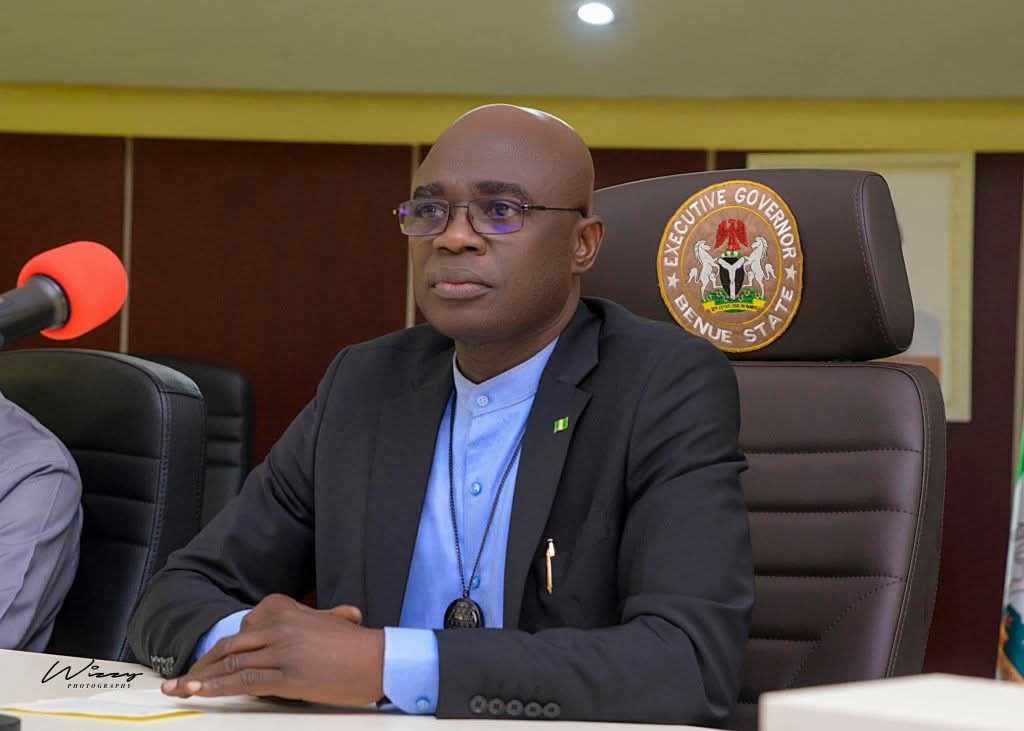
On May 29, 2023, he was sworn in as the sixth democratically elected governor of Benue State. The transition from priest to governor was historic and symbolic. It represented not only personal achievement but also the people’s desire for a new leadership style anchored on moral values. From that moment, Governor Alia stepped into the national limelight, attracting attention from across Nigeria.
Upon assumption of office, he inherited significant challenges, including unemployment, unpaid salary arrears, and economic stagnation resulting from fiscal indiscipline. These issues demanded bold, surgical, and innovative solutions. His response reflected decisiveness and strategic thinking, qualities associated with emerging statesmen. He prioritized stabilizing the workforce and restoring confidence in government institutions.
One of his early actions was initiating employment opportunities across multiple sectors. Thousands of youths were recruited into the civil service and government agencies. This move significantly reduced unemployment and restored hope among young people. It also demonstrated his belief in empowering citizens as a pathway to sustainable development.
Institutions such as the University Teaching Hospital, SUBEB, Benue Links, SEMA, and BIPC became channels for job creation. Through these agencies, many individuals found gainful employment. His administration’s focus on expanding opportunities highlighted his commitment to inclusive governance and human capital development.
The revitalization of industries under BIPC further boosted economic activity. By supporting local production and strengthening state-owned enterprises, he encouraged self-reliance. These initiatives not only created jobs but also stimulated local economies. His economic approach reflected long-term planning rather than short-term political gains.
In the area of infrastructure, Governor Alia embarked on road construction, rehabilitation of public facilities, and urban renewal projects. Communities long neglected began to witness development. Improved infrastructure enhanced mobility, commerce, and social interaction. This visible progress strengthened public confidence in his leadership.
His leadership style has been characterized by accessibility and grassroots engagement. He regularly interacts with citizens and listens to their concerns. This participatory approach fosters inclusion and strengthens democracy. It also reinforces his image as a leader who governs with the people, not above them.
Transparency and accountability have remained central to his administration. He emphasizes prudent financial management and responsible governance. This approach has helped rebuild trust in public institutions. By promoting accountability, he is gradually reshaping the governance culture in the state.
Despite resistance from some members of the old political order, his popularity has not waned. Many citizens continue to support him because of his performance-driven leadership. His ability to maintain grassroots support reflects political maturity and resilience. These qualities are essential for statesmanship.
The governor has strategically engendered youth participation at the highest levels of leadership. The young men and women of Benue are now deciding the future of their generation. Importantly, he is even preparing them for projection into the national grid of power play and decision-making. This is also mirrored as an affront to the old political order.
Barely three years in office, his influence has extended beyond the state. Governor Alia has begun to play roles at the national level. His participation in national political activities underscores his growing stature. He is increasingly seen as a voice representing progressive governance.
His selection among those who were entrusted to organize the APC convention in Abuja is a mark of his rising influence. This responsibility placed him among leaders shaping national political direction. It also signaled recognition of his leadership qualities beyond his home state.
At the convention, he demonstrated coordination and consensus-building abilities. He provided leadership not only for his state delegation but also for broader political stakeholders. His calm disposition and consultatory approach earned him respect. Such attributes are hallmarks of emerging statesmen.
Beyond politics, his personal qualities continue to define his leadership. Discipline and moral grounding remain evident in his decisions. He projects a calm demeanor even in challenging situations. These traits inspire confidence in the people.
His commitment to youth empowerment and social welfare reflects a people-centered governance. By investing in education, employment, and social programs, he is laying the foundations for sustainable growth. His policies aim to uplift citizens and reduce inequality.
Gradually but surely, the priest is unfolding into a statesman. His journey from a spiritual shepherd to political leader illustrates the power of trust, integrity, and service. With continued dedication to inclusive governance, his future holds even greater promise for Benue State and the nation.
Gbabo Anyam is Principal Private Assistant (PPA) to the Governor of Benue State on Due Process, Government House Administration..