

In a bid to cushion the adverse economic effects of the COVID-19 pandemic on households and businesses, and stimulate economic recovery in Nigeria, the Federal Government secured an emergency loan from the IMF in April, 2020 to address the economic incidental consequences of the pandemic. The loans were stimulus packages designed to provide financial support during a period of unprecedented global disruption, providing financial relief to households whose income and livelihoods were negatively impacted by the pandemic and associated lockdowns.
It was also aimed at assisting micro, small, and medium enterprises (MSMEs) that faced disruptions or were forced to shut down their operations and encourage credit flow to businesses to help them maintain operations, expand productive capacity, upgrade equipment, and invest in research and development.
The loans were also meant to help businesses take advantage of new opportunities arising from the changing economic landscape and to quickly resume productive activities as the economy reopened in phases and also provide support and grants for poor and vulnerable individuals and communities to enhance food security and access to essential services.
By and large, these loans were intended as a short-term intervention to ensure the survival and quick recovery of individuals and businesses, preventing widespread collapse and social instability.
The rules regulating COVID-19 loans in Nigeria were established by the Central Bank of Nigeria (CBN) and focused on providing financial relief, primarily through the Targeted Credit Facility (TCF), with specific stipulations for interest rates, moratoriums, and repayment.
The Loans were specifically targeted at households and MSMEs demonstrably affected by the pandemic, particularly in sectors like oil & gas, agriculture, manufacturing, and the creative industries (fashion, IT, movie production/distribution, music, software engineering).
The initial interest rate on CBN intervention facilities was reduced from 9% to a discounted 5% per annum, effective March 1, 2020. This rate was generally applicable until a specified date for example, February 28, 2021, or later extensions to 2023 for some loans, after which it was intended to revert to 9%. An initial one-year moratorium on all principal repayments was granted, effective March 1, 2020. Further roll-overs of the moratorium were considered on a case-by-case basis.
Households could access a maximum of ₦3 million, while MSMEs could access up to ₦25 million or higher amounts for specific creative industry categories like movie distribution. Repayment was typically on an installment basis, according to a schedule agreed upon during the application process and commencing after the moratorium period.
Collateral requirements varied but could include movable assets, title documents, guarantors, personal guarantees, and life insurance, as acceptable to the lending bank, NIRSAL Microfinance Bank for the TCF.
Applicants submitted applications to NIRSAL Microfinance Bank (NMFB) with: Bank Verification Number (BVN), business registration documents, a comprehensive business plan with clear evidence of the adverse impact or new opportunities caused by the pandemic, passport photographs and a valid means of identification.
According to available records, Nigeria has completely repaid its $3.4 billion COVID-19 emergency loan from the International Monetary Fund (IMF) but domestic loan recovery for individual and business beneficiaries in Nigeria is ongoing.
The recovery of the N503 billion in Targeted Credit Facility (TCF) loans disbursed to over 881,081 households and Micro, Small, and Medium Enterprises (MSMEs) through the NMFB has faced significant issues.
One of the issues has been the widespread perception among some beneficiaries that the loans were grants, not requiring repayment.
Another issue is that, many beneficiaries are querying the sudden and automatic deductions by the CBN and NMFB using the Global Standing Instruction (GSI) policy, which allows banks to automatically deduct loan obligations from a borrower’s accounts in any Nigerian bank linked by their Bank Verification Number (BVN), often without prior notice. Even when the beneficiary is paying directly to the loan lenders, his/her accounts are invaded under the pretext of outstanding loan recovery, compelling the beneficiary to pay the same loan in two ways thereby, subjecting him/her to untold hardship.
There are also complaints of arbitrary deductions, inflated repayment figures due to interest rate adjustments (from 5% to 9%), and cases where people who didn’t receive loans were debited because their details were used.
Till date, some of the disbursed domestic loans remain unpaid or are in default due to the hardship some beneficiaries are undergoing due to the removal of fuel subsidy.
Most of the household beneficiaries of the loan are farmers and the crash in prices of food in the country has greatly affected their sources of income, hence their inability to continue with payment of the loan.
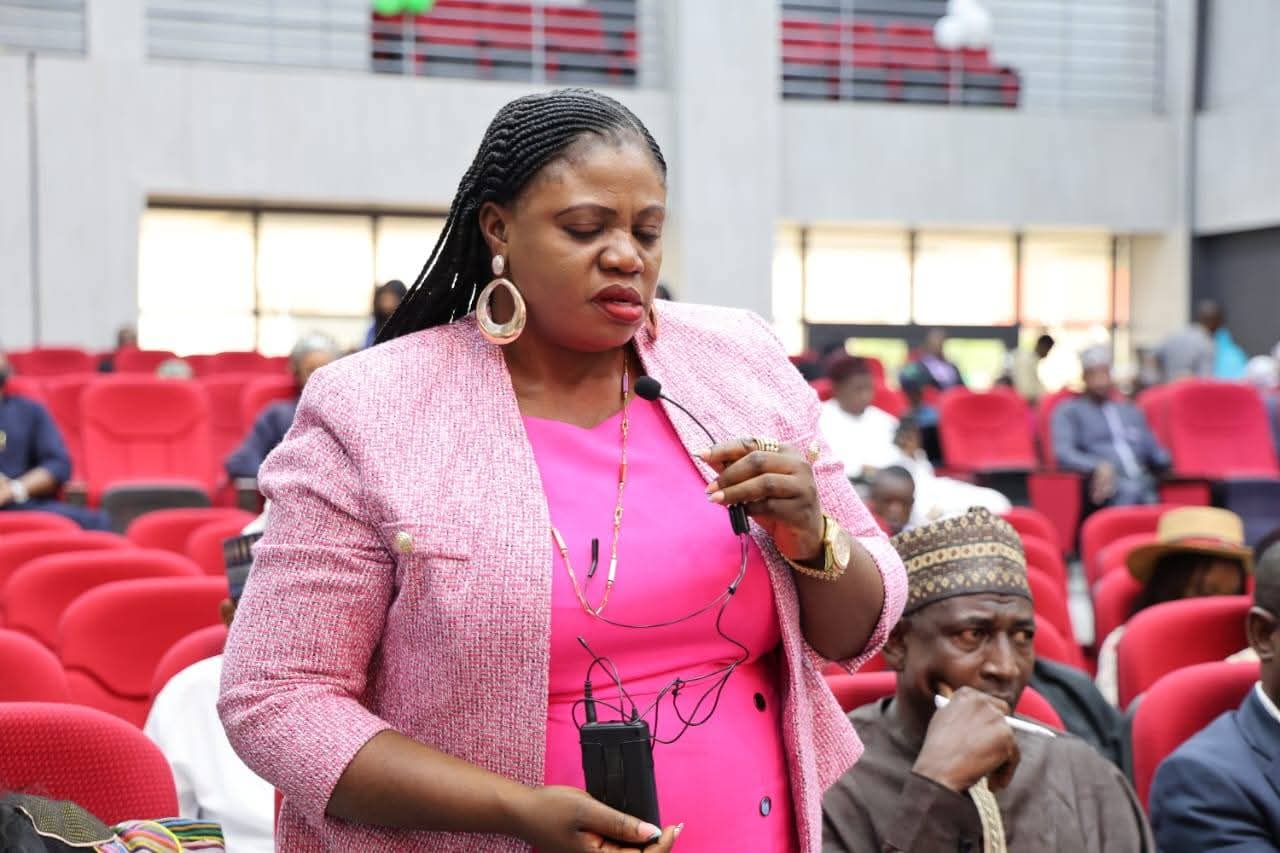
Following this development, the House of Representatives, recently urged the Federal Government through the Central Bank of Nigeria, NIRSAL Microfinance Bank, and the Federal Ministry of Finance, to immediately suspend all deductions on COVID-19 intervention loans.
The lawmakers also advised the federal government, in collaboration with the Federal Ministry of Humanitarian Affairs and Poverty Alleviation, the Federal Ministry of Finance, NIRSAL Microfinance Bank, and the Central Bank of Nigeria (CBN), to grant total waiver on the outstanding COVID-19 intervention loans owed by vulnerable households and micro-businesses, in recognition of their inability to repay under current harsh economic conditions.
This followed the adoption of a motion of urgent national importance by Hon. Saudi Musa Abdullahi (APC, Niger) at plenary. The lawmaker, expressed concerns that as at September 2023, ₦261.07 billion (about 62%) of the loans remained unpaid, while ₦378.03 billion was classified as outstanding reflecting widespread inability to repay among vulnerable households and micro-enterprises.
“Further concerned that recent CBN surveys show rising default rates across household and enterprise lending in Q4 2024 and Q2 2025, driven by inflation above 24%, severe food insecurity, loss of purchasing power, business closures, and shrinking household incomes.
“Believes that despite the high default figures reported in 2023, substantial recoveries have been made through the unplanned automatic deductions from beneficiaries’ bank accounts between late 2023 and December 2025.
“This suggests that the current outstanding exposure may be significantly lower and therefore fiscally manageable for a structured waiver.
“Recognizes that the COVID-19 TCF was fundamentally a survival support loan, not a conventional business facility as many households used the funds for essential needs such as food, shelter, healthcare, and school fees during the lockdown, making repayment unrealistic for those who have not recovered economically.
“Also acknowledges that Nigeria has a strong domestic precedent of leniency in the Anchor Borrowers Programme, where despite its commercial nature and a default rate exceeding 50%, the Federal Government has repeatedly provided restructuring and partial waivers.
“Further recalls that loan waivers for pandemic-era support align with international best practices; countries such as the United States, Canada, Germany, South Africa, and India forgave or waived significant portions of their COVID-19 relief loans or adopted extended moratoriums, recognising the humanitarian context of the pandemic.
“Worried that continued automatic debits and aggressive recoveries are inflicting severe hardship on vulnerable Nigerians, risking the collapse of small businesses, worsening unemployment, and heightening social instability”
In adopting the motion, the House mandated the Central Bank of Nigeria (CBN), NIRSAL Microfinance Bank, and Small and Medium Enterprises Development Agency of Nigeria (SMEDAN) to restructure repayment terms for SMEs by extending moratoriums, reducing interest rates, and spreading repayment over longer timelines, in order to safeguard jobs and prevent business collapse.
It also directed the House Committees on Banking Regulations, Finance and Poverty Alleviation to liaise with the Central Bank of Nigeria (CBN), Federal Ministry of Finance, SMEDAN, and NIRSAL Microfinance Bank to ensure transparent, equitable, and efficient implementation of the waiver and restructuring framework. The motion was unanimously adopted.
I totally align with the House for considering the plight of the loan beneficiaries and appeal to the Federal Government to consider waiving the loans as a humanitarian gesture. This would not only relieve the suffering the beneficiaries are passing through but show compassion and promote the well-being of the people.