


By Tyozua Terdoo Titus
There are places in Nigeria that rarely make the headlines until blood is spilled. Aboajio is one of them. Deep in Mbazun Mbaterem Council Ward of Ukum Local Government Area, Benue State, close to the Taraba boundary and within the wider Wukari axis, Aboajio is more than an ordinary rural settlement. It is a border community, a farming settlement, a refuge for displaced people and, increasingly, a frontline in Nigeria’s unresolved security crisis.
For years, the people of Aboajio have lived with the peculiar burden of being close to a state boundary without enjoying the protection, infrastructure and institutional presence that should accompany such strategic locations.
Today, the question is no longer whether Aboajio is vulnerable. The question is, how many more lives must be lost before government treats its vulnerability as a national security emergency?
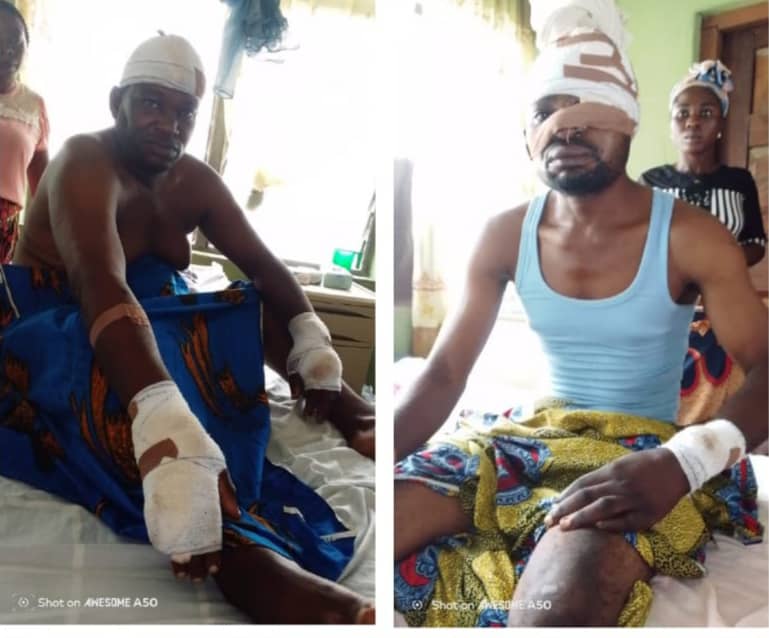
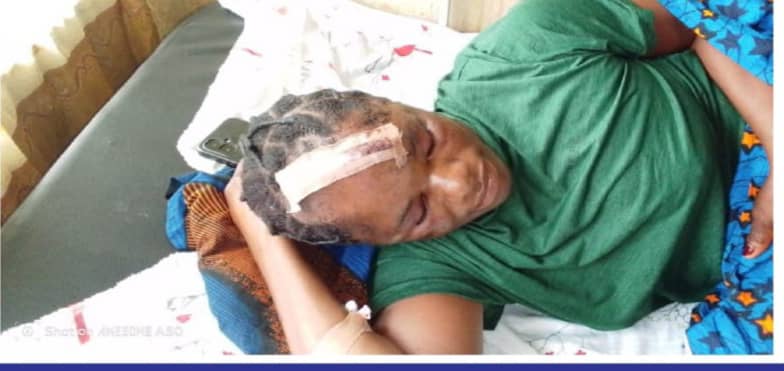
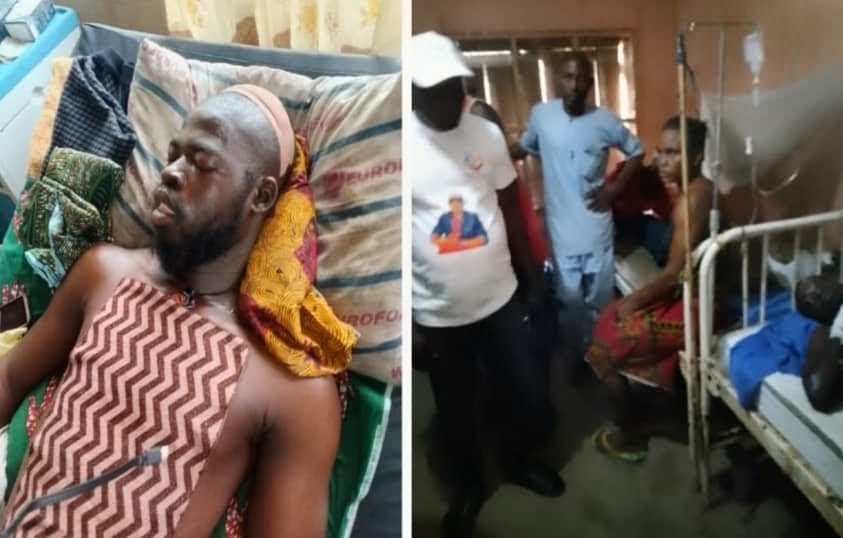
The urgency became painfully clear on August 16, 2026, when suspected armed herders attacked Aboajio and other communities in Mbazun Mbaterem.
The Benue State Police Command confirmed that the attack occurred around 7 a.m. at Aboajo Village, reporting deaths and many people injured by machete wounds.
Community sources told journalists that the actual casualty figure could be higher, with some reports putting the number of feared dead at about 10. They attacked several communities in Mbazun Ward, including Aboajio, Ayaba, Ikpur, Yina and Ukpen.
That discrepancy itself tells a disturbing story! Even the exact number of people killed in a rural Nigerian community can become uncertain in the fog of insecurity and behind every disputed number is a human being. A father, mother, farmer, child, breadwinner, future, a community at the edge
Aboajio occupies an important position between communities around Kyado and Joortar in Ukum and Rafin-Kada in Wukari, Taraba State. It is one of the largest Tiv settlements at the extreme end of Mbazun Council Ward, with a population running into Seven thousand. Its geographical position has given it an unusual historical role.
However, Aboajio’s significance is not only geographical or demographic. The community and the people who have over the years fled violence from parts of Taraba State and settled there constitute a significant social and political constituency. Their numbers, family networks, community structures and voting strength make Aboajio politically relevant, particularly as Nigeria approaches the 2027 general elections. This is therefore an area government should not overlook. Beyond the immediate security concerns, sustained government attention to Aboajio would demonstrate that border communities and their citizens matter not only when elections are approaching, but throughout the political and governance cycle.
When violence pushed Tiv communities out of parts of Taraba, Aboajio became a place where displaced families could seek safety. Communities including Tor-Musa, Tor-Yorshaer, Apiirgwa, Tse-Yawe and Gbabo-Awhadi have, had people seeking refuge around the area.
This history is important because it demonstrates something that official security maps often fail to capture. Border communities are not merely dots on a map. They are living shock absorbers for crises that cross administrative boundaries.
When violence erupts in Taraba, people flee towards Benue. When markets collapse on one side of the boundary, traders depend on the other. When roads become unsafe, communities become isolated. When security fails, the boundary itself becomes almost meaningless to those running for their lives.
The long history of Tiv-Jukun conflict in the Wukari area provides the larger context. The devastating Tiv-Jukun conflict of the early 1990s, including the destruction of Tiv villages and the displacement of tens of thousands cannot be forgotten in a hurry. Up to 5,000 people were killed during that period and approximately 80,000 displaced. Human Rights Watch’s 1993 report documented.
Later research has similarly identified land ownership, political competition, ethnic identity and disputes over traditional authority as recurring drivers of the conflict. A 2026 study on Tiv-Jukun conflict and peacebuilding in Wukari concluded that government interventions have often produced only what it called “negative peace” a reduction in immediate violence without resolving the structural grievances beneath it.
This is why Aboajio deserves attention beyond the latest attack. The problem is older than the latest gunshots. When a refuge becomes a target Aboajio’s greatest strength may also have become its vulnerability.
For years, its relative safety made it a destination for people escaping violence elsewhere but once armed actors realise that a community is receiving displaced people, protecting farms, keeping livestock and maintaining a population near a disputed border, that community can itself become a target.
The cycle is brutally simple. A crisis erupts. Families flee. They seek refuge in a neighbouring settlement. The settlement becomes overcrowded and economically strained. Fear spreads. Farms are abandoned. Markets lose customers. Children stop attending school. The community becomes poorer and poverty makes the next crisis even more devastating.
That is how a security problem becomes a humanitarian problem, then an economic problem and eventually a generational problem. This is not an isolated phenomenon.
The European Union Agency for Asylum, citing ACLED data, identifies long-standing Tiv-Jukun land disputes in southern Taraba, including Wukari, alongside farmer-herder violence and other security threats in Taraba as of February 2025, mainly linked to communal conflict and insurgency.
The figures should make Abuja uncomfortable. The ghosts of 1993, Perhaps the most painful part of Aboajio’s story is that today’s fear carries the memory of yesterday’s bloodshed.
Mr Ihyom Nyam was reportedly killed during the 1993 crisis. Decades later, his children, Lahaga Ihyom and Timothy Ihyom, were reportedly among those killed in renewed violence. If independently verified, that story is more than a family tragedy. It is a metaphor for the failure of conflict prevention.
Imagine losing a father to communal violence, only for your children to face the same danger decades later. What exactly changed? How many commissions have been set up? How many peace meetings have been held?
How many promises have been made? And how many times have communities been told that security agencies are “on top of the situation”?
Yet the fear remains. A 2022 academic study noted that settlements along several routes around Wukari including the Wukari-Jootar and Wukari-Rafin Kada corridors were severely affected during earlier rounds of the Tiv-Jukun crisis. The lesson is unmistakable! A conflict that is allowed to sleep without being resolved does not disappear. It waits.
Aboajio is not simply a security story. It is an economic story. Its people farm. Yam and groundnut production are among the community’s important agricultural activities. The people also keep indigenous Tiv cattle, a tradition with both cultural and commercial value but agriculture cannot thrive where farmers are afraid to enter their farms.
A farmer who hears gunshots instead of birdsong cannot confidently plant. A trader who fears travelling cannot take produce to market. A woman whose husband has been killed cannot easily sustain a household. A child whose parents have fled cannot attend school normally.
Insecurity therefore attacks not only human beings but the entire local economy. The disruption of Rafin-Kada’s commercial importance has reportedly increased dependence on the Kyado market for communities around the area. That dependence should concern policymakers. A functioning market is part of rural security. A motorable road is part of rural security. A health centre is part of rural security. Electricity is part of rural security. A school is part of rural security. Government presence is part of rural security. A road can save lives
This is where the proposed road from Kyado through Dajo, Ayaba and Ikpuur, with a turn towards Aboajio and onward linkage to the federal highway at Melabu, becomes much more than an infrastructure project. It is a security project.
The absence of good roads is one of the silent killers of Nigeria’s rural communities. When attackers arrive, security personnel need roads to respond. When villagers are injured, ambulances need roads. When communities need food, traders need roads. When children need teachers, teachers need roads. When farmers harvest crops, trucks need roads. When government officials want to inspect vulnerable communities, they need roads. Aboajio’s isolation therefore compounds every other weakness.
A road will not end ethnic tension, a road will not disarm criminals, a road will not resolve land disputes but a road can shorten the distance between a threatened community and help and sometimes, the difference between life and death is the number of minutes it takes for help to arrive.
Beyond soldiers and police, security is indispensable, but Aboajio does not need security personnel alone. It needs a functioning state.
The Federal Government and the Benue State Government should establish a permanent security architecture for the Benue-Taraba border corridor, rather than responding only after attacks.
Mobile police and other tactical units should have a sustained presence in vulnerable communities. Early-warning systems should be community-based. Farmers, traditional leaders, women and youth groups should have reliable channels for reporting suspicious movements.
Security agencies must also investigate attacks professionally and prosecute perpetrators, irrespective of ethnic or political affiliation. A crime committed in a remote village must not become a crime without consequence simply because the village is far from Makurdi or Abuja.
Aboajio needs a humanitarian response. The government should immediately assess displaced families and establish temporary shelters where necessary. Those who have lost homes, farms, livestock and means of livelihood need assistance.
Medical teams should be deployed. The injured need treatment. Traumatised children need psychosocial support. Women who have lost husbands and breadwinners need targeted assistance. Farmers who have lost crops and livestock need recovery support.
This is not charity. It is government responsibility. The humanitarian crisis created by communal violence is already visible across the region. In April 2026, displaced Tiv farmers from Wukari protested after spending as many as seven years in displacement, calling for conditions that would allow them to return to their ancestral communities. No society should normalise people spending years in temporary displacement because government cannot guarantee safe return.
Give the children a reason to stay. Aboajio also needs schools. Not abandoned structures. Not buildings without teachers. Not schools without desks. Not classrooms without instructional materials. Properly equipped primary schools should be established and upgraded, with teachers adequately deployed.
The reason is simple. When violence destroys education, it creates another crisis several years later. A child who repeatedly misses school because of conflict becomes an adult with fewer opportunities. That adult is more vulnerable to poverty. Poverty creates frustration. Frustration can create recruitment pools for criminal networks. And the cycle begins again.
Education is therefore not merely a social service. It is preventive security. Water, electricity and healthcare are security infrastructure..The same principle applies to water and healthcare.
Aboajio and neighbouring settlements require functional water facilities. They need primary healthcare centres equipped to handle emergencies. They need electricity.
Rural electrification would improve communication, commercial activity, healthcare and education while reducing the sense of abandonment that often accompanies life in remote border communities.
Government cannot expect citizens to remain loyal to the Nigerian project if the Nigerian state is invisible in their daily lives but security must not become another source of fear
There is another lesson from the history of the region. Security operations must be professional, impartial and accountable.
Human Rights Watch’s documentation of the 1990–1993 crisis recorded allegations of abuses and failures by security personnel, underscoring the danger of allowing communal conflict to become entangled with the conduct of security forces.
The solution is not simply to deploy more men with guns. It is to deploy trained personnel with clear rules of engagement, intelligence capacity, community trust and accountability.
The objective must be to protect civilians-not to deepen ethnic suspicion. Abuja must see the bigger picture. Aboajio may appear small on the map but its location gives it strategic importance. It sits within a corridor connecting communities across Benue and Taraba. Its security affects movement, farming, trade and displacement.
If border communities collapse, the consequences do not remain within one village. They spread. Nigeria has seen this pattern repeatedly. A neglected rural conflict becomes displacement. Displacement becomes humanitarian pressure. Humanitarian pressure becomes economic decline. Economic decline creates youth unemployment. Unemployment and frustration create fertile ground for criminality.
Then government spends huge sums of money trying to contain the crisis than it would have spent preventing it. This is why investing in Aboajio is not an act of favour. It is an investment in national security. The government must act before the next funeral
The immediate priorities are clear! First, establish a permanent and coordinated security presence around Aboajio, Mbazun Mbaterem and the vulnerable Benue-Taraba border corridor.
Second, conduct a credible assessment of the August 16 attack and establish the true casualty figure, identities of victims and circumstances surrounding the killings.
Third, provide emergency relief and temporary shelter for displaced families. Fourth, rebuild confidence through community-based early-warning and rapid-response mechanisms.
Fifth, construct and rehabilitate the Kyado–Dajo–Ayaba–Ikpuur–Aboajio road corridor and connect it to the federal highway at Melabu. Sixth, establish functional primary healthcare and emergency medical services.
Seventh, upgrade primary schools and ensure the regular deployment of teachers. Eighth, provide potable water and rural electrification.
Ninth, support farmers whose crops, livestock and livelihoods have been destroyed. Tenth, revive cross-border markets and legitimate economic activity while strengthening security around trading routes.
And, most importantly, the Federal Government, Benue and Taraba governments, traditional institutions and community leaders must confront the underlying Tiv-Jukun and farmer-herder grievances through sustained dialogue, land-dispute mechanisms and accountable peacebuilding.
A 2026 study of the Tiv-Jukun conflict in Wukari similarly recommends inclusive, community-driven peacebuilding, comprehensive attention to land disputes and stronger traditional dispute-resolution mechanisms rather than relying mainly on reactive interventions.
Aboajio must not become another forgotten name. There is something deeply tragic about rural Nigeria’s relationship with violence. A community is attacked. People cry. Politicians condemn. Security agencies deploy. Government promises action. Funerals are held. The news cycle moves on. Then another community is attacked.
Aboajio must not follow that script. Its people have farms to cultivate. Children to educate. Markets to rebuild. Families to protect. Traditions to preserved and a future to secure.
The people of Aboajio are not asking for luxury. They are asking for the basic things every citizen should be entitled to: security, roads, water, healthcare, electricity, education and the right to sleep without wondering who will attack them before morning. The August 16 attack should therefore be treated not as another isolated rural incident but as a warning.
A warning that the Benue-Taraba border remains dangerously exposed. A warning that old grievances have not disappeared. A warning that displaced communities remain vulnerable. A warning that poor infrastructure can turn a security challenge into a catastrophe.
And a warning that government cannot continue to arrive after the bodies have been counted. Aboajio is crying. The question is whether Abuja, Makurdi and Jalingo will hear that cry before the next gunshot or only after the next funeral.
Tyozua Terdoo Titus, an Engineer, is the MD/CEO of AJATEC Solutions Nigeria Limited and Founder of Tyozua Cares Foundation. He writes from Zaki-Biam, Ukum Local Government Area, Benue State.