

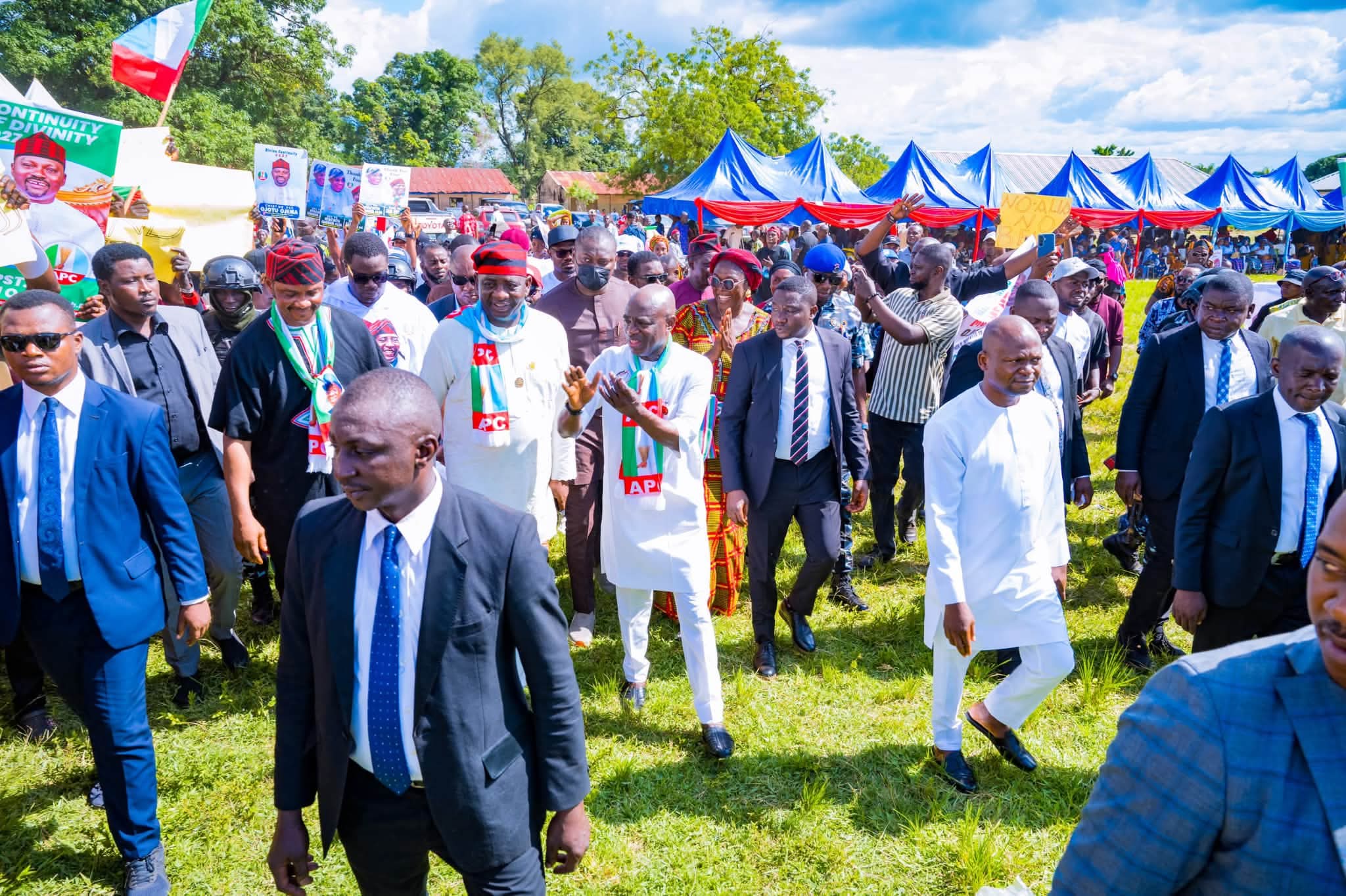
For months, opposition rhetoric in Benue State attempted to construct a persistent narrative, that the administration of Governor Hyacinth Iormem Alia had turned its back on key constituencies, leaving critical regions abandoned to aging infrastructure and economic stagnation.
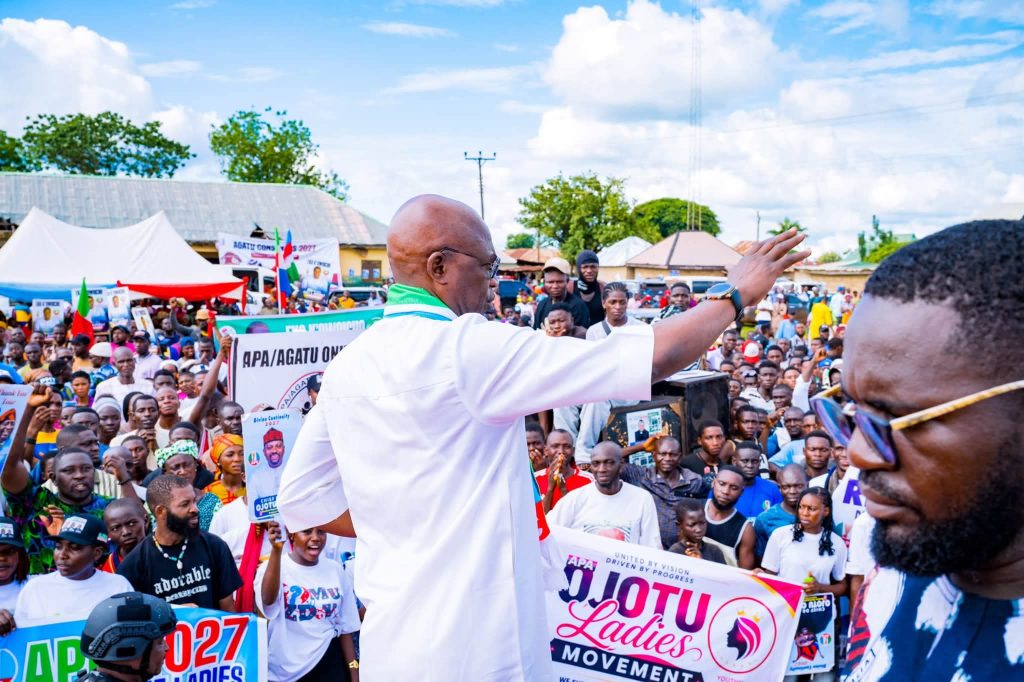
Yet, as the governor’s statewide Town Hall train completed its high-stakes sweep across the eleven Federal Constituencies of Benue State, stopping in Ukum/Logo/Katsina-Ala; Kwande/Ushongo; Vandeikya/Konshisha; Buruku; Gboko/Tarka; Gwer/Gwer West; Makurdi/Guma; and the contested territories of Zone C: Oju/Obi; Ado/Okpokwu/Ogbadibo; Apa/Agatu; and Otukpo/Ohimini- that narrative collided head-on with local reality.
From royal palaces to church pews, community leaders, traditional rulers, and grassroots residents turned out not to air grievances, but to deliver a resounding endorsement of the priest-turned-politician’s developmental agenda, coining a unified refrain across the state: “One good term deserves another.”
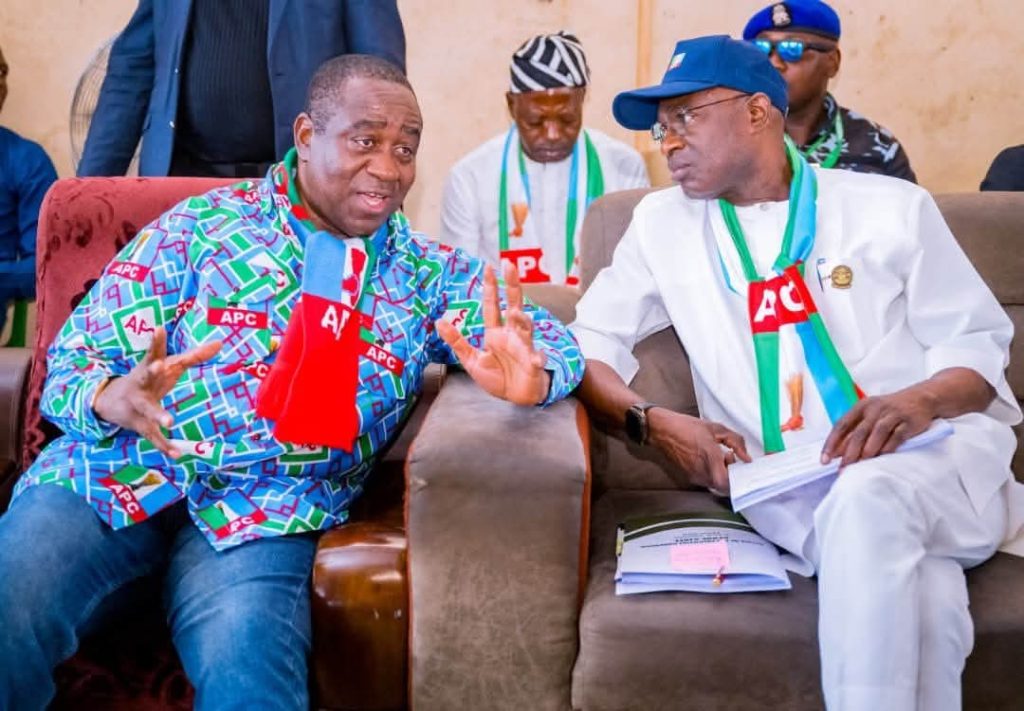
At the engagements in Katsina-Ala, Kwande, and Vandeikya, former Governor Gabriel Suswam urged the people of Sankera to reciprocate the political support Jechira had historically given the region by backing Alia’s re-election bid. Other stakeholders, including former legislators and community leaders, also praised ongoing appointments and infrastructure strides and pledged to sustain support for the administration’s development agenda.
The Governor used the town hall meetings to issue a directive to political appointees and local government chairmen to remain connected to their communities and ensure that state resources deliver direct benefits to citizens. He called on traditional rulers, including the Tor Sankera, HRH David Sevav, to monitor council chairmen and report any misuse or non-utilisation of public funds. Alia warned that a disconnect between government officials and the people fuels a false and negative perception of his administration’s performance.
On security, he addressed persistent challenges in the Sankera axis of Katsina-Ala, Ukum, and Logo with the announcement of three new operational military formations stationed at Agu, Anyiin, and Azendeshi, supported by 30 patrol motorcycles. He gave criminal groups operating in local forests a September deadline to surrender and commended President Bola Ahmed Tinubu for the deployment of the Nigerian Army’s Fifth Division to the state. The Governor also reassured residents on land rights, reiterating that his administration would not cede any land for pastoral ranches against the will of the people.
In the area of development, Alia highlighted major infrastructure plans, including a proposed 460-megawatt dam project targeted at boosting electricity generation and improving regional water supply. He said the project, alongside ongoing road, health, and education interventions across the state, forms part of efforts to expand economic opportunities and service delivery at the grassroots.
In Buruku, Governor Alia accounted for direct grassroots investments, including state funding for right-of-way acquisitions and compensation for the Federal Government-backed Buruku Bridge, eight major internal township road constructions, riverine drainage structures across Ulekuu and Kusugh, and deep investments in basic education infrastructure at LGEA Damkor and NKST Igyoroko.
Across Buruku and Gboko/Tarka, the voices from the palaces told a similar story. Traditional rulers lined up to recount the changes unfolding under Governor Alia. At the top of their list was the Gboko underpass, a project long promised, long delayed, and now finally standing as concrete proof that government can listen and act.
Their pride didn’t end on the roads. They gestured toward a new skyline in public education: storey buildings now rising in government-owned primary schools, replacing the crumbling classrooms that once symbolized neglect in the area.
For the youth, the message was different but equally hopeful. The conversation shifted to skills and jobs. Young people spoke with energy about the ICT training programmes rolled out by the administration, calling them a direct answer to unemployment and a bridge to the digital economy Benue’s next generation will inherit.
Meanwhile, Makurdi and Guma have become the focal point of a structural overhaul in urban transit and infrastructure, with the dualisation of the 20km Wurukum-Air Force Base-Renewed Hope Estate Road; construction of the High-Level Underpass/Interchange; dualisation of Senator Oluremi Tinubu Road; reconstruction of Jonah Jang Ring Road; acquisition of 100 Benue Links buses; and full right-of-way compensation for the Wurukum Flyover.
Healthcare architecture has also shifted, with the total revitalization of the Benue State University Teaching Hospital (BSUTH), including a new Molecular Lab, CT/dialysis upgrades, an ongoing Ultra-Modern Cancer Centre, an IVF Theatre, and a 230,000-litre-per-day waterworks, as well as the full clinical launch of the Mohammedu Buhari Mother and Child Hospital.
Industrialization and commerce were not left out, with the launch of the Food Basket Brewery (producers of Zeva Premium Beer, Zeva Malt, and Oyi Bitters); the full revival of the Bensono Fruit Juice and Concentrate factories; the operation of state bread and water plants; the creation of the Benue Fashion/ICT Hub; and the rehabilitation of Taraku Mills and the BIPC industrial suite (nails, leather).
Other projects include the modernization of the Benue State Secretariat, the construction of a new Governor’s Office, the renovation of the State House of Assembly Complex (with a new Assembly Clinic), the upgrade of Aper Aku Stadium, and the establishment of the 5 Division Nigerian Army HQ to secure displaced farming communities.
The political stakes were highest as the town hall delegation entered the Benue South Senatorial District (Zone C), taking the stage in Oju/Obi and Ado/Okpokwu/Ogbadibo. Long targeted by political detractors as an area allegedly neglected by the current administration, the zone presented a strikingly different picture on the ground as infrastructure dismantled the “Neglect” narrative.
Royal fathers, clergy members, and local elders stepped to the podium to catalog an extensive footprint of state-backed projects, highlighting that some of the longest road construction efforts in Benue are currently underway in Zone C. Key infrastructure milestones defining the zone’s transformation include: the 52-kilometer Oju-Awajir Road (valued at ₦25.59 billion), where 19 kilometers of asphalt paving are complete; the 31.36-kilometer Igumale-Agila Road in Ado LGA (₦19.37 billion); and the Oju-Obi-Otukpo corridor being handled by China Harbour Engineering Company.
Others include over 185 documented projects, including a dedicated 5-kilometer road network awarded in each of the nine Benue South LGAs, alongside the 26-kilometer RAAMP agricultural market connector in Oju (Ojegba-Ukpila-Ilega-Oboro Oho). Also listed were the unlocking of long-stalled ACReSAL water projects through the administration’s upfront payment of ₦1 billion in counterpart funding, the full operationalization of the Otobi Waterworks, and the overhaul of 44 Primary Healthcare Centres across Ohimini, Otukpo, Okpokwu, Obi, Oju, and Ado LGAs.
In education, there have been infrastructural interventions across 29 SUBEB schools, including new storey-building classroom blocks, the integration of 5 additional schools into the 2025 Matching Grant Programme, and the conversion of Government College Utonkon into a specialized Technical College.
“When the people closest to the ground stand up unprompted to commend an administration, the burden shifts entirely to the critics,” noted one traditional elder during the Ado town hall, referencing the newly installed solar streetlights under the “Operation Light Up Ado” project.
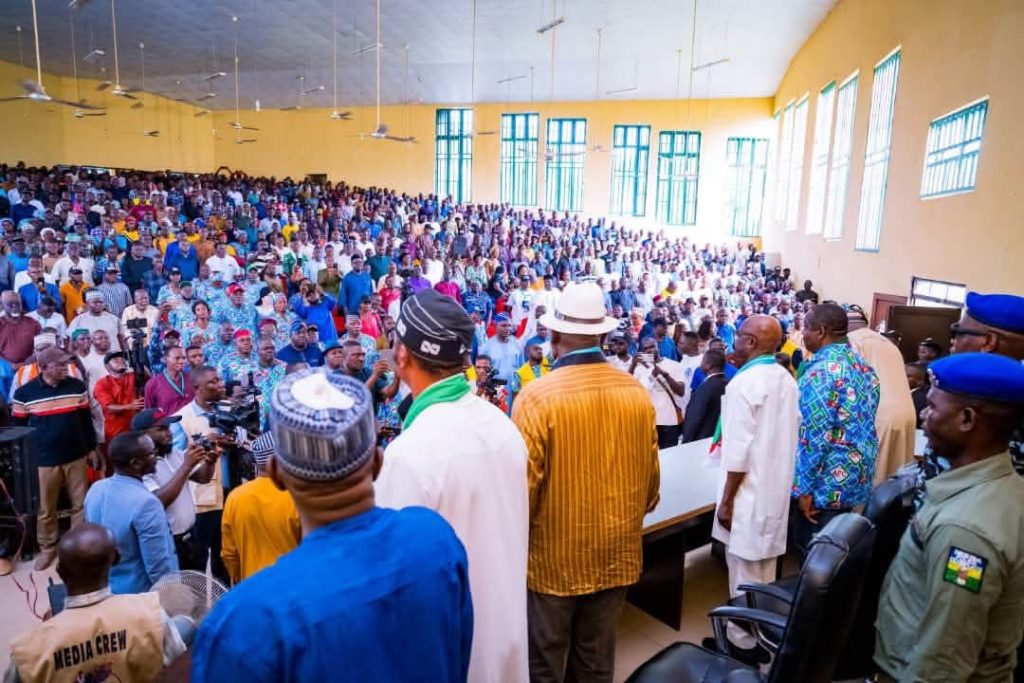
Beyond asphalt and brick, the town hall meetings served as a platform for Governor Alia to address civil welfare and traditional governance. Addressing gatherings in Buruku and Makurdi, the Governor announced plans to increase salaries and allowances for all traditional rulers in Benue State, citing their vital role in local conflict resolution and cultural preservation.
Crucially, community members across every constituency visited emphasized that the consistent, uninterrupted payment of civil servant salaries and long-standing pension arrears has fundamentally restored economic stability to household economies that had spent years in financial limbo.
“For us, governance is not about making promises from a distance,” Governor Alia stated, defending his administration’s direct engagement model. “It is about listening to the people, identifying their needs, and taking deliberate action to address them. The New Benue we promised is gradually taking shape.”
Stakeholders across the visited constituencies commended the administration’s focus and pledged continued backing to enable the Governor to complete key projects. The tour, according to government officials, will deepen consultation and accountability ahead of the next election cycle.
As the executive train returns to Makurdi with explicit mandates and fresh endorsements from Zone A, Zone B, and Zone C, the Alia administration has established a clear precedent: answering political opposition not with rhetoric, but with a statewide ledger of visible projects.