

By Charles Iornumbe
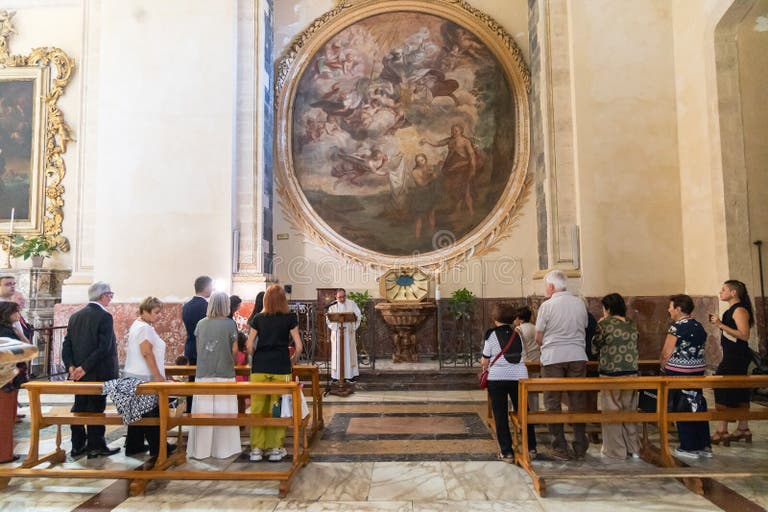
Every Sunday in Nigeria, two duties collide in the same aisle. In the sanctuary, the priest lifts the host and time seems to stop. Rubrics demand silence, stillness and total reverence. At the side aisle, a camera operator crouches, wipes sweat from his brow, and inches forward one more step. His editor in Lagos is screaming in his earpiece: “Get the elevation!” Both men believe they are serving something sacred. That is where the clash begins.
The Catholic Mass, especially the Eucharistic Prayer, is the summit of worship. St. Augustine called the Eucharist “the heart of the Church.” For 2,000 years, the Church has protected that moment with law, posture, and silence. Movement is distraction. Distraction is disrespect. That theology is non-negotiable.
But the journalist with a camera lives by a different code. Plato said, “We are twice armed if we have faith and reason.” For the camera person, reason means visual evidence. Their faith is in the public’s right to see. Their editors, 35 million Nigerian Catholics at home and a diaspora viewer in Houston all demand one thing: don’t miss the moment.
So the tension is not about who is holier. It is about two professional callings meeting at the altar rail. The priest is guardian of the sacred. The camera crew is servant of the public record. Both are right. Both feel misunderstood.
What exactly is a camera person doing during Mass? They are not dancing for attention. They are translating liturgy into pictures. The Church speaks in Latin and gesture. Television speaks in frames and focus. Without that translation, a blind woman in Makurdi or a sick man in Otukpo or a hear harder in Mbaakpur is excommunicated from the event.
Their duty is threefold: capture the rites accurately, never miss the consecration, and make viewers feel present. That means reframing when the bishop shifts, adjusting for candlelight and sometimes kneeling closer when a basic zoom lens cannot reach from the back.
A veteran cameraman in Abuja once told a colleague, “My legs shake more during the Eucharistic Prayer than during Boko Haram coverage. One wrong step and you have ‘desecrated Mass.’ One missed shot and you have ‘failed your station.’” That is the psychological pressure Nigerian crews carry.
Now, to the core issue: why do Nigerian crews move more than foreign crews? The answer is equipment, not attitude.
At a Papal Mass in St. Peter’s Square, RAI Uno uses 18 robotic PTZ cameras on rails, 800mm lenses and remote operators sitting in an air-conditioned van 100 meters away. The operator’s body is still. The camera’s eye moves. Stillness of the person does not mean stillness of the shot.
In the U.S., EWTN’s coverage of the National Eucharistic Congress uses jib arms and hidden lipstick cameras on the altar itself. They got close-ups of the priest’s hands without a single crew member entering the sanctuary during consecration.
In Nigeria, the reality is different. Most parishes and even TV stations arrive with one handheld camera, a tripod that wobbles and a 70-200mm lens. From the last pew of Holy Trinity Cathedral, Makurdi, that lens cannot capture the host clearly. Physics demands it: to get closer, the body must move.
This is what philosophers call “material constraint.” Aristotle argued that virtue is impossible without means. Nigerian camera crews are not lacking virtue. They are lacking means. Their constant, careful movement is not defiance. It is a technical sentence.
The result is predictable: bad blood. A priest in Enugu once stopped Mass briefly in 2022 to scold a cameraman who stepped into the sanctuary aisle during the epiclesis. The clip went viral. The crew felt humiliated. The priest felt desecrated. Both went home angry.
In Benue, a similar incident occurred during a bishop’s silver jubilee in 2023. The cameraman knelt near the altar to get the elevation shot. The MC later told him, “You disrespected the altar.” The cameraman replied, “Father, if I didn’t kneel, 2 million viewers would not see Christ.” Both were right. Both were hurt.
After Mass, priests accuse crews of “turning the sanctuary into a studio.” Crews complain of “being treated like intruders in God’s house.” Over time, this creates mutual suspicion. The next high-profile Mass starts with tension before the first hymn.
At another Mass at St. Francis Parish Nyikyaa, Owner Occupier in Makurdi during a thanksgiving Mass organised by Mrs. Tina Zege, the Accountant of Benue Television, Makurdi held on May 31 2026, there was a face-off between the officiating priest and the camera lady covering the Mass. The Revd Father had complained after the Mass that the lady’s movement especially during consecration of the holy Eucharist was offensive and a distraction from the solemnity of the body of Christ. The admonishment was that if given another chance, the camera lady should not distract attention.
But other parts of the world have faced this exact problem and solved it. The solution is protocol, not prohibition.
In the Philippines, the Catholic Bishops’ Conference issued “Guidelines for Media Coverage of Liturgy” in 2018. Rule 1: All cameras must be in fixed positions before the Gloria. No movement during Eucharistic Prayer. To make that possible, dioceses invested in two remote cameras per cathedral. In Ghana, St. Peter’s Basilica, Kumasi, created a raised media gallery at the back. Camera crews shoot from there during consecration. The elevation shot is wide, but dignified. Nobody moves. Nobody quarrels.
Even in less populated dioceses in Kenya, parishes partner with media houses. Before major feasts, the parish buys or borrows one PTZ camera. It is a one-time cost that prevents 20 years of arguments. So the line we must draw in Nigeria is a line of mutual respect, guided by practical steps. It starts before Mass, not during it.
For the Church, three things will help. First, designate a media zone. One side aisle, one gallery and one corner where movement is least disruptive. Announce it in the bulletin. Visiting crews should know the rules before they get in.
Second, appoint a media liaison. Not a security man with a stick. A sacristan or layperson who understands both liturgy and broadcasting. His job is to brief crews 30 minutes before Mass: “You can move during hymns, but freeze from Sanctus to Agnus Dei.”
Third, accept the reality of equipment. Until parishes can afford remote cameras, some movement is inevitable if coverage must exist. As Pope Francis said, “Reality is superior to the idea.” The idea is total stillness. The reality is poverty of tools.
For camera crews, three commitments are equally important. First, pre-Mass briefing. Walk to the priest or MC. Explain your angles. Ask permission. A crew that introduces itself is treated as guest, not invader.
Second, move with reverence. Crouch low. Silence all beeps. Turn off camera lights. Never cross directly in front of the altar if another angle exists. As St. Thomas Aquinas wrote, “To one who has faith, no explanation is necessary. To one without faith, no explanation is possible.” Let your movement preach reverence.
Third, prioritize dignity over drama. Editors can work with a respectful wide shot. They cannot work with a dramatic close-up that caused a scene and got the station banned from the diocese. The shot must serve the Mass, not dominate it.
Why does this matter now? Because Nigeria’s Catholic population is over 35 million. Major ordinations, priestly anniversaries and Masses by cardinals are national events watched by Muslims, Protestants and the world.
If we fail to draw this line, we lose twice. The Church loses control of its sacred space. The public loses access to its own worship. The camera becomes a wedge instead of a bridge. The camera is also not the enemy of the Eucharist. Poor planning is. Lack of equipment is not a sin. Lack of communication is.
There is also a deeper philosophical point here. French thinker Albert Camus said, “The only way to deal with an unfree world is to become so absolutely free that your very existence is an act of rebellion.” Nigerian camera crews are not rebelling. They are trying to be free within constraints.
And priests are not being rigid. They are protecting what Catholics believe is the “source and summit” of faith. As Cardinal Francis Arinze, a Nigerian, once wrote: “The Mass is heaven on earth. We must treat it as such.”
An anecdote helps here. In 2019, during a Mass in Rome, a tourist’s phone rang during consecration. The priest paused, smiled and said, “We will wait for God.” The crowd laughed, then fell silent. The point was made without shame. Dialogue disarms better than scolding.
Nigerian parishes can do the same. A 2-minute announcement before Mass: “We welcome media crews. Please remain in the media zone from the Sanctus. Thank you for helping the sick and elderly participate.” That sentence prevents 90% of conflicts.
The goal for both sides is identical. The priest wants people to encounter Christ. The camera crew wants people to see that encounter. As the Gospel says, “Let your light shine before others, that they may see your good works.” The priest is the light. The camera helps it shine.
So the final line is simple: reverence first, coverage second, but coverage must still happen. With dialogue, designated zones and gradual investment in better equipment, Nigerian parishes can have both sacred stillness and visual witness. Because in the end, both priest and camera man are saying the same prayer: “Ut omnes unum sint” – that all may be one and that the world may see and believe.
Dr. Charles Iornumbe, is a social commentator and former Director-General, Radio Benue, Makurdi