

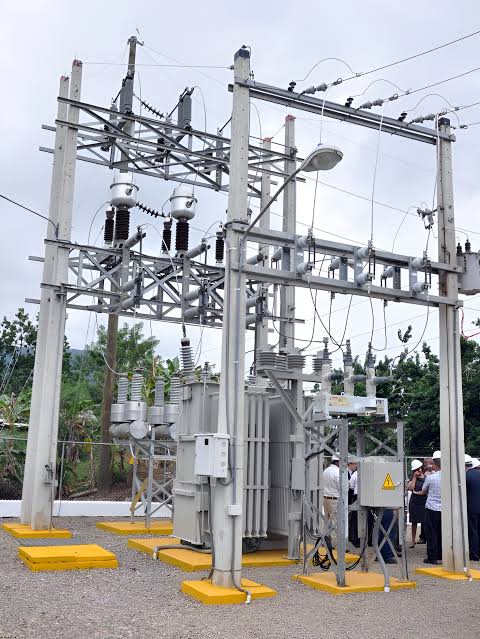
When a neighborhood in Nasarawa State is suddenly plunged into darkness, it is rarely a high-level systemic failure at a distant generation plant or a complex hitch on the national grid. Far more often, the lights go out because of a hacksaw, a stolen copper wire, or a transformer stripped bare and drained of its oil. In the precise mechanics of power distribution, infrastructure vandalism and energy theft have evolved from mere financial losses into absolute brick walls, choking the steady flow of electricity, draining operational budgets, and forcing honest, paying customers to inherit the darkness left behind by criminals.
This severe operational bottleneck took centre stage of discussion at a recent one-day stakeholders engagement convened in Keffi Local Government Area (LGA) of Nasarawa State by the Nasarawa Electricity Distribution Limited (NAEDL), a subsidiary of the Abuja Electricity Distribution Company (AEDC). Driven by the urgent theme, “Powering Nasarawa Together: Shared Responsibilities, Shared Solutions”. The forum served as a direct look into the vulnerabilities, financial realities, and infrastructural battles defining the state’s power ecosystem. From shocking details of dangerous industrial sabotage to systemic reforms designed to eliminate arbitrary billing, the event made one thing clear: adequate power distribution is impossible without collective vigilance.
The most gripping moment of the engagement emerged when the conversation shifted from financial balance sheets to active criminality. Highlighting the scale of the crisis, Mrs. Veronica Abah, Managing Director and Chief Business Officer ( CBO ) of Nasarawa Electricity Distribution Limited (NAEDL), presented a detailed dossier showing that infrastructure across the state is targeted by vandals at a minimum of twice a week.
Abah gave NAEDL’s infrastructure breakdown, explaining that the real cost of vandalism accounts for over 60% of total Operational Expense (OPEX). She said the minimum of two major network infractions every week as the core targets are High-Tension (HT) overhead lines, copper wiring, transformer oil, among others. However, the MD noted that 90 diverted meters have been recovered in the Nasarawa/Lafia axis alone.
The CBO shared graphic accounts of coordinated attacks, including a striking incident in April where criminals traveled from outside the territory to dismantle high-tension lines near a military barracks. In another instance, armed actors tied up security personnel for hours just to strip a transformer down to scrap metal.
“They came in, they took their time, they brought down the transformer, they emptied the transformer oil, they left, they removed everything they could and left us with scraps. These activities run into millions of naira. It is affecting the socio-economic life of our customers. In this phase, everyone needs light”, Abah stated.
Abah also provided a transparent overview of the state’s current customer footprint, outlining the path towards eliminating estimated billing entirely. She said the state’s metering matrix includes a total registered population of 233,807, active metered base of 175,321 and unmetered deficit (Gap) of 58,486.
To systematically eliminate this 58,486-meter deficit, NAEDL is rolling out a free mass metering campaign targeting 35,000 households across specifically designated operational zones. This builds upon historic free deployment programmes across the state, which include 10,850 meters via the National Mass Metering Programme (NMMP) and 19,024 under the Distribution Sector Recovery Program (DISREP).
However, Abah voiced serious concerns over an unexpected hurdle: widespread meter rejection by consumers who actively prefer illegal direct connections to avoid structured billing.
“Our installation groups go out, and they come up with feedback that customers are saying they don’t want meters, even though they are free. If a customer really says no to us, we are obligated to withdraw our services because we have a mandate to get you metered. We want good addresses, proper phone numbers, and email data so we can transit seamlessly to e-billing”, Abah revealed.
Delivering a keynote address on the topic “Shared Responsibility in Combating Energy Theft and Infrastructure Vandalism”, the Managing Director of AEDC, Engr. Chijioke Okwukenye, represented by the Chief Operations Officer, Engr. Blessing Ogbe, framed the operational challenges of the power sector through an immutable law of physics.
“The Law of Conservation of Energy dictates that energy can neither be created nor destroyed; it can only be converted from one form to another. In practical terms, once electricity is generated, it cannot be stored or hidden away indefinitely, it must be transmitted, distributed, and consumed. The chain breaks when legitimate customers begin acting merely as unauthorised consumers”, Ogbe noted.
Okwukenye drew a sharp line between those formally registered within the system and individuals who connect illegal lines directly to the grid without an account. This unaccounted energy draw spikes system losses and inflates estimated bills for neighbouring homes.
“We can put all the infrastructure in the world in place, but if the energy delivered is not paid for, the cycle cannot close,” Ogbe warned, highlighting common infractions like internal meter bridging and external cable bypassing.
“If customers short-change the system, the financial chain collapses. Gencos lack the funds to purchase gas, causing overall power generation to drop. You are effectively short-changed because of your neighbor’s theft”, he added.
To systematically address arbitrary billing disputes, NAEDL announced major operational adjustments focused heavily on metering transparency. Addressing consumers who previously purchased their meters out-of-pocket under the Meter Asset Provider (MAP) framework, Okwukenye announced a massive nationwide financial reconciliation mandate passed down by the Nigerian Electricity Regulatory Commission (NERC).
He said the total financial commitment is globally valued at approximately ₦44 billion, adding that AEDC has successfully processed between ₦3 billion and ₦4 billion in direct refunds.
Okwukenye said refunds are sent directly to verified accounts via SMS and email as energy tokens even as he explicitly dismissed common rumours regarding refund tokens: “There is a common customer concern that loading these refund tokens will cause the meter to run faster. There is no need to worry; this is false. The tokens represent standard mandated energy value.”
On his part, the Nasarawa State Commandant of the Nigeria Security and Civil Defence Corps (NSCDC), Commandant Samson Brah, who spoke through the Area Commander ACC Kingsley Odoemena, confirmed the security apparatus’s commitment to curbing vandalism and energy theft in the state.
He added: “I refuse to sleep because it’s my mandate. We moved out around 1:00 AM in the midnight with your CSO, with my men, to make sure we curb this. We might not bring it down totally, but it’s reducing.”
The stakeholders engagement also highlighted the robust foundational relationship between the utility provider and the Nasarawa State Government.
The Managing Director of the Nasarawa State Electricity Regulatory Commission (NASERC), Engr. Yakubu Umar Loko, praised the legislative breakthroughs that made local regulatory oversight possible. “The state government enacted the Nasarawa State Electricity Law, which gives rights to the forming of Nasarawa Electricity Distribution Limited,” Loko stated, noting the impact of the national 2023 Electricity Act.
“This is a governor that will build an injection substation, install transformers ranging from 5 MVA downward, and hand them over completely to the investor. I want to boldly tell you today that the Nasarawa State government does not owe AEDC even a kobo as we speak,” he said.
Confirming this exceptional record, AEDC’s Chief Regulatory Officer, Engr. Emmanuel Ogwuche, appreciated the state’s financial compliance.
“Between our organisation and the state government, they do not owe us a single dime, which is truly exceptional for this type of operation,” Ogwuche stated.
Ogwuche further detailed major transmission upgrades designed to dramatically increase bulk power entering Nasarawa: Lafia TCN Facility: Fully commissioned and actively delivering bulk supply. Keffi Substation Upgrade: TCN successfully upgraded a primary transformer from 60 MVA to 100 MVA, immediately injecting an extra 24 MW of capacity into the network.
He said a second 100 MVA transformer is scheduled for deployment before the end of the year, expected to unlock an additional 48 MW to 50 MW.
For customers facing unresolved service shortfalls, Dr. Moses Arigu, Commissioner for Economic Regulations and Consumers Affairs at NASERC, outlined the legal, step-by-step grievance process established to protect consumer rights.
“The customer is the king. If the customer complains, the distributor needs to listen. But don’t go with empty hands; you must put it in writing. If you talk to them verbally and it isn’t resolved, where is your evidence when you escalate it later? Put it in writing so the dates are tracked,” Arigu said.
Proving that collaboration can resolve even the most severe tariff disputes, the Vice-Chancellor of Nasarawa State University Keffi (NSUK), Prof. Sa’adatu Liman, represented by the Deputy Vice-Chancellor of Administration, Prof. Halima Doma, shared an honest account of the institution’s recent financial shock when its monthly electricity bill unexpectedly surged.
“When they brought a bill to us, jumping from 17 million per month to being asked to pay 49 million, it was a huge shock. At one point, we thought, ‘This means that the school will have to close down.’ Our first instinct was to march to the Abuja head office. However, the direction they gave us was different. They told us: ‘What you people are looking for in Sokoto is inside your shokoto. Go back to Keffi”, Liman recounted.
Upon returning to Keffi, university management engaged directly with NAEDL officials to analyse their consumption patterns.
“We met with Madam Veronica. We sat down, went through the challenges, and brought out our problems. They took the time to explain to us why we were having that kind of bill. Presently, we have an ongoing committee between the university and the staff of the electricity company to work out modalities to manage our light bills. The company has been very, very responsive,” she said.
Positioning the media as a key partner in public education and accountability, Mallam Salihu Awwulu, Executive Vice Chairman of the Nasarawa Broadcasting Service (NBS), affirmed that “The media is willing and ready to collaborate with the company to promote its objectives and ensure quality service delivery.”
Also, Barr. Pamela Chidobelo, Head of Customer Experience at AEDC, reminded attendees of the company’s core focus, stating, “Our customers are the reason we’re in business. This programme is designed to bridge the gap and better appreciate our customers’ pain points.”
As NAEDL rolls out its regional identity under the slogan “Nasarawa Can,” the path forward depends on transitioning from fragmented, defensive positions to an active, shared partnership. Securing a reliable power supply requires more than just installing transformers; it demands that communities actively protect their local infrastructure, respect regulatory billing frameworks, and recognise that the grid cannot survive without collective responsibility.