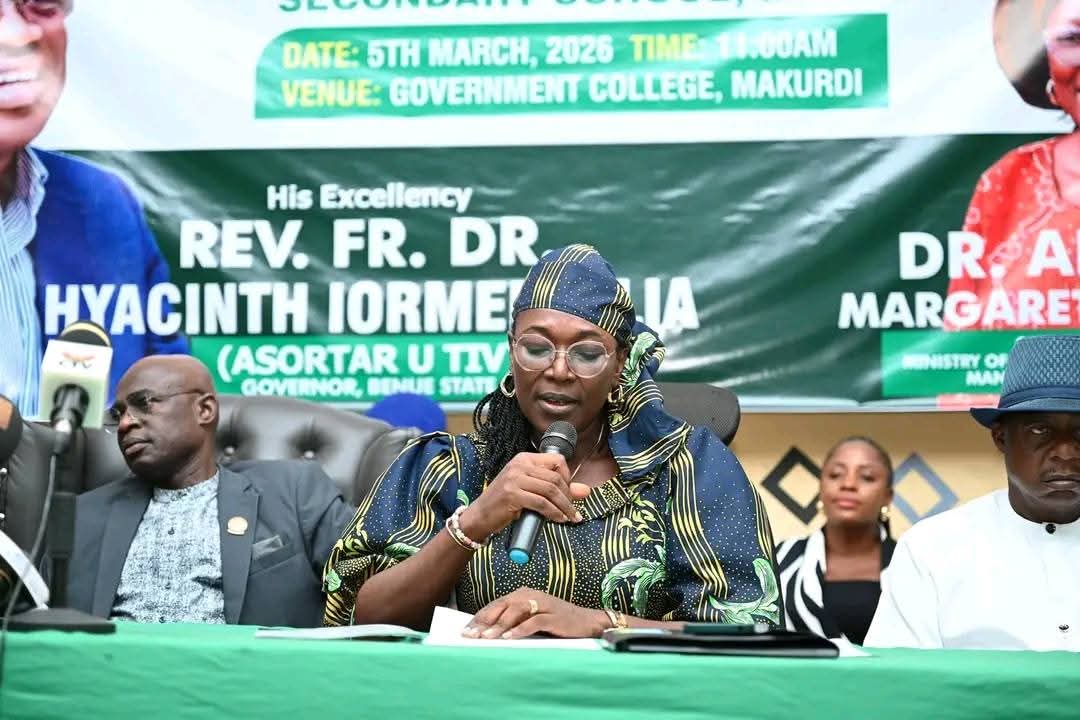


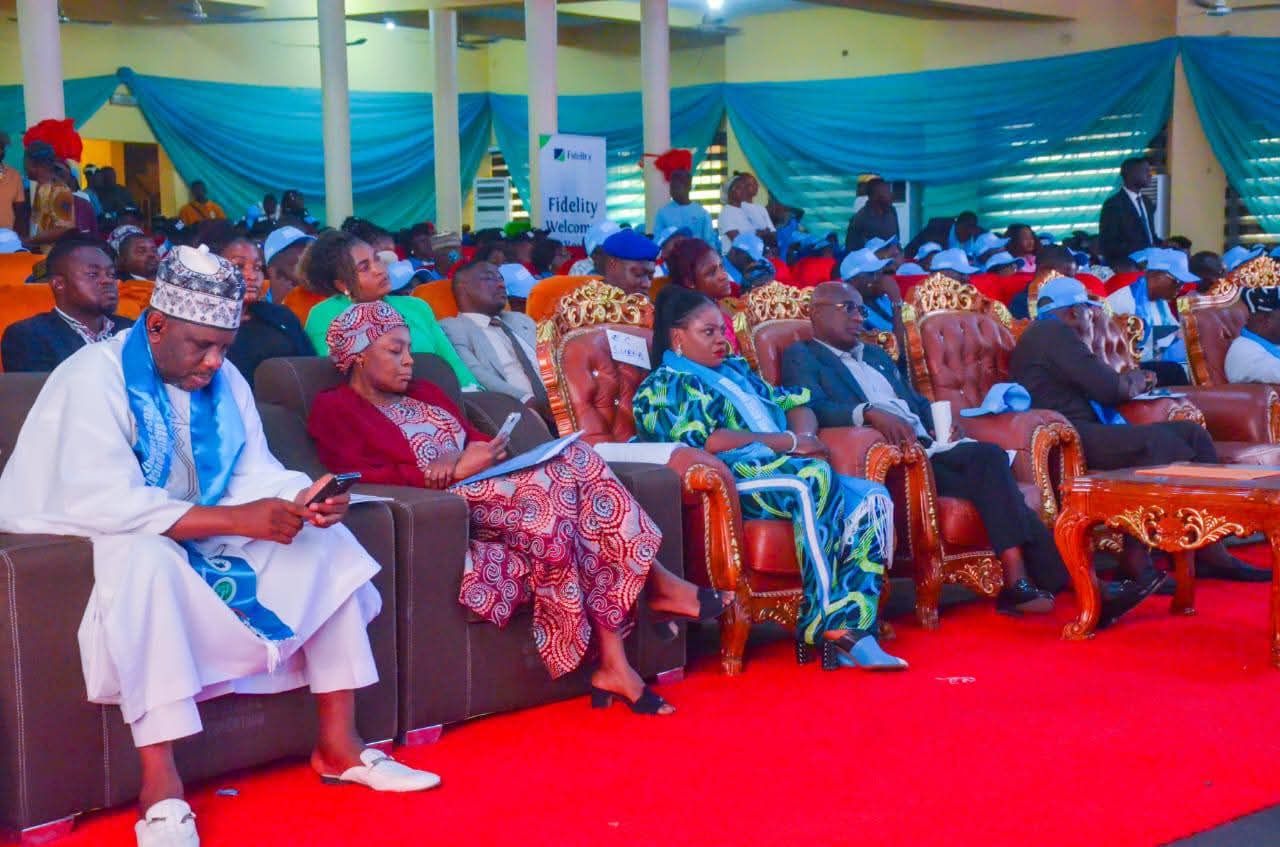
A former Vice Chancellor of Bayero University, Kano (BUK) and Professor of Mathematics Education, Professor Sahir Adamu Abbas, has recommended the use of accurate data rather than estimated figures to effectively address the menace of out-of-school children in Benue State.
Prof. Abbas made the recommendation on Friday, while delivering a keynote address titled “Innovative Strategies for Addressing the Menace of Out-of-School Children: Enhancing Enrolment and Retention of Children in Basic Schools in Benue State” at the maiden edition of the Benue State Basic Education Summit held at the School of Health Sciences, Father Adasu University (FAUM).
In his address, Prof. Abbas identified key drivers of the out-of-school crisis in Benue State, including indirect schooling costs and widespread poverty, which he said limit educational choices and push children into work and caregiving responsibilities. He recommended strong government commitment through a structured 90–180–365-day delivery plan.
According to him, the government must prioritise reliable data collection, improve pupil retention, enhance teacher welfare, and upgrade the school environment to effectively confront the crisis. He stressed that education must be treated as a shared statewide development responsibility with clear ownership and accountability.
The professor noted that Benue’s education challenges are further compounded by displacement. Citing data from UNICEF and International Organization for Migration (IOM), he stated that over 400,000 internally displaced persons currently reside in the state, many within host communities where schools are already overstretched.
Quoting national statistics, Prof. Abbas said: “Seventy-four percent of Nigerian children lack basic literacy and numeracy skills. Only 35 percent of Grade 3 pupils achieve minimum reading proficiency, while 40 percent of Grade 6 pupils do not meet fundamental mathematics benchmarks. Poor learning outcomes are strongly associated with higher dropout risks.”
He explained that these figures reveal a staggering learning crisis in Nigeria. Although many children are enrolled in school, a significant proportion do not acquire foundational literacy and numeracy skills. He warned that weak learning outcomes are not merely academic concerns but major contributors to disengagement and dropout, as families and children may lose confidence in the value of schooling when tangible progress is not evident.
Prof. Abbas emphasised that enrolment alone is insufficient, noting that many children begin school but do not complete basic education. He described poor learning outcomes as one of the strongest predictors of dropout. When children fail to master basic reading and numeracy skills early, they struggle academically, repeat classes, and gradually disengage. In low-income households, parents may eventually withdraw their children if education does not appear to yield clear benefits.
He further recommended flexible learning pathways to bring children back into school. These include accelerated learning programmes for over-aged and never-enrolled children, as well as flexible school calendars to reduce dropouts linked to seasonal labour demands.
According to him, school quality plays a critical role in retention. Teacher availability and proper deployment significantly influence learning outcomes, while effective government financing determines overall school success. He urged the state government to clearly signal that addressing out-of-school children is a top development priority rather than a routine programme.
In his remarks, the Tor Tiv, His Royal Majesty James Ayatse, pledged the commitment of traditional institutions to partner with the state government in tackling challenges affecting basic education. He appealed to the government to actively involve traditional and religious institutions in efforts to reduce the number of out-of-school children in the state.
Earlier, the Commissioner for Education and Knowledge Management, Dr. Margaret Adamu, described education as a fundamental human right of every child. She highlighted significant strides made in basic education, noting that increased government investment has boosted pupil enrolment across the state.
The Executive Chairman of the Benue State Universal Basic Education Board (SUBEB), Dr. Grace Adagba, outlined achievements of the Governor Alia-led administration in the basic education sector, including the construction, renovation, and equipping of schools with modern facilities, as well as the recruitment of teachers.
Goodwill messages were delivered by representatives of the Universal Basic Education Commission (UBEC), the Nigerian Union of Teachers (NUT), the Teachers Registration Council of Nigeria, UNICEF, Universal Learning Solutions, and the National Commission for Almajiri and Out-of-School Children Education. All pledged support and partnership in addressing the out-of-school children crisis in Benue State.