

“For many families, healthcare is a luxury item tucked away behind a price tag they can never afford. Instead, they wait. They wait out the pain, they ignore the warning signs, and they stay relaxed about their health hoping for the best until a minor ache quietly snowballs into a critical crisis”, says Dr. (Mrs) Florence Aboki.
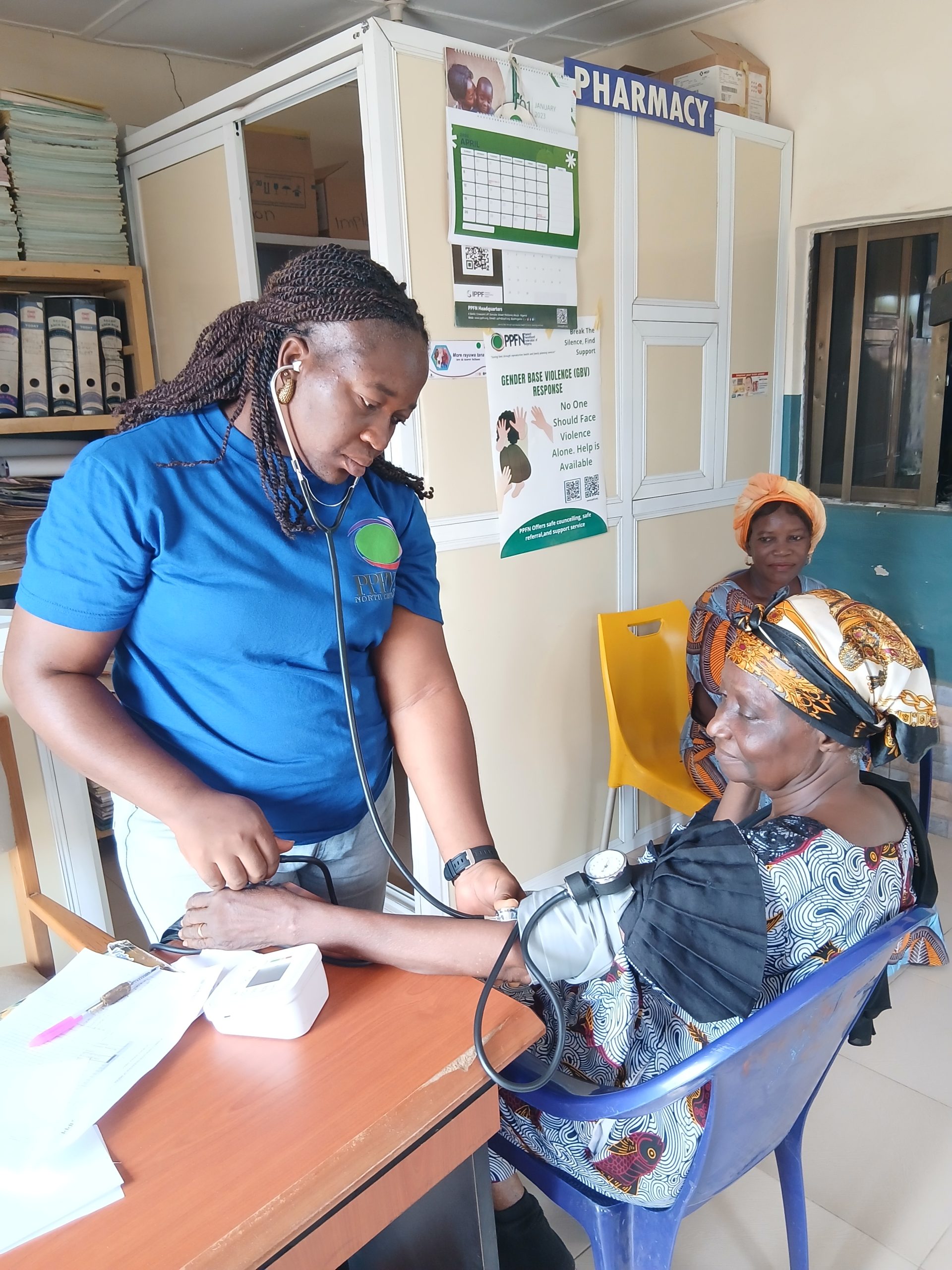
But the Seventy-six-year-old, Dr. (Mrs.) Florence Aboki, a retired civil servant, knew the stakes were high when she noticed a persistent wound on her foot. In a country where public healthcare is often overstretched, her family immediately feared the worst: diabetes. Seeking answers without breaking the bank, she turned to the Planned Parenthood Federation of Nigeria (PPFN) during a recent medical outreach in Lafia, the Nasarawa State capital.The screening provided immediate clarity and relief, ruling out her family’s worst fears.
Reflecting on her years in public service, Dr. Aboki speaks bluntly about the current state of healthcare: “Healthcare interventions are most successful when they are proactive rather than reactive. For everyday citizens, organisations like PPFN aren’t just an alternative, they are a necessity.”
Dr. Aboki stated that for many families in Nasarawa, healthcare is a luxury item tucked behind an impossible price tag. They wait out the pain, ignore warning signs, and hope for the best, until a minor ache quietly snowballs into a critical crisis. PPFN’s quarterly “In-Reach” and monthly community outreach programmes serve as a vital lifeline to disrupt this cycle.
For Mrs. Becky Agu, another retired civil servant, checking her health status is a vital component of graceful aging. During the Lafia outreach, she received unexpected news that allowed her to take immediate preventive action.
”For the aged like me, it’s good because the body system is getting old, getting weaker. I registered, I got tested, and I discovered my blood pressure had gone dangerously high.
They advised me to rest, which I did, and I am truly feeling better and fine now”, she shared her testimony.
Mrs. Agu now urges others to break through the hesitation that keeps people away from clinics: “People should take advantage of times like this. When an outreach is announced, they should show up, get tested, and enjoy the services being rendered.”
Similarly, Mrs. Lami Achuku Paul used the outreach for a comprehensive general screening, including tests for hepatitis, blood sugar, and cervical cancer. Her experience highlighted the critical importance of clinical follow-ups.
”Yesterday I was here and they told me my sugar level rose. Because I had eaten, they asked me to come back today on an empty stomach.
“I came back, and it’s completely normal today. I give God the praise. Sincerely, I see no reason why somebody would not check their health status. It helps a lot, instead of just sitting down until something dangerous comes up,” she concluded.
Behind these life-saving screenings is a complex, daily survival story managed by PPFN’s leadership. Founded in the late 1950s to promote child spacing, PPFN has since expanded into a comprehensive crusade for holistic Sexual and Reproductive Health and Rights (SRH&R), driven by global milestones like the Beijing Conference and the realities of the HIV/AIDS pandemic.
However, delivering these services today requires navigating severe international funding cuts and changing economic climates.
Josephine Udolugh, the Nasarawa Coordinator for the PPFN Lafia office, said the organisation has been balancing its humanitarian mission with modern economic constraints, a daily tight-rope walk.
”This activity is called ‘In-Reach’ because it is one of the core activities we do every quarter,” Udolugh explains. The outreaches can be in the facility or we take it to the community, depending on the location we feel is suitable. We don’t peg a target number of beneficiaries; we carry out our sensitisation, mobilisation, and then we welcome everyone who comes”, she explained.
Historically reliant on foreign aid, local NGOs across Sub-Saharan Africa have faced a harsh contraction in international donor portfolios. To survive and keep running, PPFN Nasarawa has had to introduce nominal token fees for certain service packages, a shift that often conflicts with public expectations.
”People feel because this is an NGO, everything should come totally free,” . Sometimes we offer free services, but sometimes we just peg a little amount of money to it—usually a very affordable ₦500 or ₦1,000 for a whole lot of services. This is simply because funding has drastically been cut off from our organisations. We no longer receive funding from international organisations as before”, Udolugh noted.
For the beneficiaries trooping into the Lafia facility, these token fees are a small price to pay for what is ultimately life-saving and charity.
Beyond finances, deep structural and infrastructural barriers limit PPFN’s ability to reach the most vulnerable rural populations. While the organisation maintains a cordial working relationship with the Nasarawa State government, Udolugh also stressed that deep rooted collaboration and infrastructural development are desperately needed to reach underserved, remote communities.
”Anytime we are carrying outreaches to hard-to-reach areas, it is usually difficult because of road networks. Having an accessible road to some of these areas is very tough. Imagine crossing rivers and streams just to get to a village. If the government will help create access roads to make it easy for Civil Society Organisations (CSOs) to access these environments, it will go a long way”, she added.
As international aid structures continue to shift, the responsibility for keeping these healthcare lifelines open falls equally on local participation, public awareness, and increased government investment in rural infrastructure. For women like Dr. Aboki, Mrs. Agu, and Mrs. Paul, the hope is that these vital clinic doors stay open, no matter how hard the financial winds blow.