

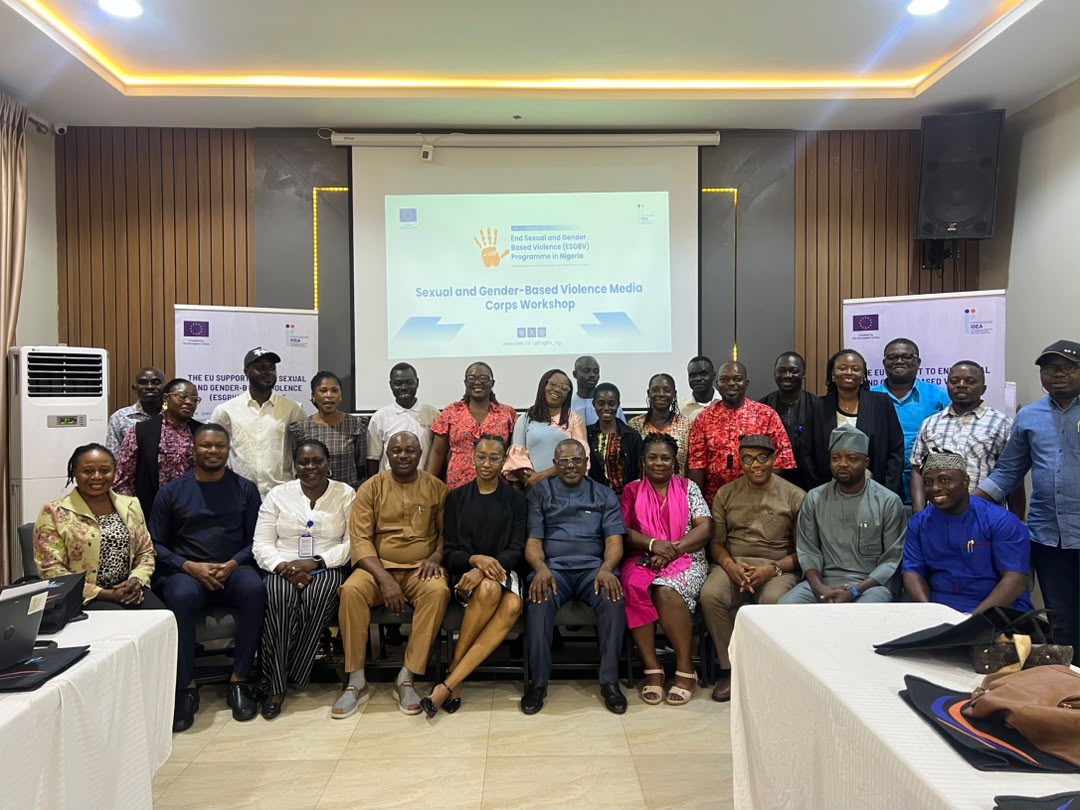
criminal elements while respecting the dignity, privacy and rights of survivors. She also stated that there would be no safe haven for perpetrators of SGBV, and that every survivor deserves justice, dignity and protection.
In her remarks, the Civil Society and Community Mobilization Specialist for the ESGBV Programme, International IDEA, Wynyfred Achu-Egbuson, provided an overview of the European Union Support to End Sexual and Gender-Based Violence in Nigeria Programme.
She disclosed that the programme is being implemented in Oyo, Kaduna, Benue States as well as FCT following an extensive design process with stakeholders.
Achu-Egbuson explained that the ESGBV Programme was deliberately designed by the European Union to build on gains made under the Rule of Law and Anti-Corruption, RoLAC, Programme and the UN Spotlight Initiative, also funded by the EU.
According to her, the programme has three results areas: strengthening laws and policies that contribute to reducing SGBV, including the VAPP Act at federal and state levels; enhancing access to services for survivors, including expansion of Sexual Assault Referral Centres in target states; and promoting positive social norms while building the capacities of civil society organizations, community-based groups and communal structures.
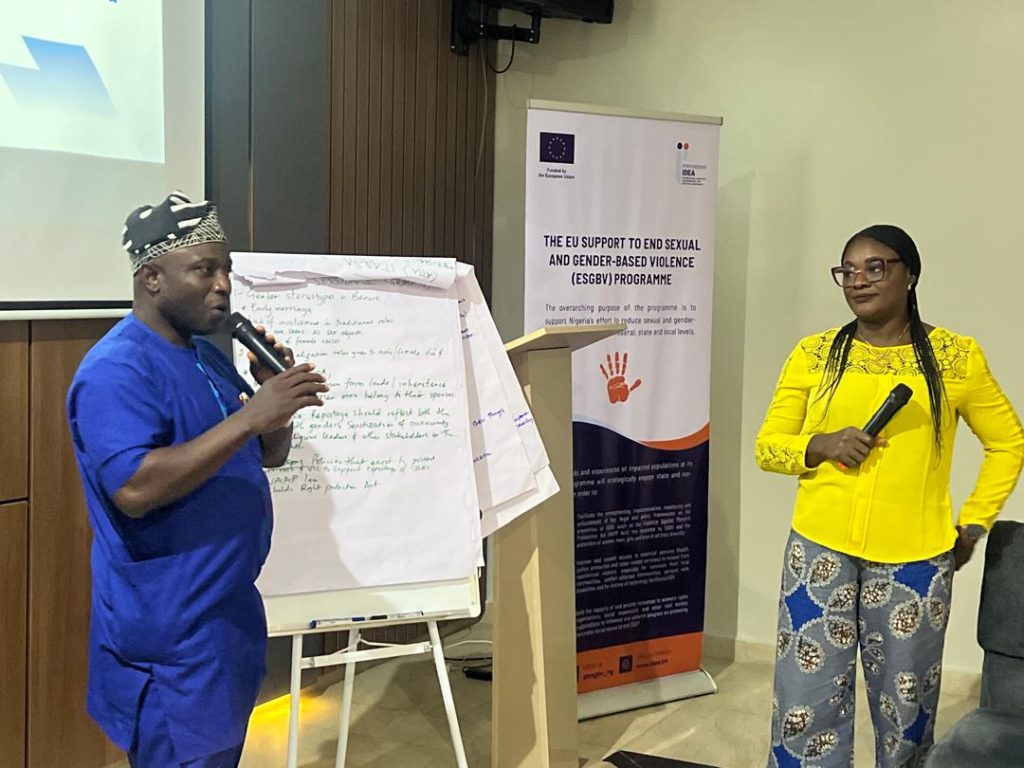
She stated that the engagement with the SGBV Media Corps marks the beginning of a four-year relationship. Following the two-day training, the Corps will receive coaching and mentoring, with additional trainings. “The objective is to shift SGBV reporting and public discourse from sensationalist and fragmented coverage to a more professional, survivor-centred, evidence-based and action-oriented approach that promotes prevention, expands access to trusted information, strengthens referral pathways and supports positive social norm change”, she said
In a good will message, Director-General of Radio Benue, Terseer Mnzuulga, called for a multi-sectoral response to SGBV, urging the media, religious institutions and traditional leaders to challenge harmful norms.
“Cultural stigma still stops many victims from speaking out. Churches, mosques, the media and traditional institutions must carry this message to every community,” he said.
He added that Radio Benue would back the effort with phone-in programmes, radio dramas and local language broadcasts to boost awareness and reporting.
Facilitators made presentations on various topics, including “Why an SGBV Media Corps and the Role of the Media in Preventing and Responding to SGBV in Nigeria,” “Understanding Sexual and Gender-Based Violence,” and “Media Stereotypes, Victim Blaming and Reporting Challenges,” among others.