

Beyond the Boundaries: The Igede Women rewriting their Story
The drums will sound again. The dances will fill the village playgrounds, families will gather, new yams will be prepared and the people of Igede land will once again come together to celebrate their heritage. But Igede Agba is more than a celebration of new yam.
For generations, the festival has provided an opportunity for the Igede people of Benue State to return to their roots, celebrate their culture and reconnect with one another. Yet, beyond the food, dancing, colourful attires and merriment is another story that deserves to be told, the story of the Igede woman.
A woman whose world was once largely defined by the home, farm and family is increasingly stepping beyond those boundaries.
She is becoming a pharmacist, politician, entrepreneur, professional, community leader, peace builder and decision maker.
She is not abandoning who she is. Rather, she is carrying her identity with her as she enters spaces that women before her could hardly have imagined.
This Igede Agba, therefore, is not just about harvesting yams. It is also about celebrating the harvest of men and women who have planted seeds of courage, education, hard work and determination and are now beginning to see the fruits.
The Igede Agba New Yam Celebration is one of the most significant cultural festivals of the Igede people of Benue State.
Over the years, the New Yam Festival has metamorphosed from a celebration of the year’s harvest to a broader celebration of Igede culture, identity and heritage.
It has become a means of preserving the people’s traditions in the face of urbanisation, globalisation and migration, which continue to change the way communities live and interact.
The celebration dates back to the 1950s. The Igede Youth Association (IYA), now known as Omi’Ny’Igede, is regarded as the progenitor of the celebration. It organised the first celebration, and since then, the festival has continued to gain momentum and recognition.
Igede Agba is celebrated on the first Ihigile market day in September. This year’s celebration falls on Friday September 4, 2026. The Ihigile market day was chosen because it is regarded as the first market day in Igede land.
The festival itself is named after Agba, regarded as the ancestral father of the Igede people. Agba was said to be the 11th son of Akpen, who lived in what is now Owan West Local Government Area of Edo State, in Orha land.
And in Oju and Obi, the two local government areas that make up Igede land in Benue State, the atmosphere changes as the festival approaches. Homes receive a facelift. Bushes are cleared. Compounds are cleaned. Some houses are renovated. New clothes are bought or sewn for family members.
On the day of the celebration, yams, meat-whether goat meat, chicken or other available meat are provided by the head of the family and handed over to the wife or shared among wives, depending on the family structure. The women take over the kitchen.
Major traditional soups such as benniseed (ehia), monkey breadfruit, also known as ogbono (onno), and melon (ibehi) soup are prepared. When the food is ready, the family gathers to eat.
Traditionally, the head of the house shares the meat, while food lumps are cut according to seniority from the oldest to the youngest. It was a practice that did not always sit well with the younger ones, who had to wait patiently for their turn. But, as civilisation, development and migration have changed family structures and lifestyles, some of these traditions have gradually disappeared.
Groups such as Aita, Akatanka and Obemu entertain the people in their homes and at the village playground, known as Ojiya.
In recent years, some of these activities have been revived, alongside competitions aimed at promoting unity and strengthening the bond among the people.
But as Igede celebrates its cultural heritage this year, there is another heritage worth examining, the changing story of its women.
There was a time when the measure of an Igede woman’s success could largely be found within the walls of her home. It was in the children she raised, the food she prepared, the farm she helped cultivate and the family she helped hold together. But times are changing.
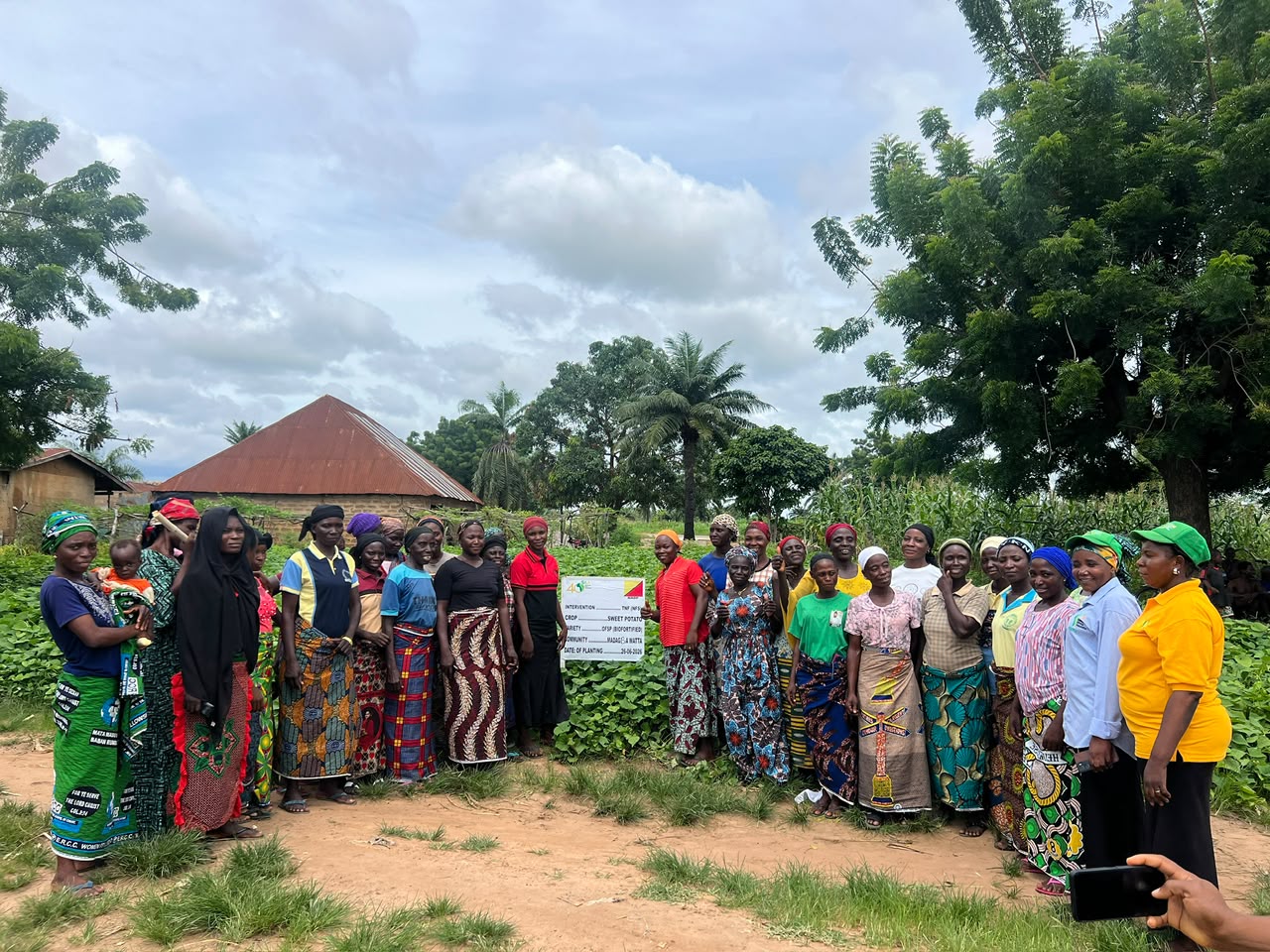
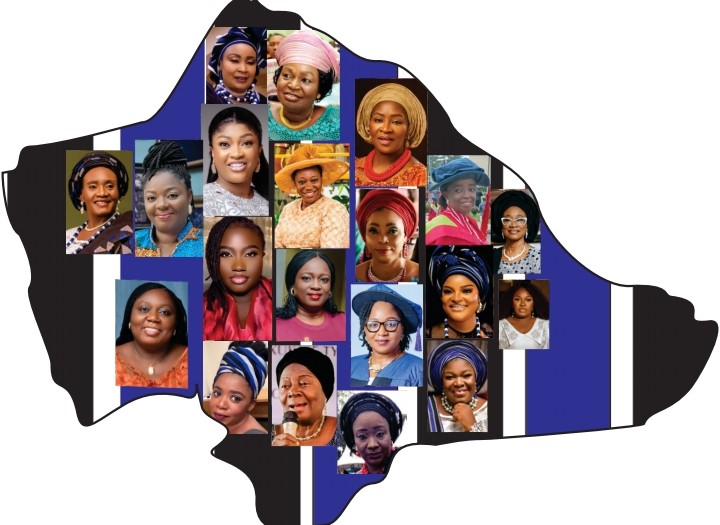
Across Igede land and beyond, women are entering spaces that were once considered largely the preserve of men. They are pursuing careers, earning academic distinctions, building businesses and accepting leadership responsibilities.
Their journeys have not always been easy. For some, the first barrier was simply being allowed to go to school. For others, it was the expectation that marriage should come before education. Some had to struggle against poverty, family circumstances and social expectations.Yet they kept moving.
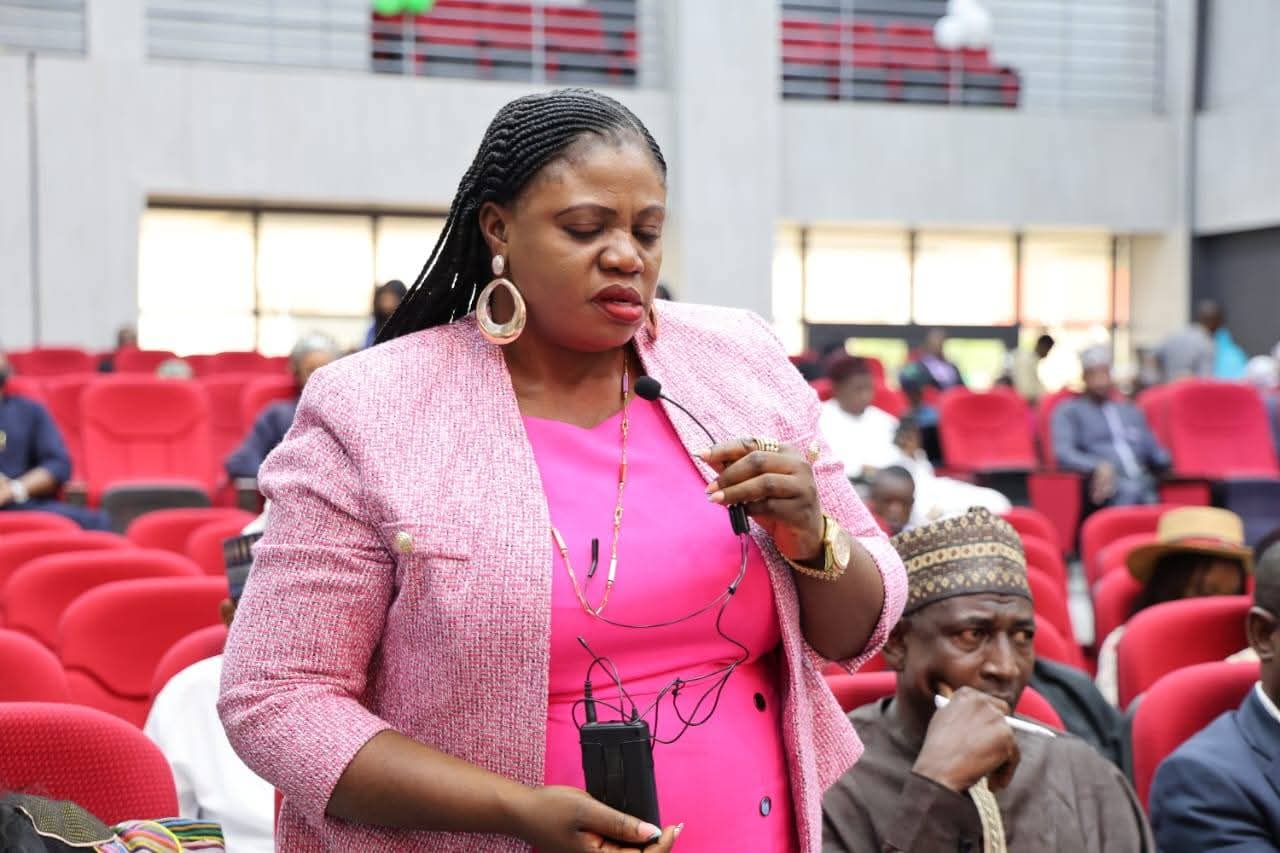
One of such women is Dr Margaret Ohuma Oga, a pharmacist, evangelist, politician and mother, who is currently seeking the office of Deputy Governor of Benue State on the platform of the SDP.
Born on August 14, 1951, in Andibilla, Oju Local Government Area of Benue State, Oga attended Methodist Primary School, Ibilla; Wesley High School, Otukpo; Federal Government College, Sokoto; Ahmadu Bello University, Zaria, among other institutions, eventually attaining doctoral-level education.
She has held several positions, including Councillor for Health and Education in Oju Local Government, Chairman of the Benue State Christian Pilgrims Welfare Board, Chairman of the Joint National Christian Pilgrims Welfare Board and Chairman of the Board of Directors of Benue Burnt Bricks, among others.
She is also the OGWANYANG 1 of Igede Land, a traditional chieftaincy title, and is regarded as the first female pharmacist in Igede land and beyond. But behind the titles is a story of a young girl whose father simply believed she should go to school.
“My father said I must go to school.My father was into adult education with his Igbo teacher friends,” Oga recalled.
“He was excited with education, and loved the way the teachers then were sending their children to school. He got excited and said I must go to school.”
Going to school, however, was not as easy as it sounds. Her home in Andibilla was far from the school and the terrain was hilly. Still, she went. Her father handed her over to one of her cousins, who took her to school and brought her back.
“I wasn’t interested in any course in particular; I was just excited to go to school,” she said. Her academic performance also encouraged her father.
“I was always taking first or second position in school. And that made him very proud, and then he encouraged me.”
But when admission to university eventually came, another expectation confronted her. Her father wanted her to marry first.
“I didn’t buy his idea, but he insisted that, being his first daughter, he didn’t want me to derail. He didn’t want me to marry late because he felt my younger siblings may follow my steps if I didn’t marry on time.”
She eventually obeyed. She got married nine months before entering the university and had a baby a few months before she resumed. At about 20 years old, Oga found herself carrying two major responsibilities; motherhood and university education. And there was another responsibility waiting for her at home.
As the first daughter in a polygamous family with over 20 younger siblings, her father expected her to be responsible for the younger ones. “I was like his assistant in running the home,” she said.
That responsibility, she explained, made her committed to leading and caring for her younger siblings. Her husband also played a significant role in ensuring she completed her education. She had initially gained admission to study medicine, but because she had married and did not want to spend more years in school or spend so much time on hospital calls, she changed to pharmacy.
When her first child was born, she lived with the baby outside the campus for three months. Her husband later took over the care of the child until she finished her studies. Combining motherhood, marriage and university education at such a young age was not easy. In fact, she was unusual among her peers.
“At that time, it was rare for people even to marry and go to school,” she said. She recalled how some students from Southern Nigeria mocked her for being married and already having a child. But she continued.
Her father, too, refused to allow the opinions of others to determine his daughter’s future. Some of his friends had advised him to withdraw her from school, warning that she could disappoint him because she was a girl. But he refused.
“He told them point-blank that he wasn’t going to withdraw me from school,” she recalled. Her father’s confidence in her began early.
As a young girl, he bought her a bicycle. Whenever he could not attend community meetings, he would send her in his place.
“He would ask me to carry my biro and book and go and write minutes or whatever reports and bring to him. That was how he trusted me,” she said.
That trust became one of the seeds that shaped the woman she eventually became. Today, she wants other young Igede girls to understand that education, especially science education, should not frighten them. “I want to advise that they should not be scared by the science courses.”
“Let us put our hands together and build the nation like other people do in other places, not just sitting down and clapping hands for people or gossiping others. Let’s put our hands together and work for the betterment of our communities, our state, our zones, and all.”
If Oga’s story is one of education and family support, the story of Juliet Odu Egbe is one of resilience in the face of circumstances she did not choose.
Egbe, a young entrepreneur from Obi Local Government Area, owns a makeup studio and hair salons in Lagos and Abuja. She is also a graduate of Mass Communication from Benue State Polytechnic, Ugbokolo.
Born and raised in Obi, Egbe was the second daughter in her family. She had her primary education in Lagos and later attended Igede Anglican Comprehensive Secondary School, Ito, from JSS3. Today, she is known for her beauty business.
But she says makeup and hairstyling were not something she stumbled into. “I didn’t stumble into makeup and hair styling. It was something I’ve always wanted to do,” she said.
“Even before I got my admission to school, I had love for anything beauty.” Immediately after school, she learnt makeup and hairstyling, opened her salon and has continued to build the business for more than four years.
But her childhood was far removed from the glamour associated with her business today. “I was just nine years old”
Egbe was only nine when she left home with a maternal uncle who promised her parents he would put her in school in Lagos. But when she arrived in Lagos, things took a different turn. Instead of school, she was given to a family to work as a house help, while her uncle collected her salary. For about three years, she did not attend school. “It was not easy at all, because this was not my expectation,” she recalled.
Eventually, she gathered the courage to ask the family to allow her to go to school. “Even if it was a public school at this point, I didn’t mind. I just wanted to go to school.”
The family had grown fond of her and valued her hard work, so they enrolled her in school. She would go to school and return to do household chores. For more than two years, her parents had no idea what she was experiencing. There was no phone with which to communicate with them, and the uncle who had taken her to Lagos continued telling her parents that she was in school whenever they wanted to speak with her.
She continued working because, despite the hardship, she had a roof over her head and food to eat. More importantly, she was able to save money towards her education. “I was just a girl who knew what she wanted,” she said.
Her decision to remain away from home was also influenced by a cultural practice that frightened her. She recalled growing up at a time when the practice of shooting guns to signify or force marriages involving young girls was common in some communities.
“I was afraid of that, so I stayed away from home. I didn’t want that to happen to me because I wanted to go to school and have a better life.” Her years as a house help came at a price. “I denied myself of many things,” she said.
“Being a maid is as if you are inside a cage. So you don’t go out, you don’t get to do the things other children do. It is just you and your work. ”If I have to repeat my life all over, I would not follow my uncle. I would have stayed with my parents and then enjoyed my childhood.”
But the experiences also helped shape her determination. She came from a family where no female before her had gone to a higher institution. “I was the one that broke the yoke of going to higher institution,” she said.
“You find yourself in a situation where nobody is progressing and then you want to make it by force. You want to change the family narrative. So that is the kind of person I am. I’ve always known what I wanted.”
Becoming the first Miss Obi in 2022 brought Egbe into the public eye. The crown gave her a platform, but it also came with expectations and judgement.
“People see the crown, the glam, and the social media followers, but they don’t see the late nights, the stress of managing two salons in different cities, or the sacrifices it took to get here. Being Miss Obi gave me a platform, but it also made people judge me before knowing my story”, she said.
Even when culture or family circumstances appear to limit women, she believes young girls can change their stories. ” Your background does not define your future. You don’t have to wait for anyone to save you. Work hard, stay focused on your goals, and no matter how tough it gets, never give up on yourself.”
The stories of Oga and Egbe are different. One grew up with a father who encouraged education and trusted her with responsibilities beyond her age.The other had to fight her way back into the classroom after being denied the opportunity she was promised.
Both stories point to something bigger. Breaking barriers is rarely one dramatic act. Sometimes, it is a series of small decisions made repeatedly. To continue when it would be easier to stop.To study again, to apply again, to build again, to speak when silence is expected, to lead when leadership has traditionally been associated with men. And, most importantly, to believe that one’s voice deserves to be heard.
From daughters to mothers. Perhaps the most important question is not only what these women have achieved for themselves. It is what their achievements mean for the girls coming behind them.
The Igede girl watching her mother return from work. The student sitting in a classroom in Oju or Obi. The young woman learning a trade. The girl dreaming of becoming a doctor, lawyer, journalist, engineer, farmer, entrepreneur, scientist or politician.
What does she see when she looks at the women ahead of her? Does she see a boundary? Or does she see a road? The answer may determine how far the next generation will go.
Igede Agba is fundamentally a celebration of harvest. But this year, there is another harvest worth celebrating. It is the harvest of women who have planted courage in places where fear once grew. Women who have cultivated education, built businesses, entered professions previously dominated by men, accepted leadership responsibilities, raised children while pursuing their own dreams, challenged expectations without abandoning the identity that shaped them, and perhaps without knowing it, have planted seeds in the minds of girls they may never meet.