

In the delicate, high-stakes ecosystem of Nigeria’s Middle Belt, a single unchecked rumor broadcast over social media or whispered in a market square can ignite fires that take months to extinguish. Tensions in region, long fueled by complex intercommunal conflicts, resource competition, and political friction are increasingly amplified by digital misinformation that turns grief and fear into sudden, violent action.
Recognizing that the battle for peace is fundamentally tied to the battle for truth, HumAngle, an independent non-profit media organization focused on conflict and humanitarian reporting, brought its latest intervention directly to the frontlines of the narrative, Makurdi, the capital of Benue State.
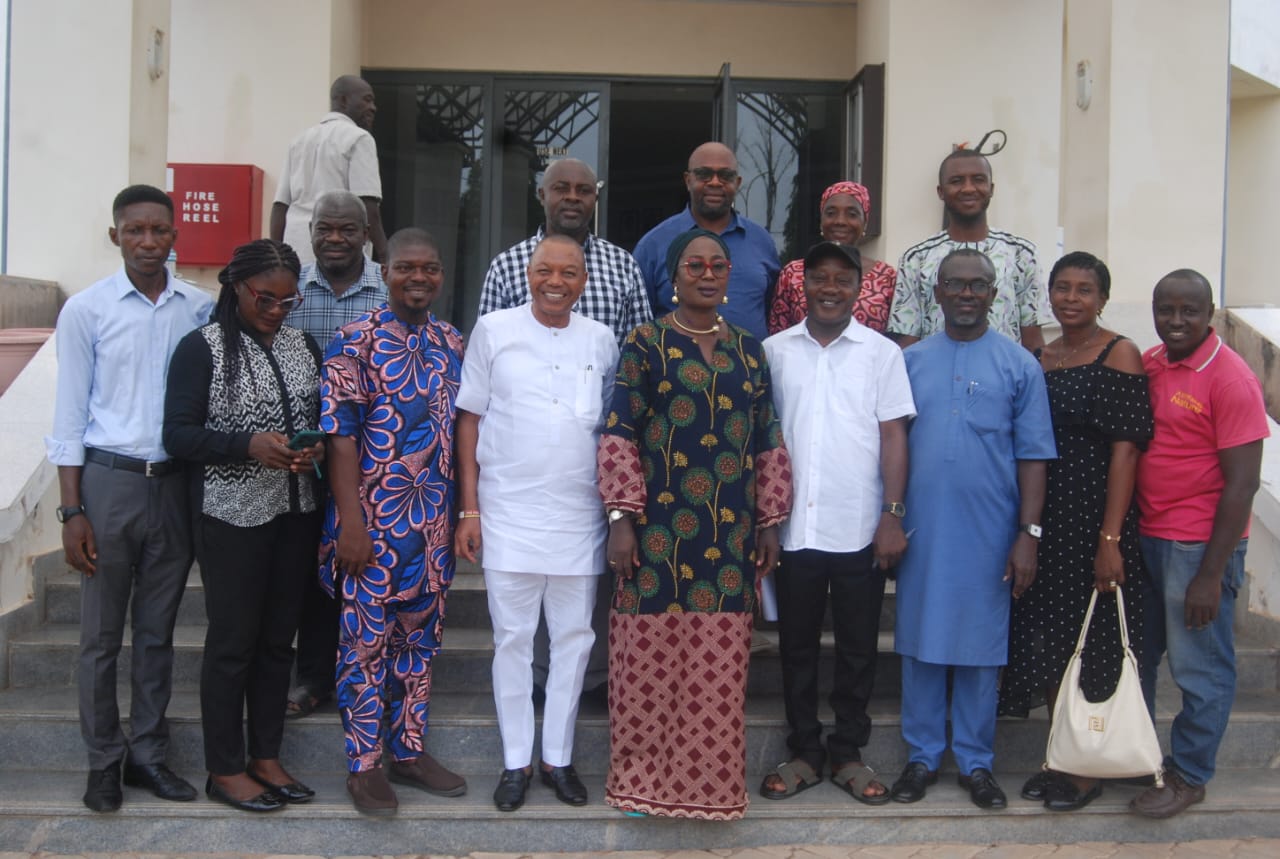
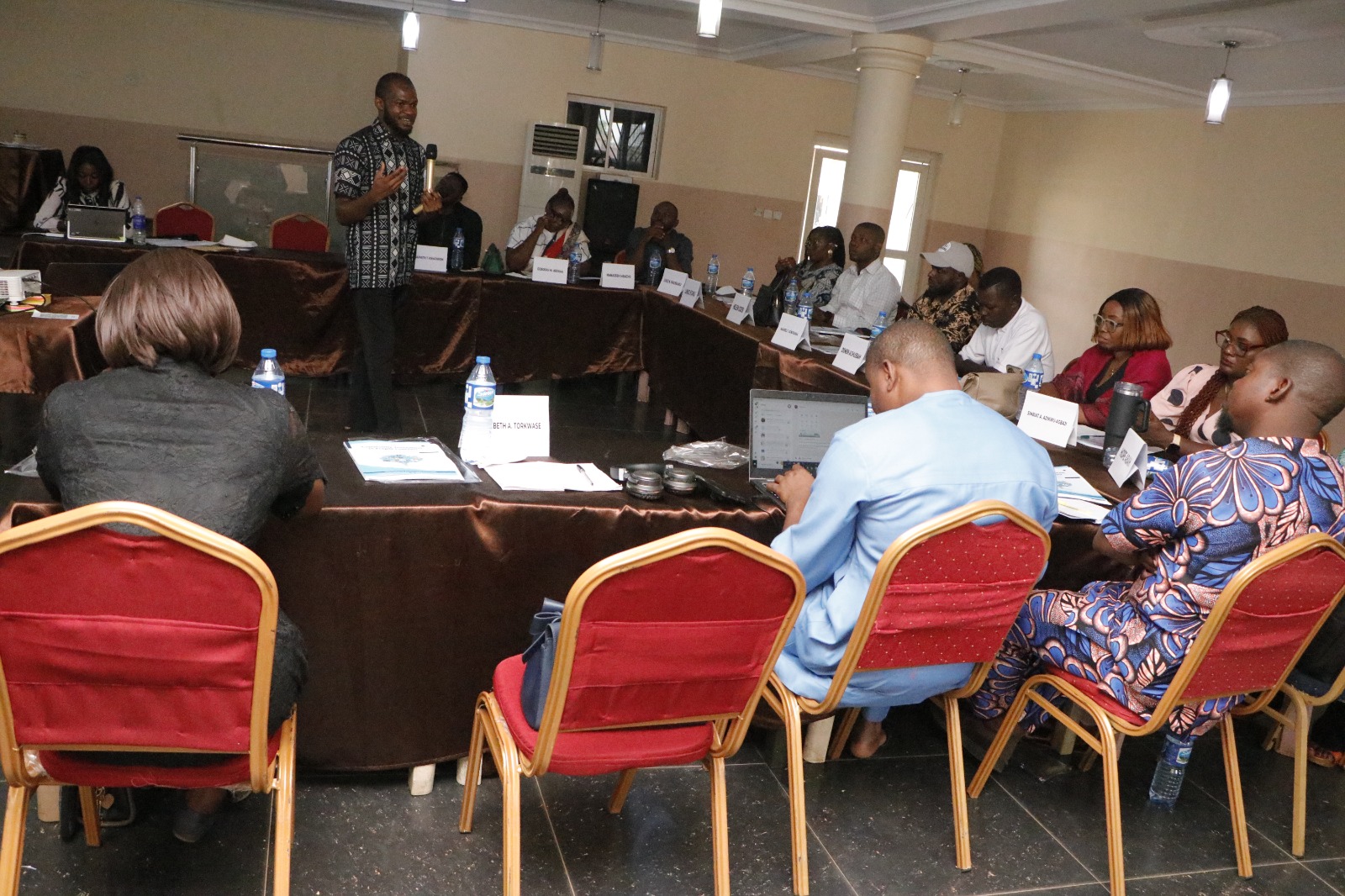
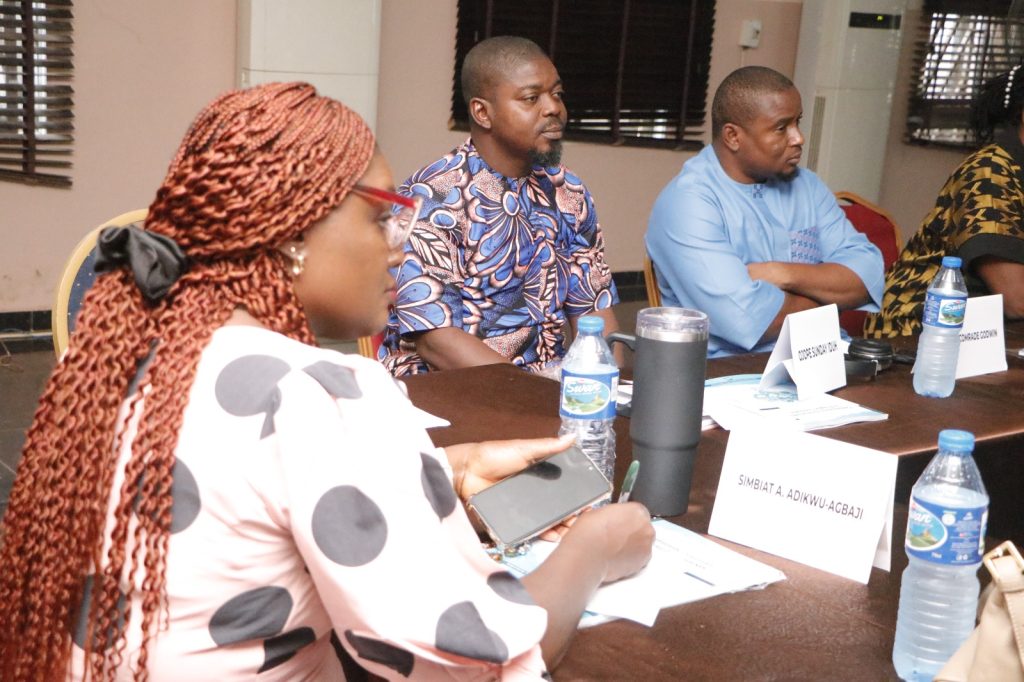
The two-day intensive workshop which commenced on Tuesday at the Doo Palace Hotel brought together reporters across print, broadcast, and digital platforms from every corner of Benue State. The initiative marks a crucial phase of HumAngle’s broader project, “Countering Misinformation and Promoting Peace in Nigeria’s Middle Belt (CMPP),” an ambitious venture supported by Journalists for Human Rights (JHR) and the Canadian High Commission, targeting Benue and Plateau states as its focal zones.
For years, conflict reporting in the Middle Belt has suffered from a dangerous race to be first, often reducing complex human tragedies to stark, unsourced body counts. HumAngle’s training sought to break that cycle by equipping journalists with practical tools for rigorous verification, data analysis, and solutions journalism.
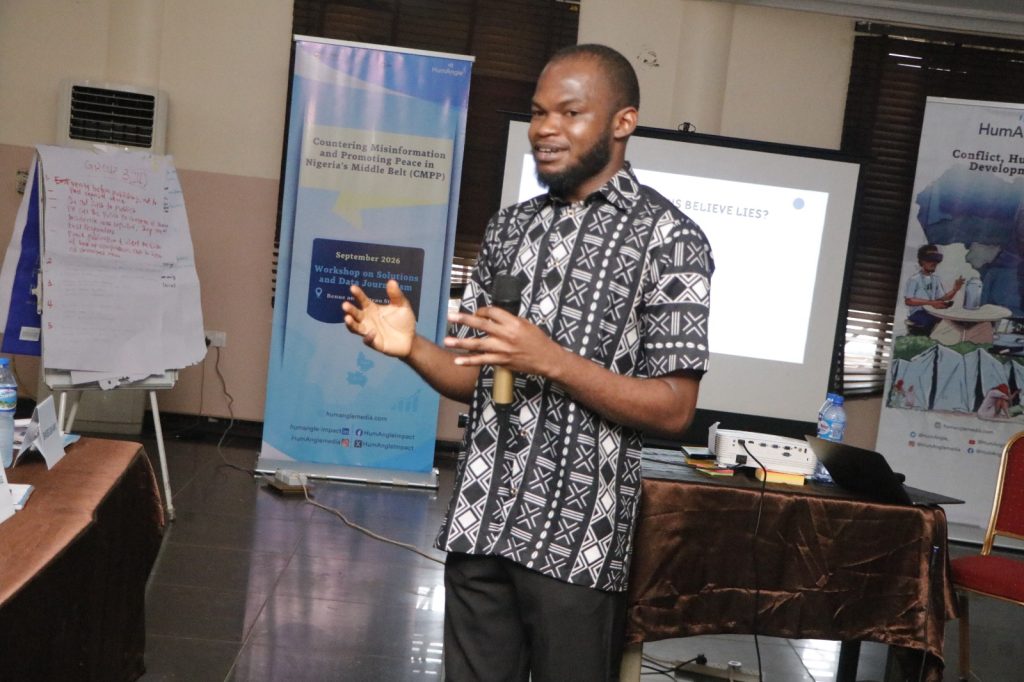
Speaking at the event, HumAngle’s Programme Officer, Khadijat Oscar, stressed that surviving as a journalist in a sensitive environment requires an entirely new reporting philosophy.
“We want a shift in mindset,” Oscar told the gathered journalists. “We want journalists who tell holistic stories, not biased ones. Our mantra in one of the sessions was ‘accuracy before speed.’ It is not about who breaks the news first, but about getting it right, especially in such sensitive environments.”
Oscar challenged reporters to look past the superficial metrics of violence and anchor their work in the lived experiences of victims. “It is not enough to publish numbers,” she emphasized. “We must tell the human story, the cost of these conflicts on real people, families, and communities.”
The technical modules were facilitated by a cadre of experienced media practitioners from HumAngle’s newsroom, offering hands-on methodologies tailored to low-resource, high-risk environments:
On Context-Setting and Neutrality, Johnstone Kpilaakaa, Standards and Ethics Editor at HumAngle, guided reporters through navigating deep-seated biases and avoiding inflammatory language that stokes sectarian divides.
Speaking on Human Rights Journalism, Veteran journalist, Fidelis Mbah unpacked the ethics of reporting on vulnerable populations, emphasizing dignity, consent, and safety in conflict storytelling while Hauwa Shaffii Nuhu led actionable sessions on verifying user-generated content, fact-checking claims, and trace-finding in digital or internet-sparse settings on the topic: Verification Under Pressure
For many in attendance, the practical exercises served as a jarring wake-up call. Journalists, including Ameh Godwin and Sewuese Anyo, admitted that the workshop forced a rare moment of introspection, pushing them to interrogate long-held editorial habits and implicit personal perspectives.
A recurring theme throughout the training was that newsrooms cannot act as isolated islands in the fight against fake news. Misinformation often spreads faster through word-of-mouth and community messaging networks than through official news channels.
To combat this, Oscar revealed that the CMPP initiative will expand its reach beyond media personnel. She said HumAngle plans to directly engage state actors, community-based organizations (CBOs), faith-based leaders, and traditional rulers to establish a joint framework capable of spotting and neutralizing dangerous narratives before they escalate into open violence.
“We have realized that journalists alone cannot win this fight,” Oscar noted, highlighting the historic disconnect between newsrooms and local actors. “Community leaders, faith leaders, and grassroots organizations relate with people daily and they must be part of the solution. That is one gap this project hopes to close.”
Founded in March 2020 by Ahmad Salkida and Obiora Chukwumba, HumAngle has established itself as a leading voice in human-centered, conflict-sensitive reporting across Africa, regularly intersecting investigative journalism with research, advocacy, and media development.
As the training in Makurdi concluded, the overarching message to the participants was clear: in conflict reporting, sensationalism is a public liability, and public interest must remain the ultimate standard of success.
By equipping Benue’s journalists with the tools to prioritize verification over velocity and human dignity over body counts, HumAngle is doing more than training reporters, it is building the foundation for an information ecosystem where truth, context, and peace can finally take root.