

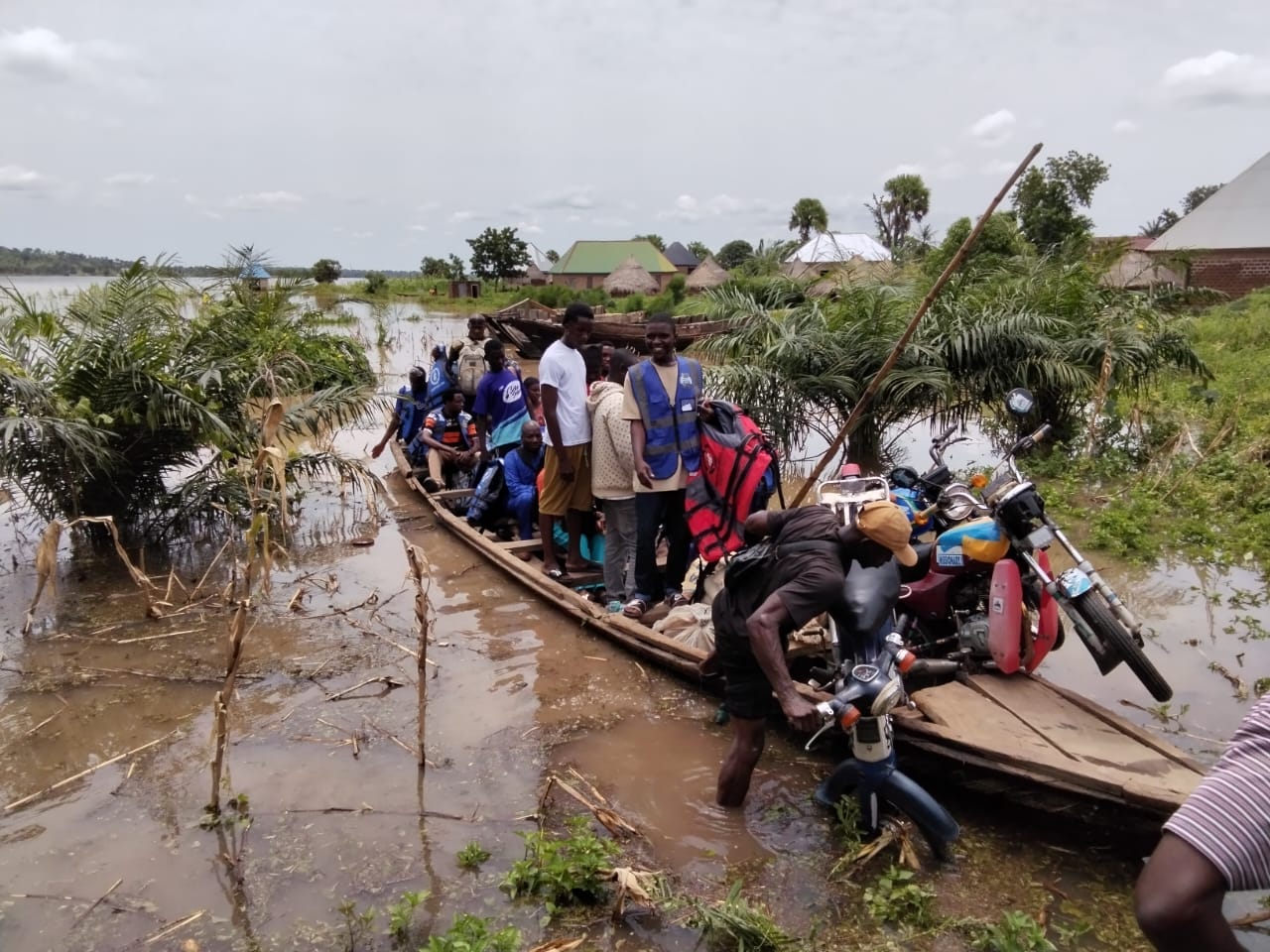
Five people and seven motorcycles remain missing following the October 3 boat mishap at the Buruku crossing point in Buruku Local Government Area of Benue State, as newly deployed Marine Marshals struggle with inadequate life jackets and other operational challenges.
The tragedy, which particularly affected the Mbayion community in Gboko Local Government Area, triggered search and recovery operations at the crossing.
It took divers five days to recover seven bodies-two women and five men, from the 12 people reportedly missing. Meanwhile, divers also recovered 29 of the 36 missing Boxer motorcycles, popularly known as Bajaj, from the water. Some were carrying fuel tanks, while others were not.
As of Thursday, October 8, the search for the remaining five people had stalled, with no search team seen at the site. Reasons for their withdrawal remained sketchy as of press time.
Meanwhile, efforts to recover the seven missing motorcycles continued, albeit on a limited scale. One of the team members, Mr. Iorlumun Adure, decried inadequate support for the divers.
“There are two teams of divers here; one for the missing persons and the other for bikes. I was in the team searching for missing persons before I switched to the other. We intended to continue with the search today, but we didn’t get a canoe to work with”
In response to the recurring boat mishaps, the Benue State Ministry of Marine and Blue Economy, led by Hon. Dennis Iyaghigba, has deployed Marine Marshals to both sides of the crossing. Their primary responsibilities include preventing overloading and ensuring that passengers wear life jackets provided by the ministry. However, inadequate safety equipment threatens to undermine the initiative.
An investigation by The Voice revealed that the ministry provided only 25 life jackets, while the Marine Operators’ Union at the Buruku crossing owns an additional 17. The union-owned jackets are reportedly rented out to passengers for N500 each.
The shortage of the ministry’s free life jackets has made it difficult to enforce the directive by the state and local governments that no passenger should cross without wearing a life jacket.
As observed by The Voice last week, many passengers, particularly those boarding barges, crossed without life jackets. Although some passengers using taxi canoes wore them, not everyone was properly equipped before crossing.
The Vice Chairman of the Marine Marshals at the Buruku crossing, Mr. Eric Emmanuel, confirmed the shortage. “The life jackets are grossly inadequate. As a result, we give them only to passengers using the small canoes, pending when there will be enough for everybody,” he said.
Another challenge confronting the Marine Marshals is alleged interference by members of the Marine Operators’ Union, who reportedly question their efforts to enforce safety regulations, particularly restrictions on overloading and the free distribution of life jackets.
A newly recruited Marine Marshal, Mr. Yusuf Gambo, said disagreements with some canoe operators had nearly resulted in a breakdown of law and order.
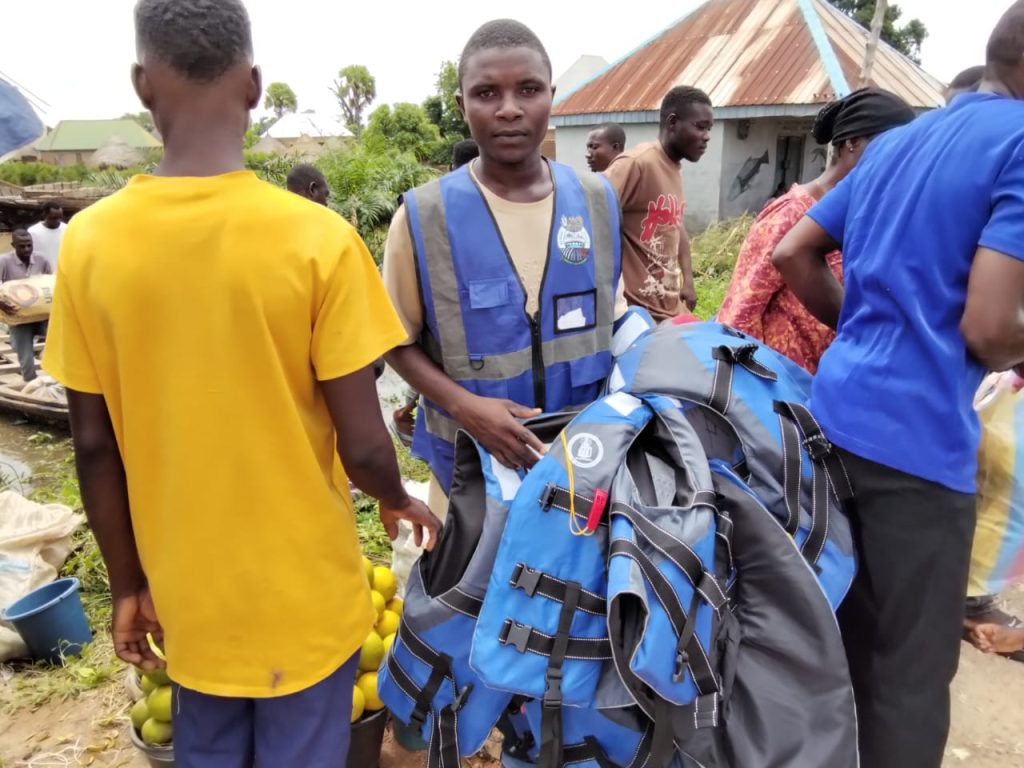
“We exchanged words with the union members and it almost resulted in chaos because they are against us working here,” Gambo recounted.
Efforts to hear from the leadership of the Marine Operators’ Union were unsuccessful, while members of the union declined to comment.
The investigation also revealed concerns about the ages of some canoe operators, with some reportedly underage and others considered too old to perform the demanding task effectively.
The situation raises questions about the enforcement of age requirements and the physical fitness of operators responsible for transporting passengers across the river.
The condition of the wooden canoes presents another safety concern. Some reportedly have structural defects, while others appear unstable in the water.
A Marine Marshal, pointing to a canoe carrying a large stone apparently used to keep it balanced, questioned its suitability for transporting passengers.
“Look at that canoe. Without that stone, it will tilt to one side. How do you expect it to move freely in the water?” the marshal asked.
The marshals acknowledged that addressing such defects would require intervention beyond their immediate responsibilities.
Despite the challenges, some passengers have expressed confidence in the use of life jackets. Rev. Godwin Maor, a passenger who spoke with The Voice, said wearing one gave him a sense of security.
“Immediately I wore the life jacket, I felt relieved and gained confidence that even if an accident occurred, I would not sink,” he said.
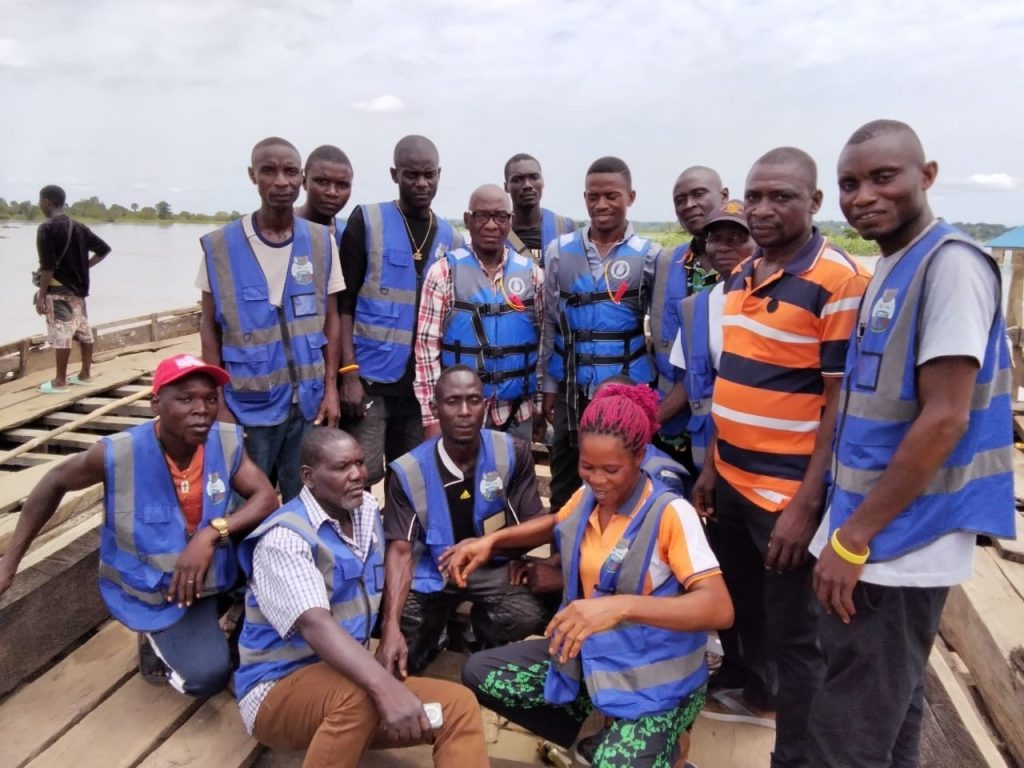
The Marine Marshals have appealed to the Benue State Government to expedite the provision of additional life jackets to ensure that every passenger is adequately equipped before crossing.
They also called for the issuance of identity cards and appointment letters, alongside clear operational guidelines, adequate training, and other necessary support to enable them to discharge their duties effectively.