


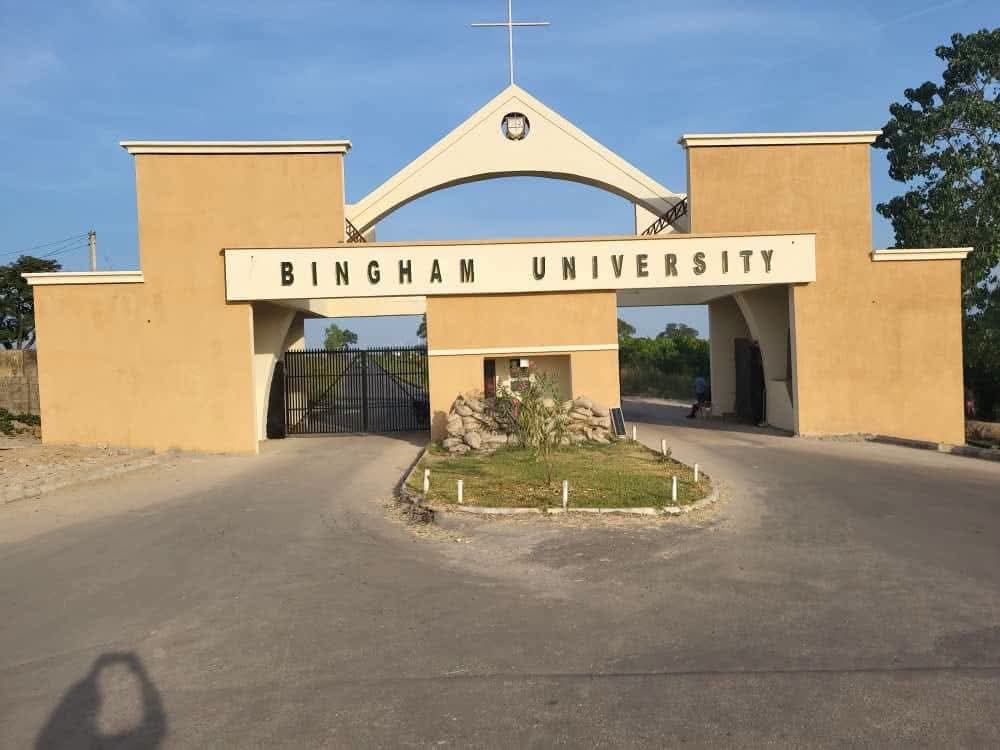
Bingham University College of Medical Sciences has graduated 911 doctors in its 20 years of existence, while expanding its academic programmes, clinical training, research and community health services.
The Provost of the College, Prof. Haroun Omeiza Isah, disclosed this during the institution’s 20th anniversary celebration, where he highlighted its growth since commencing operations in 2006.
Isah said the College, established by the Evangelical Church Winning All (ECWA), began at the temporary site of ECWA Theological Seminary in Jos before moving to its permanent campus in New Karu, Nasarawa State, while retaining clinical training facilities in Jos.
He said the upgrade of ECWA Evangel Hospital to Bingham University Teaching Hospital in 2010 strengthened clinical training in various medical specialities, including Surgery, Paediatrics, Internal Medicine, Obstetrics and Gynaecology, Psychiatry and Community Medicine.
The Provost also highlighted the hospital’s contribution to the management of infectious diseases, particularly Lassa fever, HIV, COVID-19 and Mpox.
According to him, the College conducted its first medical induction in 2015 with 19 pioneer graduates after securing the necessary regulatory accreditations.
He added that the institution had expanded beyond Medicine to include Nursing, Medical Laboratory Science, Radiography, Optometry, Human Anatomy, Physiology and Public Health, alongside postgraduate programmes.
Looking ahead, Isah said the College planned to strengthen research, infrastructure and technology, including the establishment of a Clinical Skills Laboratory and a Centre for Global Health Research and Development.
He also identified artificial intelligence and international research partnerships as areas of future development.
The Deputy Provost and Chairperson of the Central Planning Committee, Prof. Joy Shuaibu, described the anniversary as an opportunity to thank God for the College’s growth and achievements over the past two decades.
In his anniversary public lecture titled, “Christian Medical Education and the Future of Health Care in Nigeria,” the Secretary-General/Director-General of the Christian Health Association of Nigeria (CHAN), Dr. Suleiman Mshelia, commended the institution for sustaining its vision.
Mshelia, however, expressed concern over the migration of doctors and other health professionals, calling for improved working conditions, better remuneration, stronger primary healthcare and expanded postgraduate training opportunities to retain skilled personnel in the country.
He urged Christian medical institutions to produce not only competent medical professionals but also ethical practitioners committed to compassionate care, research and service to underserved communities.
Mshelia further challenged the College to use its next 20 years to deepen its contributions to healthcare delivery, medical education and research in Nigeria.