


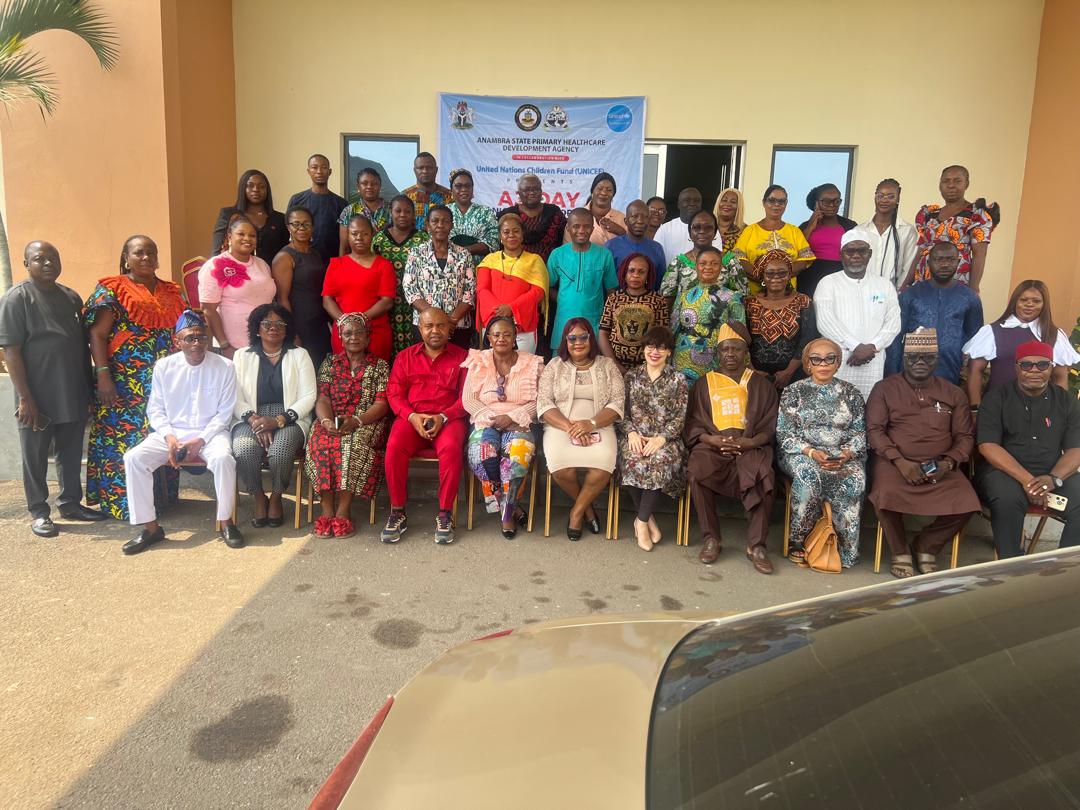
Stakeholders in the nutrition sector have emphasized the need for stronger coordination, improved data accountability, and increased government ownership of nutrition programmes to address malnutrition across states in the South-East and North-Central zones.
This call was made during a three-day Zonal Nutrition Coordination Meeting for Implementing Partners (IPs) held at the Golden Tulip Hotel, Agulu, Anambra State, from 25–29 January 2026, with support from UNICEF. The meeting brought together 41 participants, including 13 males and 28 females, from Abia, Anambra, Benue, Cross River, Ebonyi, Enugu, Imo, and Kogi States, comprising Permanent Secretaries, State Nutrition Officers, health officials, and development partners.
Declaring the meeting open, UNICEF Chief of Field Services, Ms. Judith Leveillee, stressed that nutrition outcomes are results-based and multisectoral, noting that nutrition “cannot improve in isolation.” She urged participants to strengthen service delivery, think innovatively, and integrate nutrition interventions with birth registration, social protection, and other sectoral policies.
In a statement on Sunday, Benue State Chairman, Food and Nutrition and covering Permanent Secretary, Benue State Planning Commission, Orinya Ogenyi, said a consolidated review of the 2025 Nutrition Programme Performance was presented by Mrs. Ngozi Onuora, Zonal Coordinator of Enugu, highlighting key achievements, challenges, and lessons learned across participating states. She noted that programme implementation was guided by UNICEF’s Country Programme Document, which focuses on three priority outputs: enabling environment, systems strengthening, and improved diets and practices, while addressing cross-cutting issues such as equity, gender, accountability, and partnerships.
According to the statement, major achievements recorded in 2025 included the conduct of State Committee on Food and Nutrition (SCFN) quarterly meetings for three to four quarters in Abia, Benue, Cross River, and Enugu States. In addition, Local Government Committees on Food and Nutrition (LGCFN) were established across several states, with 42 committees in Cross River, 16 in Enugu, and 11 in Ebonyi, as well as in Benue, Abia, and Anambra States. The SMART nutrition survey was also successfully implemented across all five domains in Benue State, alongside the onboarding of nutrition commodities into the National Health Logistics Management Information System (NHLMIS).
It further states that despite these gains, the programme faced significant challenges, including weak coordination across sectors, delayed release and utilization of funds, and inadequate accountability and use of data for decision-making. Highlighting lessons learned, Mrs. Onuora emphasized that early and sustained engagement with state and local government leadership, coupled with focused advocacy and high-level policy dialogue, is critical to achieving improved nutrition outcomes for children.
A review of 2025 nutrition programme performance highlighted key achievements, including regular State Committee on Food and Nutrition (SCFN) meetings in several states, establishment of Local Government Committees on Food and Nutrition (LGCFN), successful implementation of the SMART survey in Benue State, and integration of nutrition commodities into the National Health Logistics Management Information System (NHLMIS). Despite these gains, participants identified major challenges such as weak coordination, delayed funding releases, inadequate use of, and poor reporting practices. It was observed that many states failed to use standard reporting templates, lacked clear indicators and targets, and did not adequately document programme results.
Presenting the 2026 nutrition strategy, UNICEF officials raised concerns over increasing food insecurity and stagnant Severe Acute Malnutrition (SAM) rates, which remain at an average of 1.8 per cent. Abia and Anambra States were identified as high-burden states in 2024, underscoring the need for accurate data reporting and evidence-based planning.
Key priorities for 2026–2027 include revitalization of LGCFNs, strengthening monitoring and evaluation systems, integration of nutrition data into DHIS2, expansion of social and behaviour change communication strategies, and stronger collaboration across Ministries, Departments, and Agencies (MDAs).
Wrapping up the sessions, a consultant, Dr. Ugwunta cautioned that declining donor funding makes it imperative for states to take ownership of nutrition programmes. He stressed that nutrition challenges are multisectoral and require effective planning, financing, implementation, reporting, media visibility, and use of technology.
The meeting ended with a renewed commitment by participating states and partners to strengthen collaboration and scale up high-impact nutrition interventions, in line with UNICEF’s vision that every child has the right to survive and grow to full potential.