

By Nguagee Dorathy
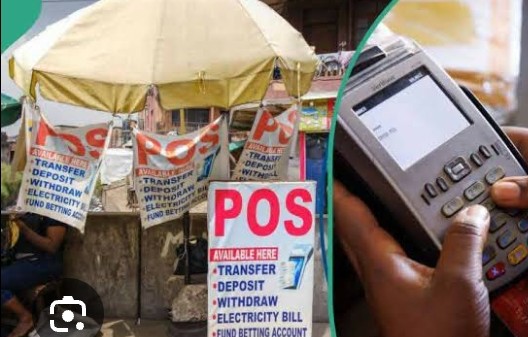
As early as 7:00 a.m. in the morning, the streets of Wurukum in Makurdi are already a beehive of activities. Motorcycles riders are moving in different directions, traders are opening their shops, and people are in a hurry to start their day. Beside a small provision store with faded paint, Esther Iorfa, a Point of Sale (POS) operator, carefully sets up her stand. She places a small wooden table and a plastic chair, connects her POS machine to a power bank, and positions a roll of receipt paper, then wipes her face with a small towel. Another long day of hustle has begun.
Esther has been operating her POS business in Wurukum for almost three years. She wakes up every morning by 5:30 a.m. so she can prepare early and get to her spot on time. As she recounts, coming out late means losing customers, and as such, her wages. Before she sits down properly, her first customer arrives. It is an elderly woman who needs cash to buy foodstuff for the house. Esther collects the ATM card, types carefully on the POS machine, and waits. After a few seconds, the machine beeps and shows “transaction successful”. Esther smiles softly. Starting the day well gives her hope.
Esther did not always plan to become a POS operator. After her secondary school education, she searched for a job but could not find one. She stayed at home for a long time, depending on her parents and feeling unhappy. Later, with help from her elder brother, she raised some money and decided to start a POS business so she could support herself and her family.
As the morning goes on, more customers gather around her table. Traders, students, and okada riders come to withdraw money. Some complain about bank charges, while others get angry when the network is slow. Esther remains calm and explains things patiently. Sometimes transactions fail, and customers become upset. Some shout, while others accuse her of collecting their money. Esther explains that bank reversals take time and asks them to be patient. She says the job has taught her how to control her temper, even when people speak to her badly.
In a day, Esther makes different amounts depending on how busy the day is. She says on a good day, she makes between 6,000 naira and 7,000 naira as profit. However, on days that are not so favourable, she makes less. And in a month, Esther makes an average of 90,000 naira to 120,000 naira. From this business, Esther has been able to support her parents, pay her personal bills, and save some money. She recently bought a new phone and a better power bank from her savings. She also plans to increase her capital in the future.
Not far from Esther’s location, across the River Benue at North Bank close to the fruit market, Samuel Terna is also facing his own day. He places his table under a mango tree to protect himself from the sun. His POS machine, two mobile phones, and record book are arranged neatly in front of him. Samuel, 29 years old, has been a POS operator for four years. He studied Business Administration but could not get a job after school. After staying at home for many months, he decided to start a POS business as a way to survive.
By mid-morning, Samuel’s stand is surrounded by customers. Keke riders need fuel money, traders want change for business, and students are in a hurry to get cash. Like Esther, Samuel also faces network problems. When the network fails, customers think it is their fault, he says. Samuel remembers a painful experience that almost made him quit the business. One day, a customer showed him a fake transfer alert. Before Samuel realized what was happening, he had already given out the money. He lost a large amount that day. That day was very painful, he says. He could not sleep well. Since then, Samuel checks every alert carefully, no matter how long it takes. He says it is better for customers to complain than for him to lose money.
Samuel says his income varies daily. On average, he makes between 5,000 naira and 7,000 naira profit daily. In a month, Samuel earns about 110,000 naira to 150,000 naira. From the POS business, Samuel has achieved a lot, he has been able to pay his house rent, support his younger siblings in school, and save some money. He recently bought a used motorcycle to help him move around easily.
Although Esther and Samuel work in different parts of Makurdi, their experiences are very similar. Both of them deal with fake alerts, network problems, and impatient customers. Both of them sit outside under the sun for long hours. Both of them worry about security because they handle cash in an open place.
Esther explains that sometimes local government officials come to collect levies that eventually affect their capital base. Most of these taxes are tagged as daily tickets or market fees. She says even when business is slow, they still collect what’s theirs. Samuel also shares the same concern. According to him, multiple charges from local authorities affect their profit. After bank charges, network issues, and taxes, what is left is small, he says. They hope the government should support small business owners instead of adding more pressure in taxes.
Esther says she is always careful in the evening. She avoids staying out late because of fear of robbery. Samuel also closes early for the same reason. According to him, safety is more important than profit.
The work is not without its health hazards. Esther often complains of back pain from sitting for too long. Sometimes she forgets to eat because she is too busy attending to customers. Samuel also suffers from headaches and body pain, especially on very hot days.
Despite all these challenges, there are moments that make the job meaningful. Esther feels happy when she helps people during emergencies, especially when banks are crowded or closed. Samuel feels proud when customers thank him or bring others to his stand.
As evening approaches, Esther begins to pack her things in Wurukum. At North Bank, Samuel also counts his money and records his transactions for the day. Their earnings may not be much, but the money helps them pay bills and support their families. Both Esther and Samuel hope for a better future. Neither of them wants to remain a POS operator forever. Esther dreams of expanding into a bigger business, while Samuel hopes to start something better with time.
To many people passing by, they are just POS operators sitting on plastic chairs by the roadside. But behind the small tables are two young people working hard every day to survive in a difficult economy.
Nguagee Dorathy is an IT Student, Mass Communications, Rev Fr Moses Orshio Adasu University.