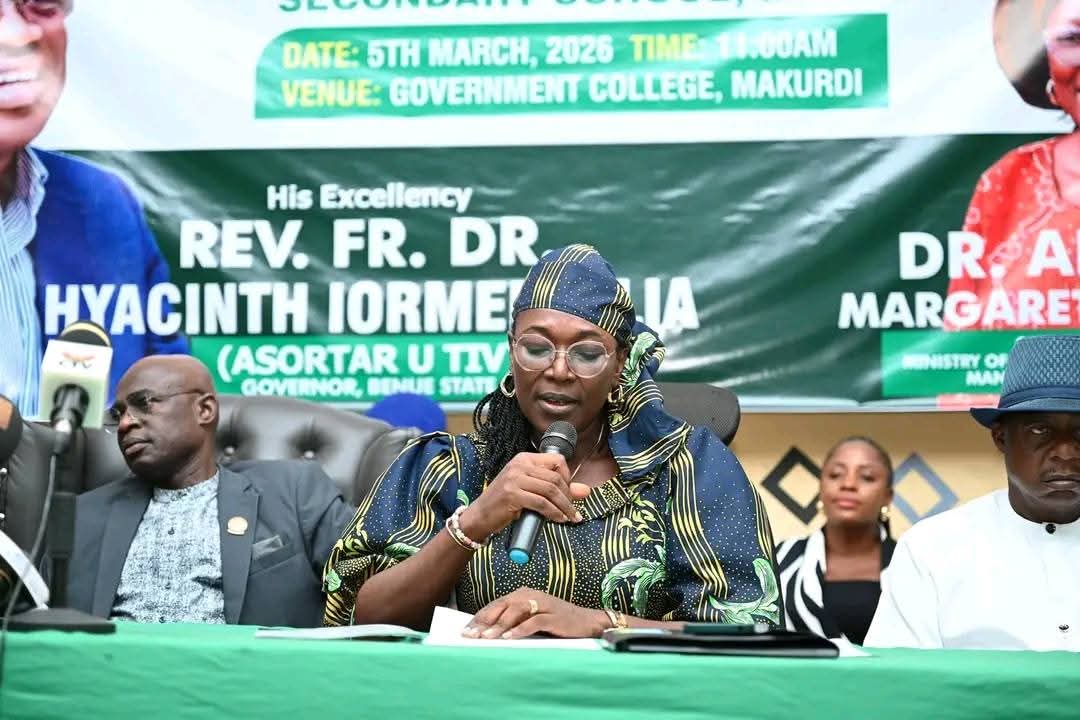



Professor Amana Onekutu has called for a paradigm shift in insect pest management, urging farmers, researchers, policymakers, and industry stakeholders to embrace eco-friendly strategies that protect crops while safeguarding human health and the environment.
“Delivering the 96th Inaugural Lecture of Joseph Sarwuan Tarka University, Makurdi (JOSTUM), titled “Winning Without Poison: Advancing Eco-Friendly Strategies in the War Against Insect Pests,” on Wednesday at Aper Aku Hall, Northcore, Prof. Onekutu argued that the future of pest control lies not in the excessive use of synthetic chemicals but in sustainable, science-driven approaches that work in harmony with nature.”
The Professor of Crop Protection highlighted biological control, host plant resistance, cultural practices, behavioural manipulation, botanical pesticides, and Integrated Pest Management (IPM) as viable alternatives capable of delivering effective pest control without compromising ecological balance.
According to him, these environmentally responsible strategies are redefining pest management from a relentless campaign of eradication to a system of intelligent regulation and coexistence.
“The future of insect pest management lies in a more balanced and sustainable approach. These eco-friendly strategies demonstrate that effective pest control can be achieved while preserving ecological balance,” he stated.
Prof. Onekutu described the concept of “winning without poison” as more than a scientific aspiration, insisting that it has become an economic, environmental, and moral imperative in the face of growing concerns over chemical pesticide dependence.
He noted that decades of reliance on synthetic insecticides have delivered quick results but have also triggered serious challenges, including pest resistance, environmental contamination, destruction of beneficial organisms, and food safety concerns.
The university don stressed the need for continuous research, innovation, and adoption of sustainable technologies capable of protecting crops, conserving biodiversity, and guaranteeing food security for future generations.
“The future of insect pest management lies not in escalating the chemical arms race against pests but in harnessing nature’s own defences through science-driven, environmentally responsible, and farmer-friendly innovations,” he said.
He further urged governments, researchers, extension workers, industries, and farmers to forge stronger collaborations aimed at promoting sustainable pest management practices that protect human health, preserve biodiversity, and enhance agricultural productivity.
Prof. Onekutu maintained that the war against insect pests should not be won at the expense of environmental integrity or the well-being of future generations, emphasizing that sustainable solutions remain the surest path to resilient agriculture.
Earlier, the Vice-Chancellor of JOSTUM, Engr. Isaac Itodo, congratulated Prof. Onekutu on the academic milestone, describing inaugural lectures as a vital indicator of the university’s intellectual vibrancy and research excellence.
He reaffirmed the institution’s commitment to sustaining the inaugural lecture series as a platform for advancing scholarship, innovation, and knowledge dissemination.