

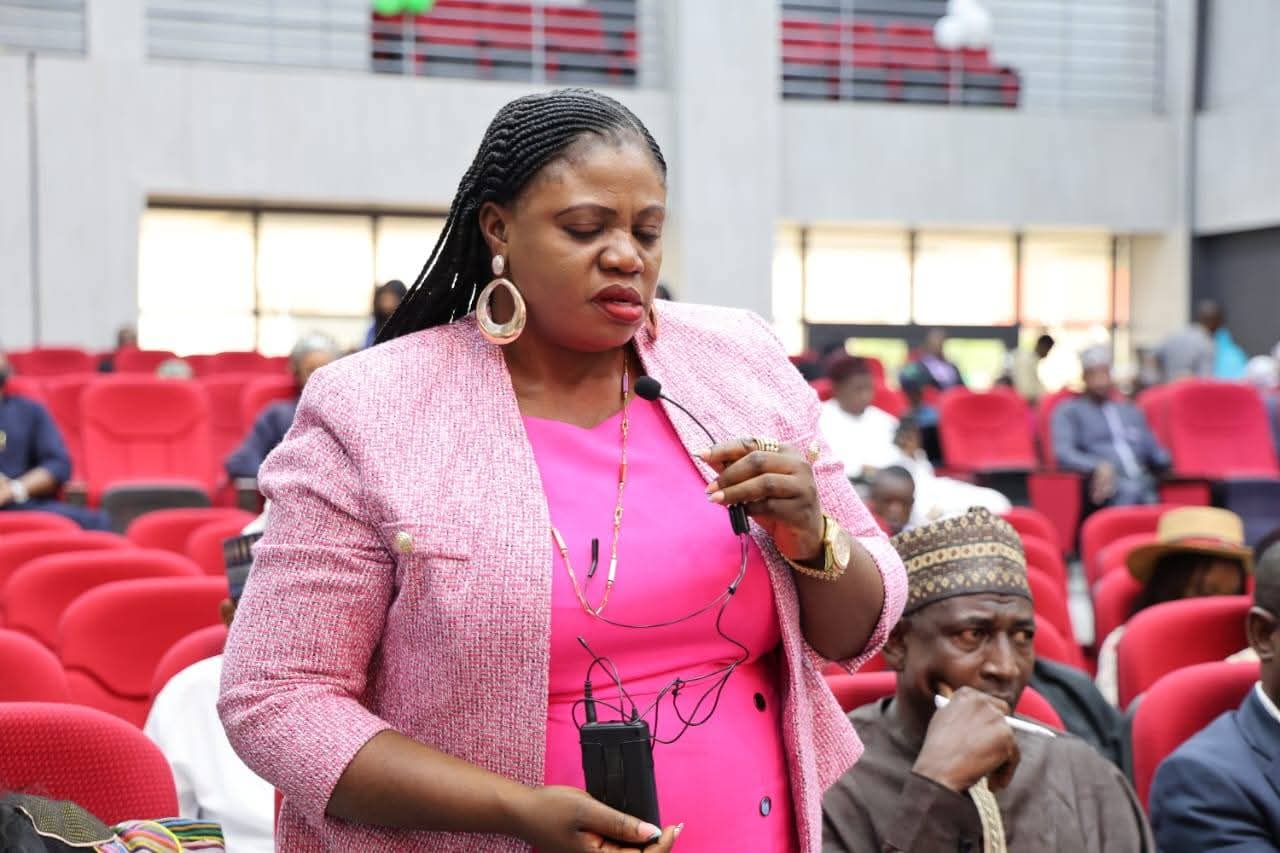
In the dusty classrooms of rural Benue, where children once learned under trees and teachers waited months for salaries, a quiet revolution is underway. At its center is Dr. Grace Adagba, Executive Chairman of the Benue State Universal Basic Education Board (SUBEB), whose leadership is being credited with restoring hope to the state’s public primary education system.
Her work has not happened in isolation. Observers say the transformation has been made possible by the enabling environment created by her principal, Governor Rev. Fr. Dr. Hyacinth Iormem Alia. Together, they have set out to reverse decades of decay and reposition basic education as the foundation of Benue’s future.
Before 2023, Benue’s public primary schools told a story of abandonment. More than 1,000 projects had been left uncompleted across communities. Roofs were missing, boreholes were dry, and learning materials rarely arrived. In many villages, pupils sat on bare floors while funds meant for classrooms allegedly vanished into private hands.
The consequences were predictable: soaring dropout rates, poor learning outcomes, teacher absenteeism, and a mass exodus of parents to private schools they could barely afford. For many, the idea of quality public education in Benue had become a distant dream.
Dr. Adagba’s appointment marked a turning point. A former lecturer in the Department of Physics at Rev. Fr. Moses Orshio Adasu University, Makurdi, she came into office with a clear mandate: restore integrity, accountability, and dignity to basic education.
One of her first moves was to confront the financial leakages that had long plagued the system. Through administrative reforms and stricter controls, SUBEB began to cut off the channels through which public funds were diverted.
Her most celebrated reform has been the introduction of direct electronic payment of teachers’ salaries. By paying salaries straight into teachers’ bank accounts, the Board eliminated the delays, unlawful deductions, and ghost payments that had demoralized staff for years.
“Salary deductions and omissions were among the most frequent issues teachers brought before the Board,” said Mrs. Christiana Aver of LGEA Primary School, Wurukum. “Some deductions accumulated for as long as fifteen months. Since this administration came on board, we have not experienced such deductions again.”
Alongside salary reforms, the Board launched biometric verification and regular personnel audits to weed out “ghost workers” from the payroll, a move that has saved millions and restored credibility to the system.
Education reform in Nigeria requires more than good intentions. Under Section 11(2) of the Universal Basic Education Act, 2004, states must provide 50% counterpart funding to access matching grants from UBEC.
The Alia administration has met that obligation consistently. As a result, Benue has unlocked UBEC intervention funds and embarked on one of the most ambitious school infrastructure programs in its history.
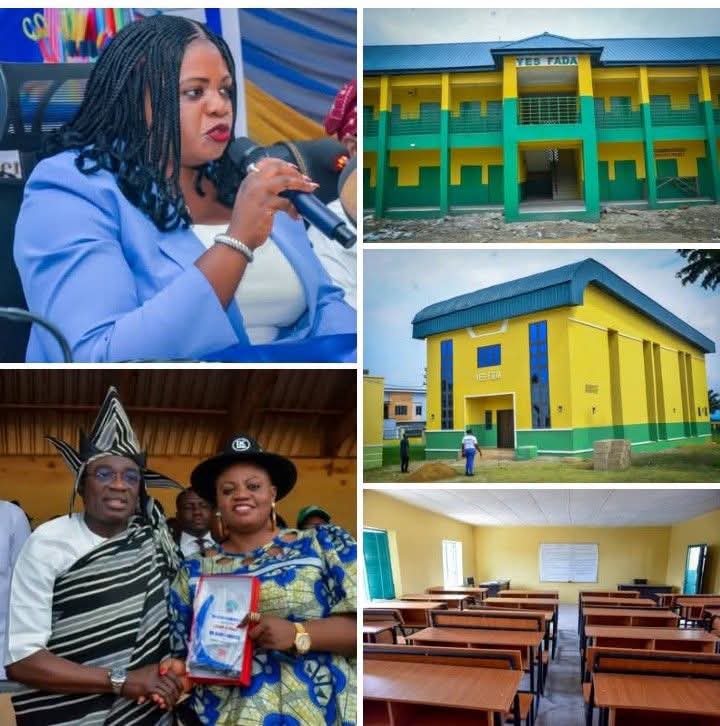
Today, standard storey classroom blocks are under construction in over 250 public primary schools across all 23 local government areas. New buildings, perimeter fencing, boreholes, and solar power are replacing dilapidated structures and open-air lessons.
For parents and communities, the change is visible. For pupils, it means safer, more attractive environments where learning can actually happen.
Dr. Adagba insists that infrastructure alone is not enough. Her administration has placed equal emphasis on academic excellence, technology, and teacher development.
In May 2026, Benue’s SUBEB Debate Team won a bilateral competition in Indonesia organized by the President’s Schools Debate Nigeria in partnership with Nigeria and Indonesia’s Ministries of Education. It was proof, she says, that with the right support, children from Benue’s public schools can compete globally.
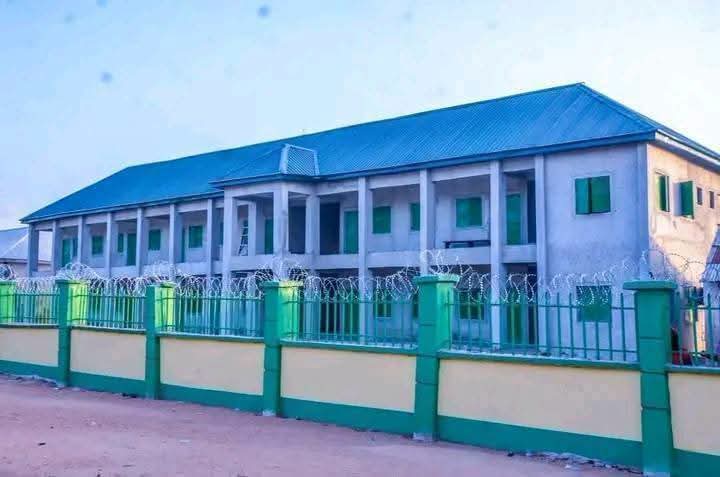
To prepare more pupils for that future, ICT centers equipped with computers are being established in schools across the state. The goal is to introduce digital literacy early, bridge the urban-rural divide, and make learning more engaging and practical.
Inside SUBEB itself, the Board has modernized its operations with new office blocks, a Digital Resource Centre with over 30 computers, and improved power and water facilities, all aimed at boosting efficiency.
Unlike many administrators who rely on reports, Dr. Adagba is known for showing up. She regularly inspects schools and project sites across the state, interacting directly with teachers and contractors.
“Payments on our projects are based on valuation,” she told journalists during one inspection. “It is how much you have done at each stage of execution that determines how much you are paid.” That insistence on value for money has become a hallmark of her tenure.
A trained educator herself, Dr. Adagba believes no system can rise above the quality of its teachers. She has championed training and retraining programs, and pushed for partnerships with institutions like the British Council to expose Benue teachers to global best practices.
At the 2026 National Teachers’ Summit in Abuja, she argued that teachers are “the backbone of every meaningful educational reform.” Earlier in the year, during a visit to UBEC Executive Secretary Aisha Garba, she advocated for direct federal payment of teachers’ salaries once local government autonomy takes full effect, a proposal aimed at guaranteeing financial security for teachers.
She also secured land from Governor Alia for a proposed modern Teacher Training Centre in Benue, to be funded through UBEC matching grants.
In February 2026, SUBEB hosted the maiden Benue Basic Education Summit in Makurdi, themed “Innovative Strategies for Addressing the Menace of Out-of-School Children.” The summit brought together government officials, traditional rulers, religious leaders, and development partners.
A major outcome was the launch of the BRACE-UP project-Building Rights to Access and Compulsory Education for Un-enrolled Pupils. The initiative mobilizes communities to identify out-of-school children and track them through to completion of basic education, addressing barriers of poverty, geography, and culture.
Dr. Adagba’s influence extends beyond education. She organized a competition for Tiv folkloric singers that drew 28 contestants, using culture to promote Governor Alia’s development agenda. She has also backed women’s empowerment and grassroots mobilization efforts.
Colleagues describe her as humble, disciplined, and accessible, a leader who shows up, listens, and delivers. The Voice Newspaper, Benue’s state-owned publication, has documented SUBEB’s activities almost daily since she assumed office.
Her work has not gone unnoticed. Governor Alia has publicly commended her “dedication and relentless efforts in ensuring that basic education in the state remains a moving train.” Stakeholders now call her “The Transformer,” “The Reformer,” and “Champion of Basic Education in Benue.”
History will likely remember Dr. Grace Adagba not just as another SUBEB chairman, but as an architect of renewal. Her tenure has combined prudent financial management, infrastructural renewal, investment in people, and a relentless focus on transparency.
The true measure of her legacy, however, will not be in the number of classrooms built or policies signed. It will be in the children now sitting in proper classrooms, the teachers paid on time, and the communities that once again believe in public education.
If the current momentum holds, Dr. Adagba will be remembered as the woman who helped lay the foundation for a stronger, more inclusive, and globally competitive basic education system in Benue, one that will shape generations yet unborn.