

The Benue State Government has reaffirmed its commitment to protecting the dignity and rights of Adolescent Girls and Young Women (AGYW), ensuring equality and improving their access to justice and non-discriminatory healthcare services.
The Attorney General and Commissioner for Justice, Benue State, Prof. Timothy Ornguga, stated this in Makurdi during a two-day training on “Non-Discriminatory and Trauma-Informed Healthcare for Highly Vulnerable AGYW in Benue State.”
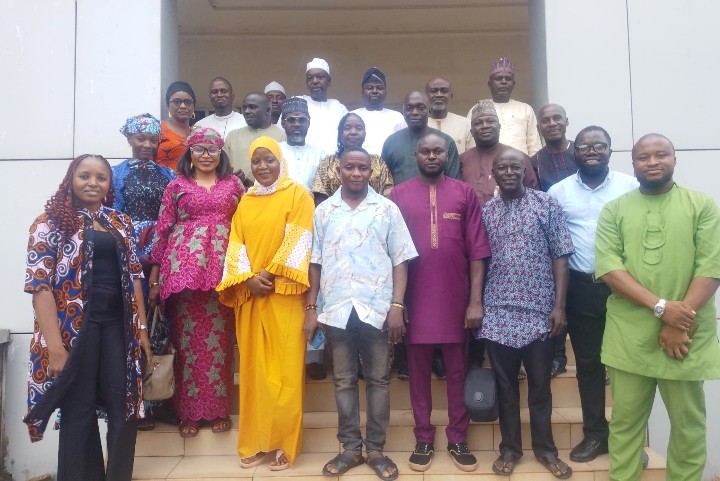
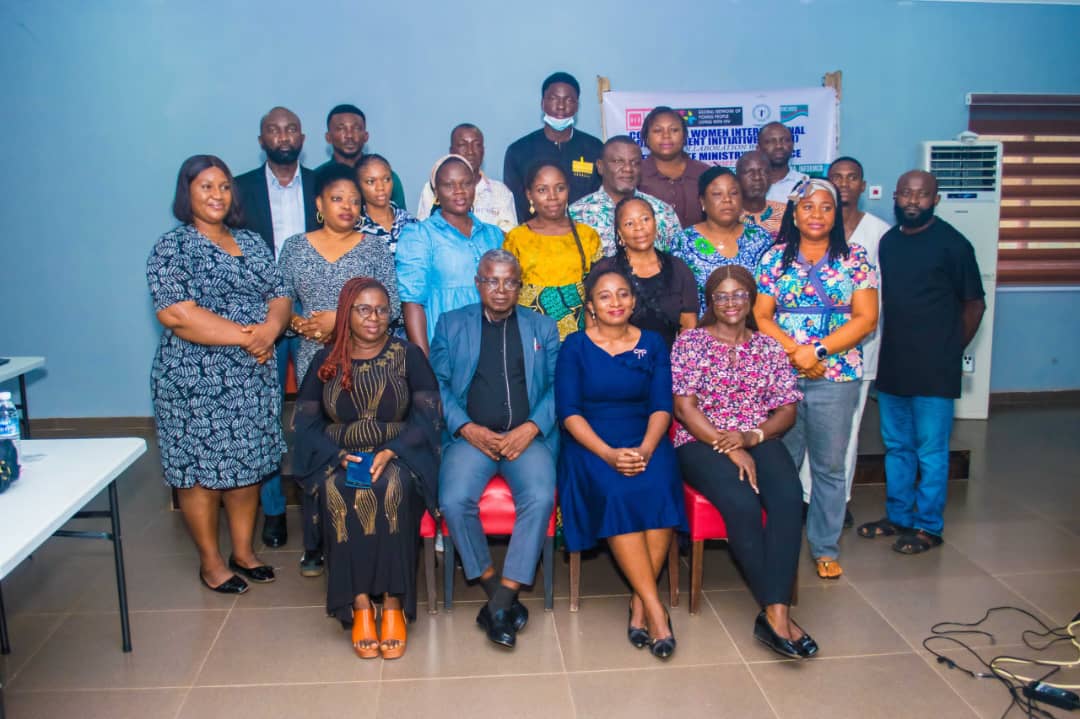
The training, organised by the Concerned Women International Development Initiative (CWIDI) in collaboration with the Benue State Ministry of Justice, with support from GEF and Y+ Global, was held at Monatel Hotel, Makurdi, under the theme: “Building Compassionate and Survivor-Centred Healthcare.”
Addressing participants, facilitators, partners and other stakeholders, Ornguga said healthcare workers have a responsibility to ensure that every girl or young woman who seeks medical attention is treated with dignity, regardless of her circumstances.
“It gives me pleasure to welcome all participants, facilitators, partners and stakeholders to this important training. For healthcare workers, this means that a girl or young woman who comes to a health facility must be received as a person with rights and dignity, not as a problem, moral offender or mere case file,” he said.
The Commissioner stressed that no AGYW should be discriminated against on the basis of age, sex, clothing, marital status, disability, economic circumstances, displacement, alleged conduct or any other personal circumstance.
He urged healthcare workers to limit questioning to information necessary for safe care, documentation and appropriate referral, warning against questions or comments that could embarrass, shame or morally judge survivors.
According to him, the health facility is often a survivor’s first point of contact before the police, lawyer or court, and the treatment received at that stage can determine whether the survivor feels safe enough to pursue protection and justice.
Ornguga cited a recent decision of the Delhi High Court of India in State vs. Sajid Ali, delivered on August 10, 2026, by Hon. Justice Chandrasekharan Sudha, saying the court condemned cross-examination focused on a survivor’s clothing and emphasised that a woman’s choice of attire should not be regarded as justification or condonation for unlawful conduct.
“That principle has a wider lesson for every professional institution: clothing is not consent, and a survivor’s dignity must not become collateral damage in the search for an explanation for another person’s misconduct,” he said.
He noted that Benue State’s legal framework, including the Violence Against Persons (Prohibition) Law and the Child Rights Law, provides important safeguards against violence, abuse and exploitation.
However, he stressed that the protections contained in these laws must be translated into everyday professional practice.
The Justice Commissioner urged healthcare workers to uphold confidentiality, informed communication, accurate documentation, respectful treatment and effective referral pathways. He also encouraged participants to approach the training with openness and a willingness to critically examine existing practices.
He said healthcare facilities should be places where survivors can seek help without fear of humiliation, stigma or blame.
Ornguga commended CWIDI for organising the programme and said the fight against gender-based violence could not succeed if healthcare workers, the Ministry of Justice, psychosocial service providers and social protection agencies worked in isolation.
He pledged the continued support of the Ministry of Justice for partnerships and programmes aimed at improving access to justice and protection for women, girls and other vulnerable persons.
Speaking on the objective of the training, the Executive Director of CWIDI, Becky Gbihi, said the programme was designed to ensure that healthcare workers protect human dignity while providing services to AGYW, particularly those considered highly vulnerable.
She identified adolescent orphans, girls with disabilities, sex workers and girls living in Internally Displaced Persons (IDP) camps among those who may face heightened vulnerability.
“Those categories are more vulnerable, and because they are already traumatised, whenever they receive negative treatment or comments from health workers, they withdraw, and this could cause them to break down further.
“So, the essence is for health workers to deliver services with a human face by respecting and protecting the dignity of AGYW seeking healthcare, ensuring that they have access to holistic healthcare and referring them appropriately,” Gbihi explained.
She expressed optimism that the training would equip participants to go beyond immediate medical treatment by appropriately directing survivors to other essential services, including psychosocial support.
In a presentation titled “Understanding Gender, Equality, Gender-Based Violence, GBV, and Violence Against Women and Girls,” a representative of the Ministry of Justice, Timothy Tion, explained gender roles, social norms, equality and the different forms of gender-based violence.
Tion also took participants through relevant provisions of the Benue State Violence Against Persons Prohibition (VAPP) Law of 2019 and the Child Rights Law of 2008.
He stressed the importance of equal opportunities, noting that denying people opportunities on the basis of gender violates fundamental human rights and perpetuates inequality.
Also speaking, Dr. Kwasedoo Ngbea, a Senior Lecturer in the Department of Psychology, Moses Orshio Adasu University, Makurdi, delivered a paper titled “Understanding the Health, Psychological and Social Impact of GBV on AGYW and Principles of Survivor-Centred Care: Safety, Confidentiality, Respect, Non-Discrimination and Informed Consent.”
Ngbea said the rights, needs, safety, dignity, choices and autonomy of survivors must remain paramount in the provision of healthcare.
She advocated respectful, confidential and non-judgmental support for survivors, noting that the health, psychological and social consequences of gender-based violence on AGYW can be severe and long-lasting when not properly addressed.
Participants at the training commended the organisers for strengthening their capacity and called for increased awareness campaigns to educate young girls about their rights and available support services.
They said equipping frontline workers with the right knowledge and skills would help reduce stigma, encourage reporting and ensure that survivors receive holistic care without fear of discrimination, humiliation or judgment.