

The Benue State Ministry of Women Affairs and Social Welfare, in collaboration with the Nigerian Governors’ Forum, NGF, has commenced the domestication of the Women’s Economic Empowerment, WEE, Policy Framework aimed at improving women’s access to finance, skills acquisition, agribusiness opportunities, and social protection across the state.
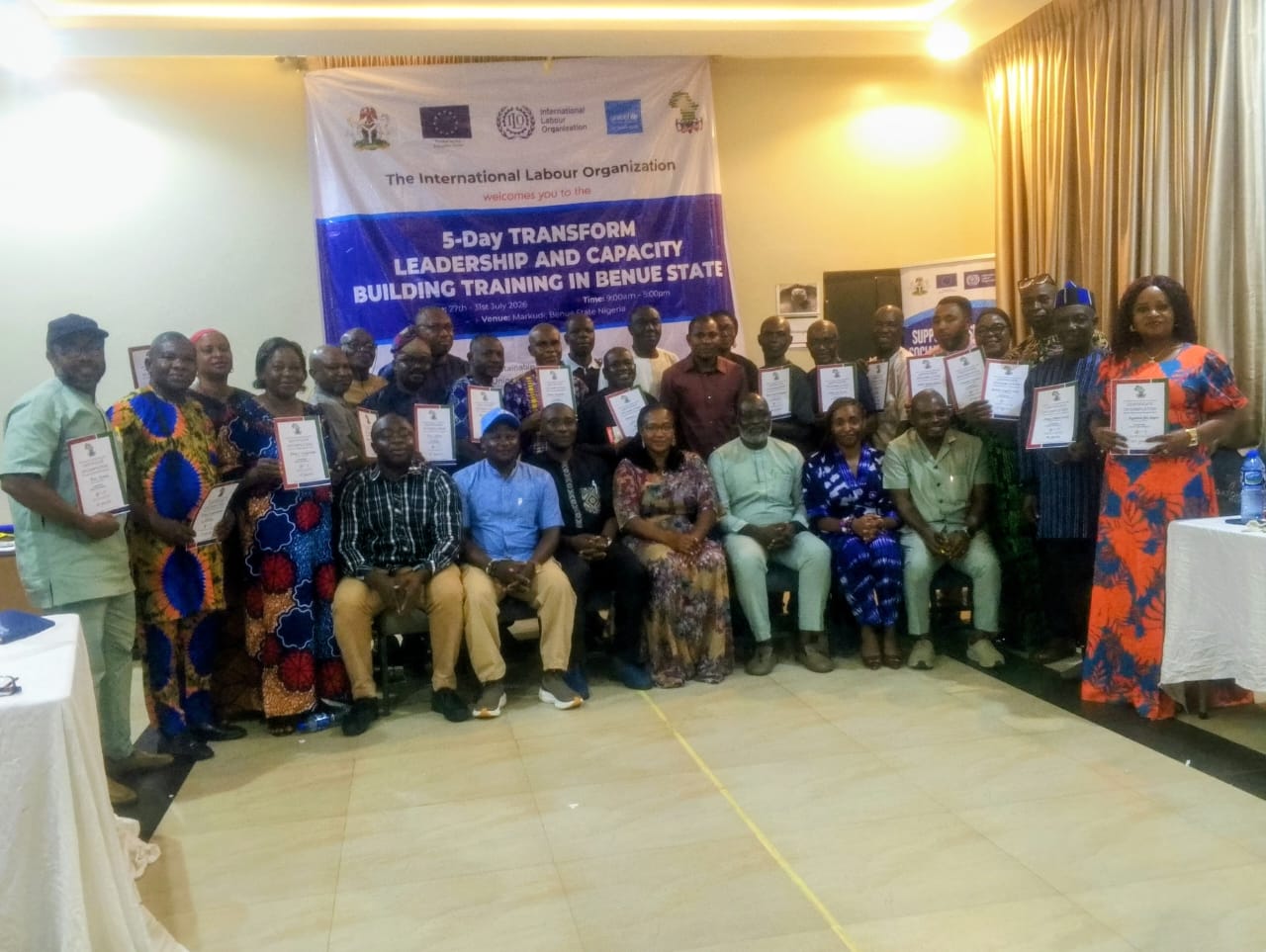
The initiative was marked by a five-day engagement and validation meeting held at the Planning Commission Hall, State Secretariat, Makurdi. The meeting brought together key stakeholders to review and adapt the national policy framework to meet the specific needs of Benue State.
Speaking at the event, the Commissioner for Women Affairs and Social Welfare, Hon. Theresa Odachi Ikwue, who was represented by the Permanent Secretary, Mrs. Martha Edor, said the administration of Governor Hyacinth Alia places the dignity, protection, and economic independence of women, persons with disabilities, and other vulnerable groups at the center of its development agenda.
She explained that the Women’s Economic Empowerment, WEE, Initiative is designed to address barriers limiting women’s access to finance, markets, land, vocational skills, and social protection, while providing a coordinated, inclusive, and measurable framework for implementing empowerment programs across the state.
“This meeting is part of our ongoing efforts to strengthen collaboration and enhance service delivery across the social welfare sector. Specifically, we are here to validate and strengthen implementation strategies for two critical instruments: the Women’s Economic Empowerment, WEE, Initiative and the Benue State Women’s Economic Empowerment Policy Framework,” she said.
The Commissioner urged stakeholders to identify gaps in disability-inclusive data collection, rural financial inclusion, and gender-responsive service delivery, while reaffirming the ministry’s commitment to translating the policy into tangible benefits for women in all 23 local government areas of the state.
In her opening remarks, the WEE Policy Framework Consultant, Prof. Mrs. Fumi Banjo, speaking on behalf of the Nigerian Governors’ Forum, commended the Benue State Ministry of Women Affairs and Social Welfare for taking steps to domesticate the policy.
According to her, the Nigerian Governors’ Forum resolved that implementing the Women’s Economic Empowerment Policy only at the national level would not adequately address the unique needs of individual states. Hence, the decision to support states in developing their own frameworks. She noted that only 15 states, including Benue, have so far demonstrated readiness to domesticate the policy.
“The programme is anchored on five pillars: Agriculture, Entrepreneurship, Labour Market, Emerging Industries, and Education and Skills. It is further supported by key accelerators such as financial inclusion, inclusiveness, support systems, and good governance. The mandate of the thematic groups is to identify where we are, and assess our strengths, weaknesses, opportunities, and threats,” she said.
Prof. Banjo explained that the Nigerian Governors’ Forum expects participants to provide a comprehensive diagnostic assessment of the situation in Benue State. She urged them to be honest and factual in identifying the issues and challenges affecting women’s economic empowerment.
She further disclosed that the validation exercise followed earlier focus group discussions on agriculture and entrepreneurship, and continued with a consultative workshop. Participants were divided into five thematic groups corresponding to the policy’s key pillars: Agriculture, Entrepreneurship, Education and Skills, Labour Market, and Emerging Industries, to review questionnaires and develop practical recommendations.
The event featured key informant interviews, focus group discussions, consultative workshops, and the validation meeting.
Participants were drawn from women’s groups, Civil Society Organisations, CSOs, Organisations of Persons with Disabilities, PWDs, religious and traditional institutions, as well as the media.