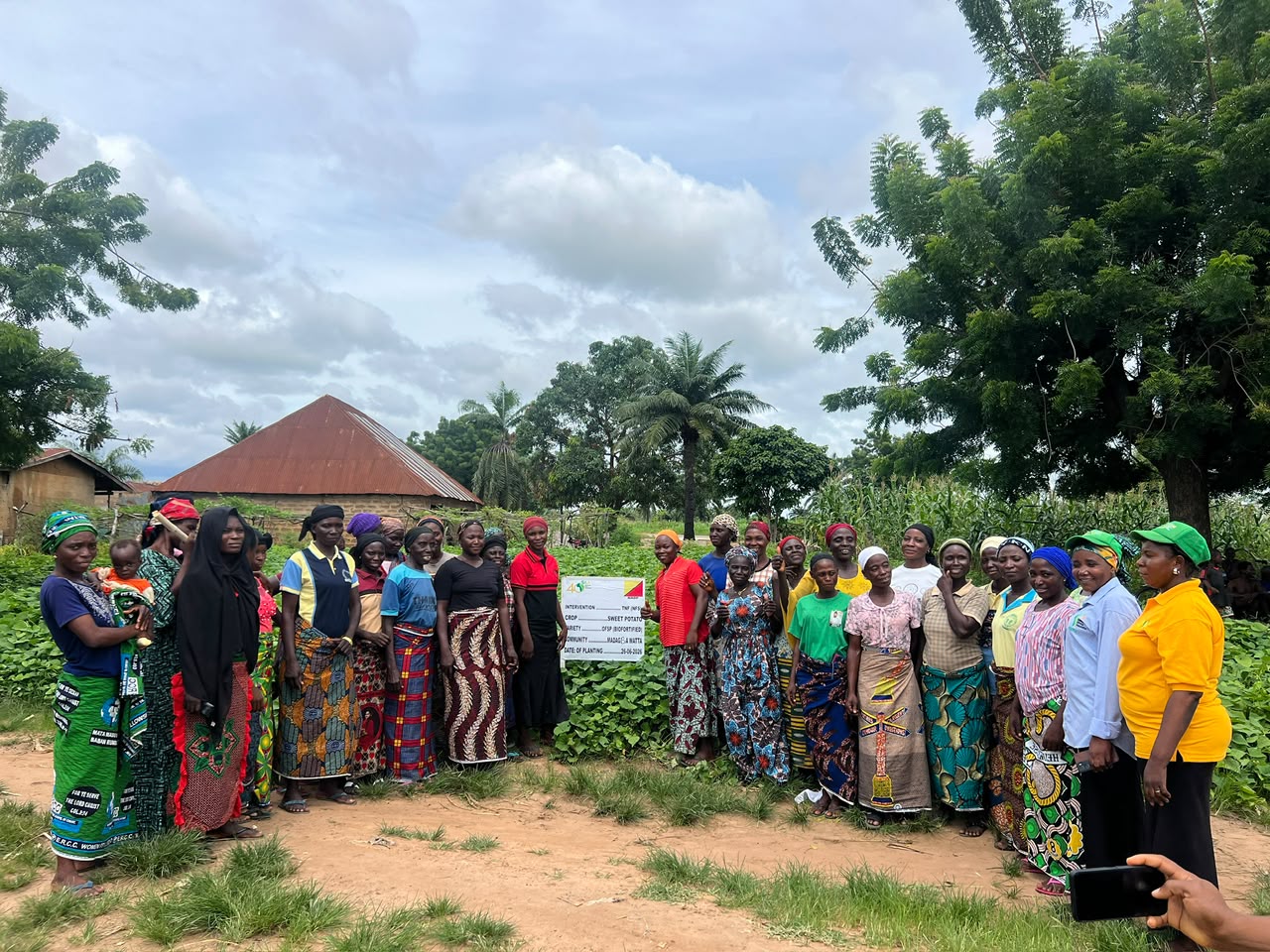


Rural farmers in Benue State, the food belt of Nigeria have embraced the new agricultural extension models aimed at keeping their crops viable and profitable. The new models deemphasized the application of fertilisers which prices are soaring daily beyond reach of average farmers. They are equally checks to recurring pests invasions on farms.
The new methods places emphasis on sustainable organic farming.To prove the huge advantages of these new models, the Sasakawa Africa Association (SAA), recently organised a demonstration farming in Cheedu, Gwer Local Government Area of Benue State with the aim to contrast the traditional reliance on expensive chemical inputs and the sustainable organic methods.
During the 2-day Media Field Tour organized by Sasakawa Africa Association (SAA-NIG), an initiative funded by Japan’s Nippon Foundation, to assess SAA’s 3-year project with local smallholder farmers, journalists were taken to project sites across the State to keep them better informed on their reportage.
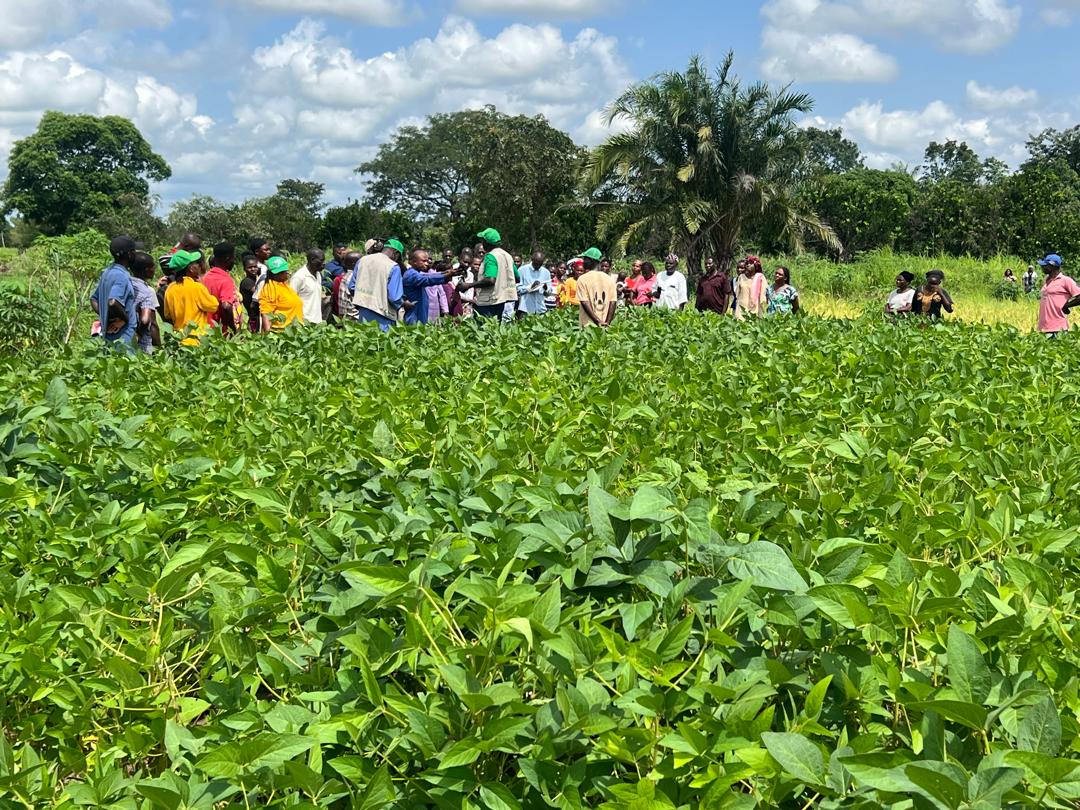
In Cheedu, Mary Ukamave, lead farmer of the Kasev Mba Iordye Multipurpose Cooperative, shared their experiences on the cooperative’s plot.Under the SAA-NIG-supported maize and soybean inter-cropping project. Ukamave said the group combined biochar and organic manure alongside conventional NPK chemical fertiliser to prepare the land and compare crop performance.
”We cleared the field, prepared the land, and planted our crops to test and compare how they grow. When pests attacked, the crops treated with manure remained strong and resilient, while the ones relying on chemical fertiliser suffered severe damage. The caterpillar attack destroyed most of the chemically fertilised crops, but the manure-treated plot stood firm,” Ukamave explained.
She noted that the manure-treated plot delivered significantly higher yields and heavier weight per kilogram.
”Chemical fertiliser is very expensive now, and its effect on the soil don’t last long. Manure improves soil health, protects against pests, and gives a lasting, high-quality harvest. It is a great farming method for us, and we strongly recommend it to everyone,” she added.
SAA-NIG is scaling this approach across eight local government areas in Benue, namely :Guma , Gwer, Gboko, Ushongo, Vandeikya, Tarka , Buruku and Konshisha in partnership with the Benue State Bureau for Agricultural Development and Mechanisation. The project integrates sustainable agronomy, community processing infrastructure, and certified seed production to help smallholders build stable incomes.
Beyond field management, the project addresses post-harvest processing, a longstanding bottleneck in Benue agricultural supply chain. In cassava-producing communities, processing cassava into garri manually had traditionally required grueling physical labour and long trips to commercial mills.
To solve this, SAA established an Improved Cassava Agro-processing Centre in Gwer LGA under its Safe, Adequate, and Nutritious Food Production and Utilisation programme. The facility features a solar-powered borehole to tackle local water shortages, a 5-ton-per-hour cassava grater, hydraulic pressers, and heavy-duty fryers.
Chief Atindi Tyom, a beneficiary of the center, said the facility has brought immediate relief to local households, particularly women.
”Processing cassava used to take us a long time and required immense labour. Before, processing cassava manually was tedious and exhausting. Now, women can process large quantities easily, quickly, and hygienic into high-grade garri without physical strain. The income generated helps households meet family needs and support our children’s education,” Tyom said.
To ensure long-term maintenance, Chief Tyom manages the facility as a local entrepreneur, providing commercial services to cooperative members at subsidised rates to keep profits within the local economy.
Explaining the project’s setup, Dr. Moshood Sulaiman, SAA-NIG Programme Officer for Safe, Adequate, and Nutritious Food Production and Utilisation, noted: “When we came into this community, we conducted a needs assessment. We discovered that while they produced a lot of cassava, they had to travel several kilometers to access processing equipment, leading to high production costs and extreme stress. We established this centre and a solar-powered borehole so they can have 24/7 access to clean water.”
In neighboring Luga-Mbatiav community in Gboko LGA, SAA focuses on commercial seed production to address the high cost of quality seeds, which has forced many farmers to reduce cultivated land or leave farming entirely.
Ronald Gbatsav, a local farmer, recalled his initial reluctance before joining SAA’s Community-Based Seed Multiplication project.
”Personally, I had decided not to farm this season. But when Sasakawa came in, I attended the meeting and decided to try the project. I prepared biochar and organic compost before cultivation. When I applied it on the farm and followed the instructions, the yield was impressive. Seeing is believing, and I now believe in what Sasakawa is doing,”Gbatsav said.
Instead of growing basic commercial grain, Gbatsav and his cooperative multiply high-yielding foundation seeds specifically the CGX 1951-3F soybean variety sourced from the Institute for Agricultural Research (IAR) in Zaria. The National Agricultural Seeds Council (NASC) inspects the fields three times per season to certify the seed for commercial sale to other regional farmers.
Mr. Jonathan Yassah, SAA-NIG Programme Officer for Inclusive Markets and Agribusiness Development, highlighted the commercial potentials of certified seed production.
”This is purely a business, not a demonstration plot. A bag of grain soyabean that costs 80,000 Naira can fetch around 200,000 Naira or more if certified as seed. We train farmers on enterprise management and good agronomic practices, while NASC supervises to certify the farm,” Yassah said.
He added that central to SAA’s strategy in Benue is shifting farmer mindsets from subsistence to commercial planning. “Most farmers don’t look at farming as a business, but we encourage them to shift from farming as a way of life to farming as a business. We promote ‘produce to sell’, meaning you secure a market before you even begin production.”
Mr. Nathaniel Otene, SAA-NIG Technical Coordinator for Climate-Resilient and Sustainable Agrifood Systems (CRASS), broke down the numbers for a standard half-hectare plot.
”With proper management, a half-hectare plot can produce at least 12.5 bags of 100 kg foundation seeds,” Otene explained. “At market prices of 2,200 to 2,500 Naira per kilogram, a group can earn over 2.7 million Naira from an initial investment of under 500,000 Naira,” he said.
Mr. Moses Nongoatse, Communication Officer of SAA-NIG, emphasised that the program relies directly on public extension infrastructure to ensure lasting impact.
”We are currently working across eight local government areas with 15 extension agents seconded to us by BNARDA under the State Ministry of Agriculture. Each extension agent works with four farmer groups of 25 members, giving us 1,366 direct beneficiaries and over 8,950 indirect beneficiaries across Benue State,” he said.
By combining soil conservation, mechanised processing, and certified seed production, local farmers across Benue are building practical, self-sustaining agricultural businesses.