


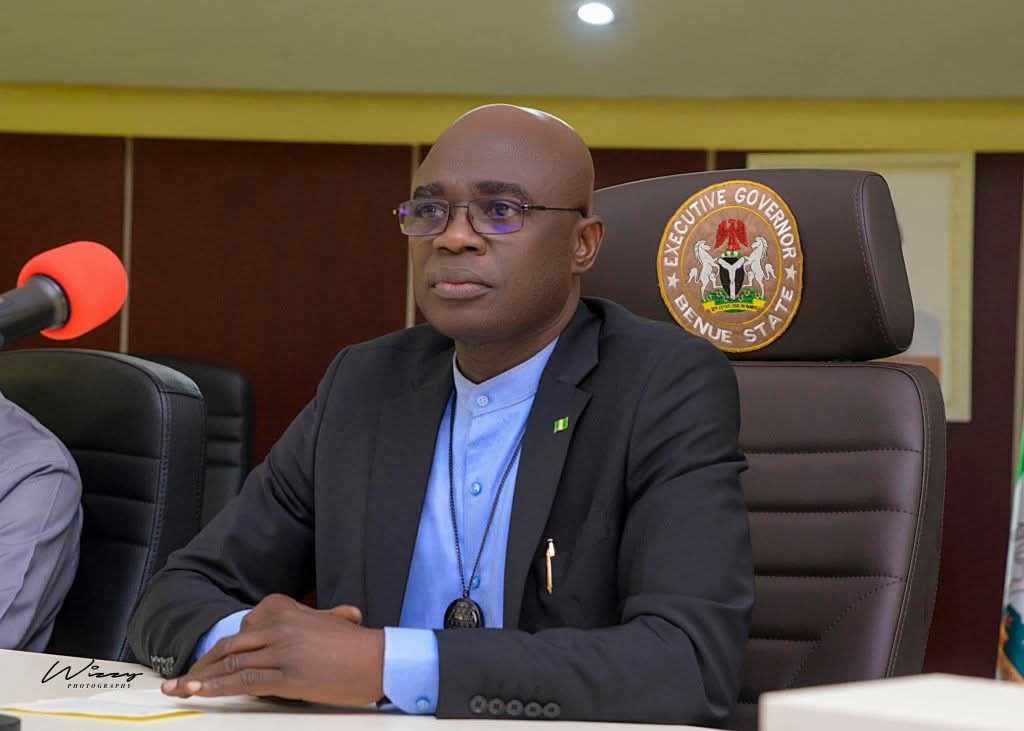
By Peter Oboh Egbodo
Quiet diplomacy, firm resolve. In times of tension and insecurity, leadership is not always about loud declarations or dramatic headlines. Sometimes, it is about deliberate, strategic, and quiet engagements that yield lasting solutions. That is exactly what the Governor of Benue State, His Excellency, Rev. Fr. Dr. Hyacinth Iormem Alia, demonstrated in his recent peace mission to Taraba State on 2nd March, 2026.
The Governor undertook what can best be described as a courageous and painstaking journey to Wukari in Taraba State. His mission was clear and purposeful: to interface with his counterpart, His Excellency, Dr. Agbu Kefas, Executive Governor of Taraba State, over the lingering Tiv/Jukun crisis that has, for years, strained relationships between border communities of the two States. This was not a ceremonial visit or a routine courtesy call. It was a practical and strategic step toward restoring confidence, rebuilding trust, and laying a solid foundation for peaceful coexistence.
The Governor was not alone on this important mission. He was accompanied by prominent stakeholders, including the Deputy Governor, Dr. Sam Ode Mni; Honourable, Prince Solomon Wombo, member representing Katsina – Ala, Ukum and Logo Federal Constituency, four Commissioners from the Executive Council: Dr Peter Oboh Egbodo of Information and Orientation, Dr Benjamin Ashaver of Agriculture and Food security, Dr Ornguga Yangien of Justice, and Hon Kwaghgba Amande of ICT and Digital Economy; former Governor, Senator Gabriel Suswam; the Tor Tiv, His Royal Majesty Orchivirigh Professor James Iorzua Ayatse; the Executive Chairmen of Katsina-Ala, Ukum, Logo, and Kwande Local Government Councils; the Tor Sankara, His Royal Highness David Sev-Av, alongside other royal fathers and key leaders. Their collective presence signified unity of purpose and shared responsibility for the security and stability of the Benue people. This is responsive leadership at its peak-consultative, inclusive, and people-centered.
Beyond high-level discussions, Governor Alia went further to visit the affected border communities of Abako and Tor Donga. By stepping physically into these troubled areas, he sent a powerful message to the people: leadership must not remain confined to offices—it must meet the people at the point of their pain. It must listen, empathize, and act.
In Wukari, the Governor with the team, and his counterpart, His Excellency, Dr. Agbu Kefas, Executive Governor of Taraba State interfaced with the revered paramount ruler, the Aku Uka of Wukari, His Royal Majesty Dr. Ishaku Adda Ali, acknowledging the indispensable role of traditional institutions in conflict resolution and peacebuilding. This consultative approach underscores an important truth: sustainable peace requires the buy-in of traditional authorities who command grassroots loyalty, cultural legitimacy, and enduring respect.
The resolution from the consultative meeting at the palace of Aku Uka of Wukari was far reaching. The both parties agreed to pursue peace and mutual coexistence, the royal fathers and the government promised to work together to educate their various communities on the need for love and togetherness as a recipe for development. For enduring peace; the gathering resolved that the meeting be held at regular intervals to appraise progress, and a committee was set up with membership drawn from both Sides-Benue and Taraba, with Senator Gabriel Suswam as the Chairman.
It is important to educate the public that effective security management is not always loud or dramatic. Much of it happens behind closed doors—through dialogue, trust-building, intelligence-sharing, and strategic collaboration. The absence of noise does not mean the absence of action. Indeed, quiet diplomacy often achieves what public grandstanding cannot.
Narratives suggesting that the Governor is indifferent or careless about the security of his people do not align with the facts on the ground. A leader who travels across State lines, consults widely with traditional and political stakeholders, and personally visits affected communities cannot be described as unconcerned. On the contrary, such actions reflect deep commitment, courage, and strategic foresight.
Security challenges, particularly those rooted in historical and communal tensions, demand collective responsibility. Government alone cannot achieve sustainable peace without the cooperation of traditional rulers, political leaders, community influencers, youth groups, and every well-meaning citizen.
As a people, we must resist narratives dressed in selfish and malicious garments—stories designed not to heal but to divide. Peace thrives where unity prevails, and unity is built on truth, patience, and shared commitment to a common destiny.
The highlights of the journey also included the organic love and spontaneous acceptance witnessed when the Governor made a stopover at the Ukum Local Government Secretariat. The atmosphere was electric with hope. The Governor commended the Tor Sankara and the Ter Ukum, Arc. Orkav Kaave, for their statesmanship in advancing the cause of peace within their domain. He assured the people of his administration’s firm collaboration with the Federal Government to reinforce the security architecture across Sankara. He further assured them that work would soon commence on the approved road projects in the area and promised to rebuild the burnt Ukum Secretariat—clear demonstrations that peace must be accompanied by development.
The reception was remarkable. Students and pupils lined the roadsides, waving enthusiastically. The elderly and the young alike erupted in chants of “Yes Fada doo,” a symbolic expression of acceptance and trust in the Governor’s leadership. It was not a staged moment; it was a heartfelt endorsement.
In a related development, the presence of former Governor, Senator Gabriel Suswam, on the peace trip is worthy of special mention. Senator Suswam, who led Benue State from 2007 to 2015, has consistently shown up whenever peace in Benue is at stake. Senator Suswam has demonstrated that when it comes to peace and security, Benue comes first—beyond political status or differences or personal interests. It is a worthy lesson for past and present leaders alike: when the security and survival of our people are concerned, cooperation is not optional; it is a moral obligation. Thank you, Senator Gabriel Suswam, for making it a personal principle to stand by the Governor now that the peace of Benue is on the line. It is not a surprise that he was considered to head the peace and reconciliation committee.
Peace is not achieved by noise. It is built by courage, consultation, compassion, and collective will. Governor Alia’s strategic path to lasting peace deserves our understanding, our encouragement, and above all, our maximum support.
Peter Oboh Egbodo is the Honourable Commissioner for Information and Orientation, Benue State