

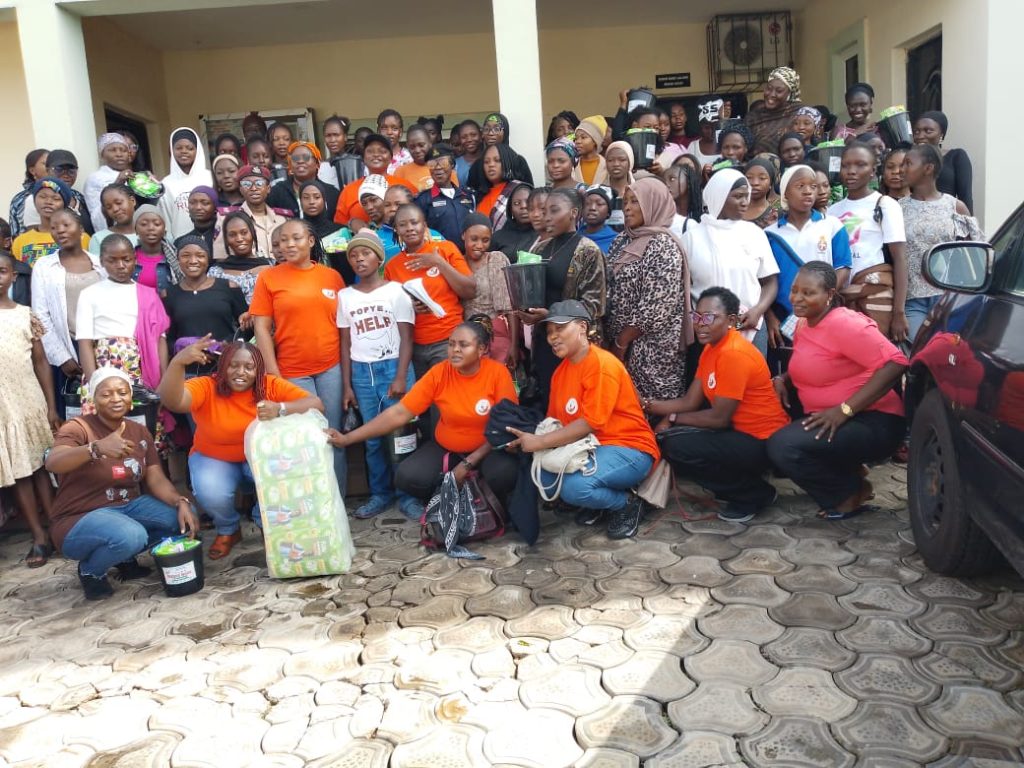
Group photograph of participants and NAWOJ members at the menstrual hygiene training
Members of the Nigeria Association of Women Journalists (NAWOJ), Plateau State Chapter, have trained over 100 adolescent girls on proper menstrual hygiene management in the state.
Addressing participants on Thursday during a one-day training at the Nigeria Union of Journalists (NUJ) Press Centre in Jos, the Chairperson of NAWOJ, Plateau State Chapter, Mrs. Grace Akwe Gotip, said the training was organized to address poor menstrual hygiene practices among adolescent girls and reduce the risk of infections associated with unhygienic menstrual management.
Mrs. Gotip called on mothers and female guardians to educate their adolescent daughters on the importance of maintaining proper menstrual hygiene, describing it as essential to their health and well-being.
The lead facilitator of the training and Programme Manager of the Women and Girl Child Development Initiative, Longreat Laurentiis, urged the girls to pay close attention to their menstrual cycles and observe any unusual changes.
In a goodwill message, the NUJ Plateau State Council Chairperson, Mrs. Ayuku Pwaspo, commended NAWOJ for the initiative and pledged the council’s continued support for programmes that promote the welfare of girls and women.
She congratulated the participants for attending the training and advised them not to allow themselves to be influenced by people with negative intentions.
Mrs. Pwaspo also encouraged the participants to step down the knowledge acquired during the training to members of their families, friends, and communities.
Earlier, the Media and Communication Officer of the Women and Girl Child Development Initiative, Jemiahma Libere, delivered a lecture on the onset of menstruation in girls.
She explained that menstruation commonly begins around the age of 13, although the age varies from one individual to another.
According to her, missing a menstrual period may be due to pregnancy or, in some cases, an underlying infection. She therefore advised girls and women to seek medical attention whenever they notice abnormalities in their menstrual cycles.
Libere further revealed that many girls miss school during menstruation because of inadequate menstrual hygiene facilities in some educational institutions.
She encouraged girls not to feel ashamed of menstruation, describing it as a natural biological process that prepares the body for possible fertilization and pregnancy.
“Your menstruation is your dignity. Feel free to seek help whenever necessary,” she said.
Participants were also informed that menstruation lasting beyond five days may require medical evaluation, and they were advised to visit a healthcare facility if such cases occur.
Some participants shared personal experiences, revealing that they began menstruating between the ages of eight and ten. Many recalled being frightened during their first menstrual experience, believing they had sustained an injury because they had not been adequately informed beforehand.
The participants were encouraged to pass on the knowledge gained during the training to other girls who were unable to attend, thereby promoting wider awareness of menstrual hygiene management.
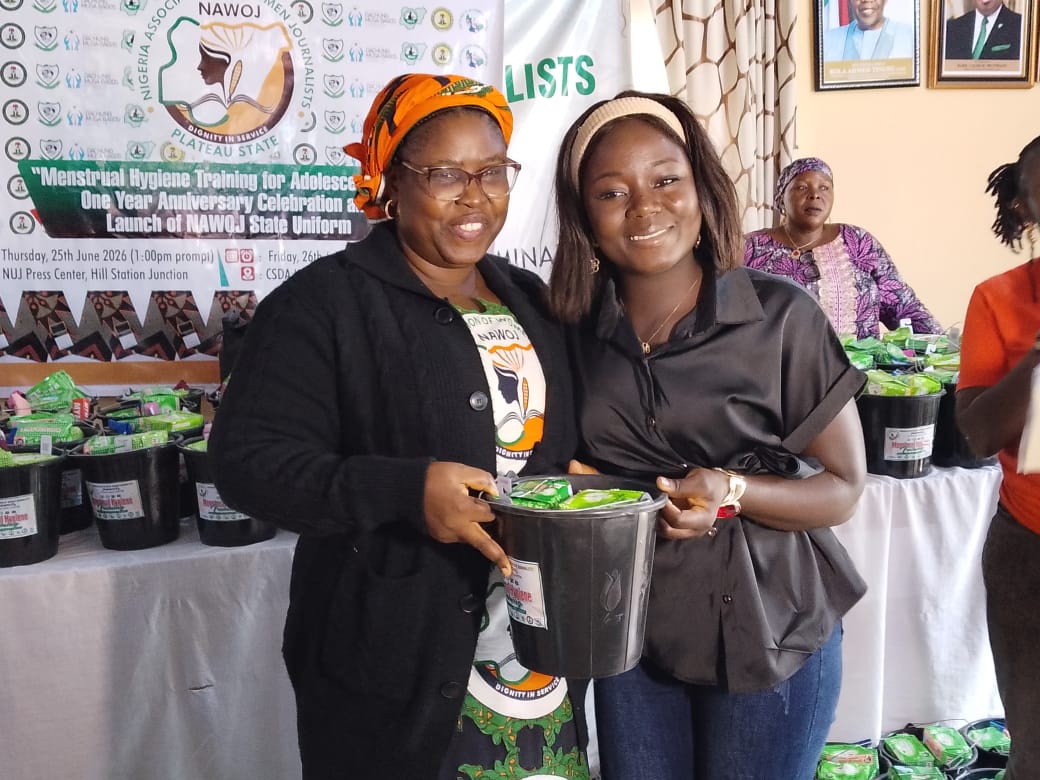
Sanitary pads were distributed to all participants, including those who were not formally invited.
The training formed part of activities marking the first anniversary of the current NAWOJ Plateau State executive and the forthcoming launch of the association’s corporate attire, scheduled to hold tomorrow, Friday.