

The Independent National Electoral Commission (INEC) and the European Union (EU) have warned that the growing use of artificial intelligence (AI) to spread misinformation and manipulate electoral information poses a serious threat to Nigeria’s 2027 general elections.
They cautioned that fabricated audio recordings, manipulated videos, fake election results and misleading announcements attributed to electoral officials could undermine public confidence, distort voters’ decisions and potentially trigger violence.
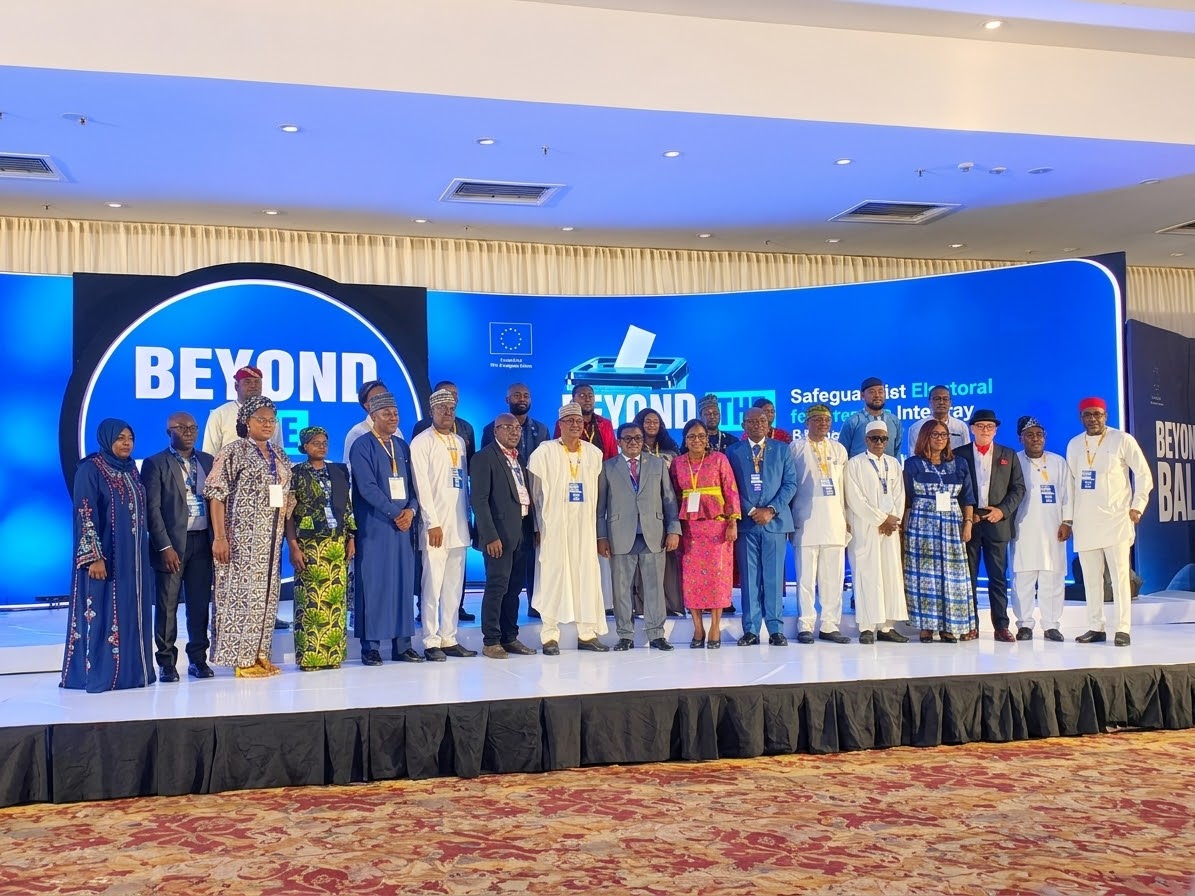
The warning was issued on Monday at a national summit on electoral information integrity held at the Continental Hotel, Abuja, under the theme, “Beyond the Ballot: AI, FIMI and the Integrity of the Nigerian 2027 Elections.”
The two-day summit brought together electoral officials, diplomatic representatives, media executives, civil society organisations, security agencies and technology experts to develop strategies for protecting Nigeria’s electoral information environment.
INEC Chairman, Prof. Joash Amupitan, said the increasing sophistication of artificial intelligence had introduced new challenges to election management, requiring the Commission to strengthen its technological infrastructure and develop more effective mechanisms for detecting and countering digital manipulation.
He explained that AI-generated misinformation could affect virtually every stage of the electoral process, including voter registration, political campaigns, election-day activities, result collation and official announcements.
Amupitan identified forged registration portals, fake operational directives and manipulated information about the voters’ register as potential threats capable of confusing citizens and disrupting electoral preparations.
He said INEC had introduced online voter registration to improve accessibility but was also strengthening safeguards to prevent the system from being exploited by malicious actors.
The Chairman further warned that AI-generated campaign materials could be used to discredit political parties and candidates, particularly during legally restricted campaign periods when opportunities for official responses might be limited.
Citing experiences from other countries, he recalled an incident in which an AI-generated audio recording allegedly implicating a political party leader in vote-buying and electoral manipulation circulated shortly before an election.
According to him, the incident demonstrated how fabricated content could spread rapidly and influence public perception before authorities had sufficient time to verify and respond to it.
He also expressed concern over the circulation of fake election results and fabricated announcements attributed to electoral officials, warning that such content could provoke unrest and weaken confidence in the official collation process.
Amupitan stressed that INEC remains the legally authorised body responsible for announcing official election results, urging Nigerians to disregard unverified figures circulating on social media and rely on information released through the Commission’s official channels.
To address the growing threat, the INEC Chairman said the Commission was prioritising voter education, technological safeguards and rapid-response communication mechanisms.
He noted that voter education must go beyond teaching citizens how to cast their ballots to equipping them with the skills to identify authentic information, verify official announcements and recognise AI-generated deception.
Amupitan disclosed that INEC was strengthening its engagement with major digital platforms, including TikTok, Facebook, Instagram, WhatsApp, YouTube, Telegram and X, adding that the Commission had signed memoranda of understanding with some of them.
He called for a coordinated response involving media organisations, independent fact-checkers, civil society groups, security agencies, telecommunications providers and technology companies.
The Chairman urged journalists to prioritise accuracy over speed, stressing that responsible reporting and rigorous verification were essential to protecting democratic institutions.
However, he cautioned that efforts to combat misinformation must not become a justification for censorship, digital restrictions or the suppression of legitimate political expression.
He maintained that measures against foreign information manipulation and AI-generated electoral fraud must respect fundamental rights, operate transparently and remain subject to legal accountability.
Amupitan identified clear inter-agency communication protocols, stronger collaboration with independent fact-checking organisations and practical crisis simulations as key outcomes expected from the summit.
Former INEC Chairman, Prof. Attahiru Jega, described the summit as timely, given the growing influence of digital technologies on electoral processes.
Jega, who supervised the 2011 and 2015 general elections, recommended the deployment of AI-powered chatbots containing verified electoral information to help Nigerians authenticate election-related claims and obtain reliable answers to their questions.
He said such platforms could provide citizens with quick access to accurate information while helping election management bodies reduce the damaging effects of misinformation and disinformation.
The former Chairman also called on Nigerians and other stakeholders to recognise their collective responsibility in safeguarding the credibility of the country’s electoral process.
European Union Ambassador to Nigeria, Gautier Mignot, warned that an election could be undermined without a single ballot being physically altered, noting that fabricated announcements and false claims about results could mislead voters and deepen public suspicion.
He said the immediate target of electoral manipulation was information, while its ultimate objective was to weaken citizens’ trust in democratic institutions.
Mignot observed that although artificial intelligence could improve translation, accessibility and communication, it could also make deception easier to produce and more difficult to detect.
He stressed that protecting electoral information required more than identifying deepfakes, adding that credible institutions, reliable public communication, independent journalism and coordinated responses were equally important.
The EU envoy outlined three priorities for Nigeria ahead of the 2027 elections: preparing before electoral pressure intensifies, making stakeholder partnerships operational, and protecting democratic rights while safeguarding electoral information.
He said verification contacts, institutional responsibilities and communication channels must be established and tested well before election day to ensure prompt responses whenever false information emerges.
Mignot also referenced the EU Election Observation Mission’s report on Nigeria’s 2023 general elections, which highlighted the need for timely public information, independent fact-checking and stronger capacity to address harmful content in local languages.
He warned that allowing an information vacuum to develop could weaken public confidence, stressing that citizens must have access to credible and timely information throughout the electoral process.
The summit is expected to provide a platform for stakeholders to develop practical measures for detecting, verifying and responding to AI-driven electoral misinformation, while strengthening cooperation among institutions responsible for protecting Nigeria’s democratic process ahead of the 2027 general elections.