

…Seeks govt intervention on roads, staffing
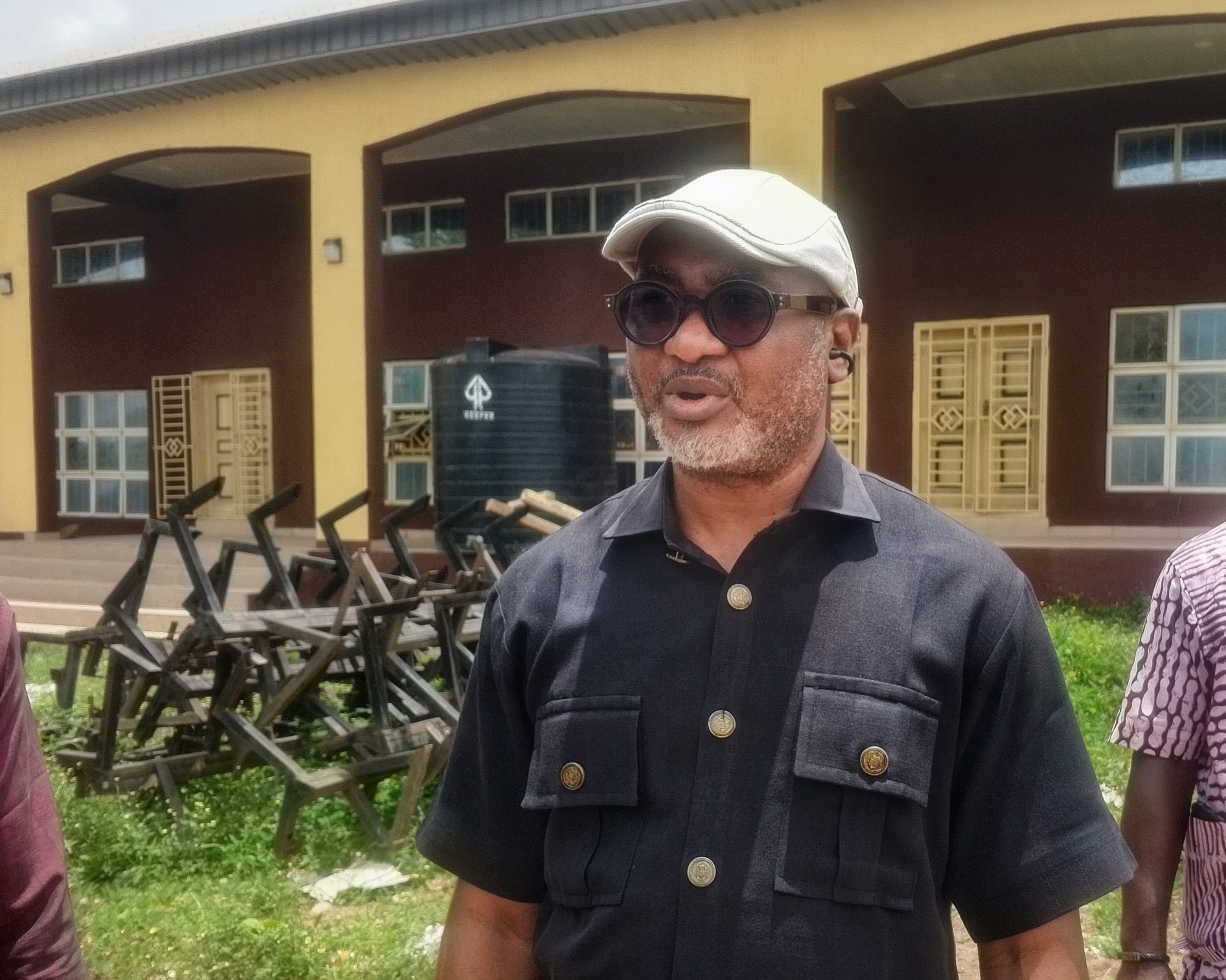
The Rector of Benue State Polytechnic, Ugbokolo BENPOLY, Dr. Henry Ojobo, has said his administration has recorded significant reforms and restored public confidence in the institution one year after assuming office, but noted that funding gaps, poor road networks, and acute staff shortages remain major hurdles.
Dr. Ojobo disclosed this to the Chairman, Nigeria Union of Journalists, NUJ, Benue State Council, Comrade Bemdoo Ugber, during a visit to the institution on Monday, where he gave a detailed account of his team’s stewardship since taking office in April, 2025.
The rector expressed gratitude to Benue State Governor, Rev. Dr. Hyacinth Iormem Alia, for appointing him alongside other principal officers: the Registrar, Bursar, and Librarian through what he described as a merit-based process.
“It was a departure from what used to happen before. His Excellency was determined to put the best people on the job,” Ojobo said. “We are committed to making him proud and not disappointing those who entrusted this task to us.”
Dr. Ojobo noted that the polytechnic had suffered prolonged instability before his arrival. “Within a short period of two years, the school had two or three managements at the helm. When changes like that happen, it impedes development. That was exactly what happened to this institution,” he said.
He listed low staff morale, dwindling student enrollment, insecurity, and systemic corruption as key problems on ground. “Confidence of staff, students, and even the host community had to be built from scratch. People had lost hope. Student numbers had dropped to a very low level. Insecurity around the school was part of why that happened,” he explained.
To address insecurity, management partnered with the Ugbokolo community, which already had a security plan. “We keyed into their plan because without the community, the school wouldn’t be here. It’s a mutual relationship,” Ojobo said.
“The collaboration yielded results. Today, I can categorically tell you that the security situation is at its lowest ebb. Incidents have reduced drastically. That has encouraged students and visitors. This year, our intake has increased tremendously,” he added.
The rector said the polytechnic reorganized its security architecture by replacing aging personnel with younger guards and raising their monthly allowance. “Every crime starts from within. There were collaborations between those inside and those outside. The community also helped us checkmate cult activities. They made a pronouncement that any child of this town involved in cultism or theft will not be tolerated,” he said.
On the anti-corruption and digitization drive, Dr. Ojobo said his team met widespread racketeering, certificate fraud, and diversion of school fees. “People were collecting certificates without attending lectures. Some would appear only on exam day and still pass. Others owed fees for years and only paid when they needed results. Revenues ended up in private pockets,” he said.
“To curb the practices, management digitized key operations. We reduced human interface because that is where corruption thrives. Results are now collected online, not through personal contact. Admission is fully online. Whether you are in London, Lagos, or the village, you apply with your phone,” he explained.
“The shift initially met resistance. People were used to the old way. But we insisted. To the glory of God, all admission processes are now online. Contrary to fears, we got a substantial number of applicants, and it will improve next session,” he said.
A “no school fees, no exams” policy was also enforced. “Everywhere became hot; for parents, students, and racketeers. But it restored sanity,” Ojobo stated.
Clarifying admission figures, the rector disclosed that “realistically, we admitted 1,744 students, though 2,580 applied. Previously, unqualified candidates were smuggled in for fees, and they ended up having issues.”
Speaking on infrastructure and health services, the rector said most visible projects are funded by TETFund. “The government tries, but I must also commend TETFund. They have done so much for our human capital and physical presence,” he said.
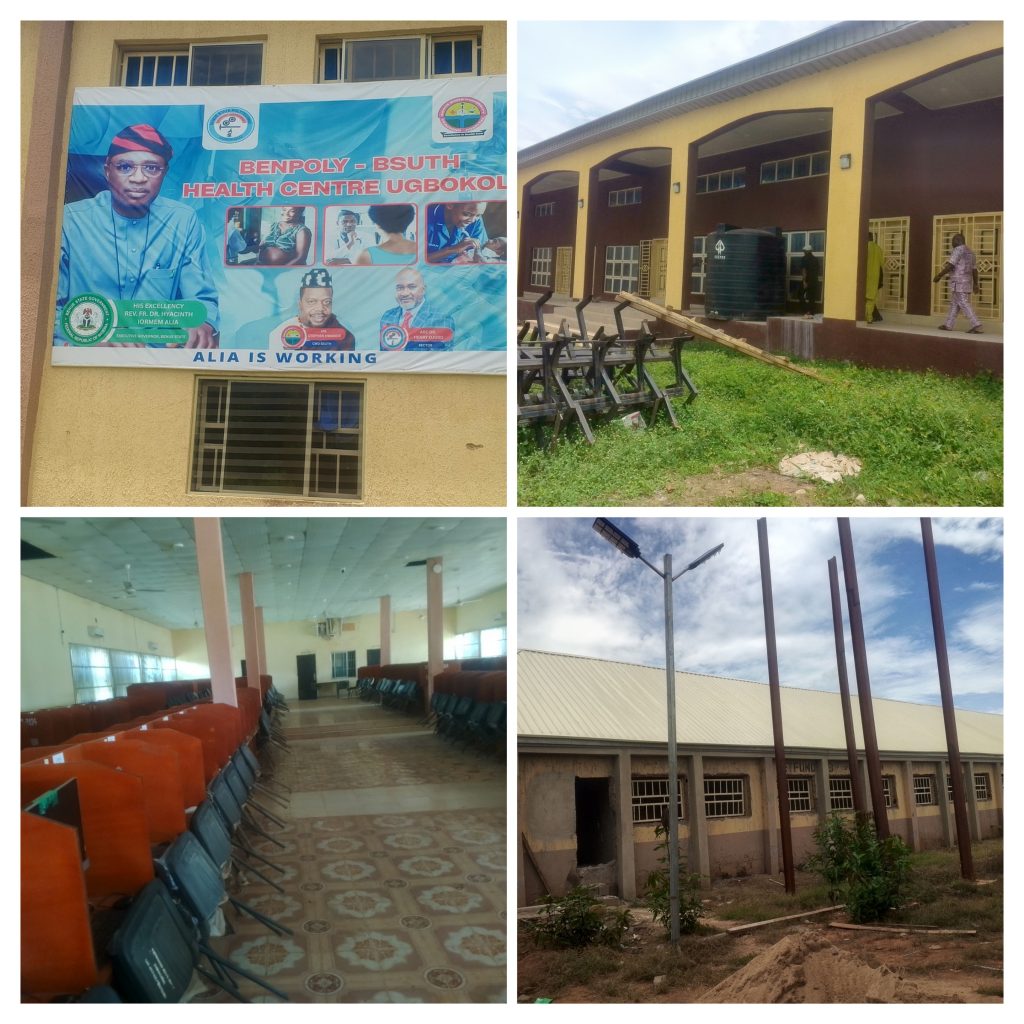
One major achievement, he noted, is the upgrade of the school clinic to BENPOLY–BSUTH Hospital through a partnership with Benue State University Teaching Hospital, BSUTH. “We had the building but lacked personnel. BSUTH, under Prof. Stephen Hwande, agreed to an extension here since the community lacks basic health infrastructure,” he said.
He explained that the hospital became operational in November 2024 after an outreach programme. “It’s fully functioning. During the recent JAMB CBT exams here, about three candidates collapsed and were revived because of prompt attention,” Ojobo said.
The rector also explained that the polytechnic established a 250-computer JAMB CBT centre to revive its image and generate revenue. “We believe when candidates come here, they’ll see the campus and may be attracted to apply. The centre hosted UTME sessions over three days in 2026,” he said.
Dr Ojobo, who is an architect, disclosed that, in order to boost morale, management revived the Rector’s Cup football competition among departments, the first in over 15 years. “It was a huge success. It made people know Benpoly still exists. MTN and other firms supported us,” he said.
The rector added that vandalized boreholes had been resuscitated. “Water is no longer a challenge in the hostels. We also have wells as backup,” he said.
He explained that seven grounded buses are being repaired gradually. “When we came, all were parked and vandalized. We’ve started bringing them back to life,” he noted.
Dr. Ojobo described staffing as the institution’s biggest challenge. He disclosed that the last major recruitment was in 2012, stating that a subsequent exercise was cancelled by the current administration due to irregularities.
The rector appealed for urgent government intervention in addressing the challenges, including road networks and campus access. “Our roads are very bad. It makes the environment look unkempt. We are seeking intervention,” he said.
He noted that the polytechnic is the only tertiary institution in Benue bordered by both a local road and a federal highway, yet its main gate opens to the less-trafficked local road. “People pass the expressway and don’t know what’s inside. If we can have access from the expressway, our visibility and student intake will increase,” he said.
Dr. Ojobo disclosed plans for accreditation of most courses, a convocation ceremony, and activities to mark the polytechnic’s 50th anniversary this year. “But there are a lot of things to put in place, and it has to do with funds,” he said.
He also commended the Federal Ministry of Education for a Needs Assessment intervention. “They assessed completed projects recently and are planning another intervention,” he added.
“Largely, this is what Benue Polytechnic is about. We have achieved a lot in one year, but we need support to do more,” the rector concluded.
Earlier in his remarks, Comrade Bemdoo Ugber commended the rector for his resilience, vision, and unwavering commitment to repositioning the institution.
Congratulating Dr. Ojobo on his appointment, the NUJ chairman described his emergence as a testament to competence, experience, and dedication to the advancement of education. He noted that the strides recorded within a short time reflect purposeful leadership and a determination to restore the institution to its pride of place.
Ugber said the visit aligns with the union’s constitutional role as a watchdog of society. “As journalists, we are not only chroniclers of events but also partners in progress. Our mission is to objectively assess the achievements under your leadership and understand the challenges, to inform the public accurately and constructively,” he stated.
He called for stronger collaboration between the polytechnic and the media, especially in capacity building, research visibility, and public engagement. “No institution can thrive in isolation,” he added.
To enhance journalists’ performance in the digital era, the NUJ chairman appealed to the rector for support in equipping the union’s ICT Centre. “This will greatly enhance the capacity of our journalists to carry out their duties more effectively and professionally in line with global best practices,” Ugber said.
Ugber thanked the polytechnic management for the warm reception and pledged the union’s continued support in projecting the institution’s positive image.