

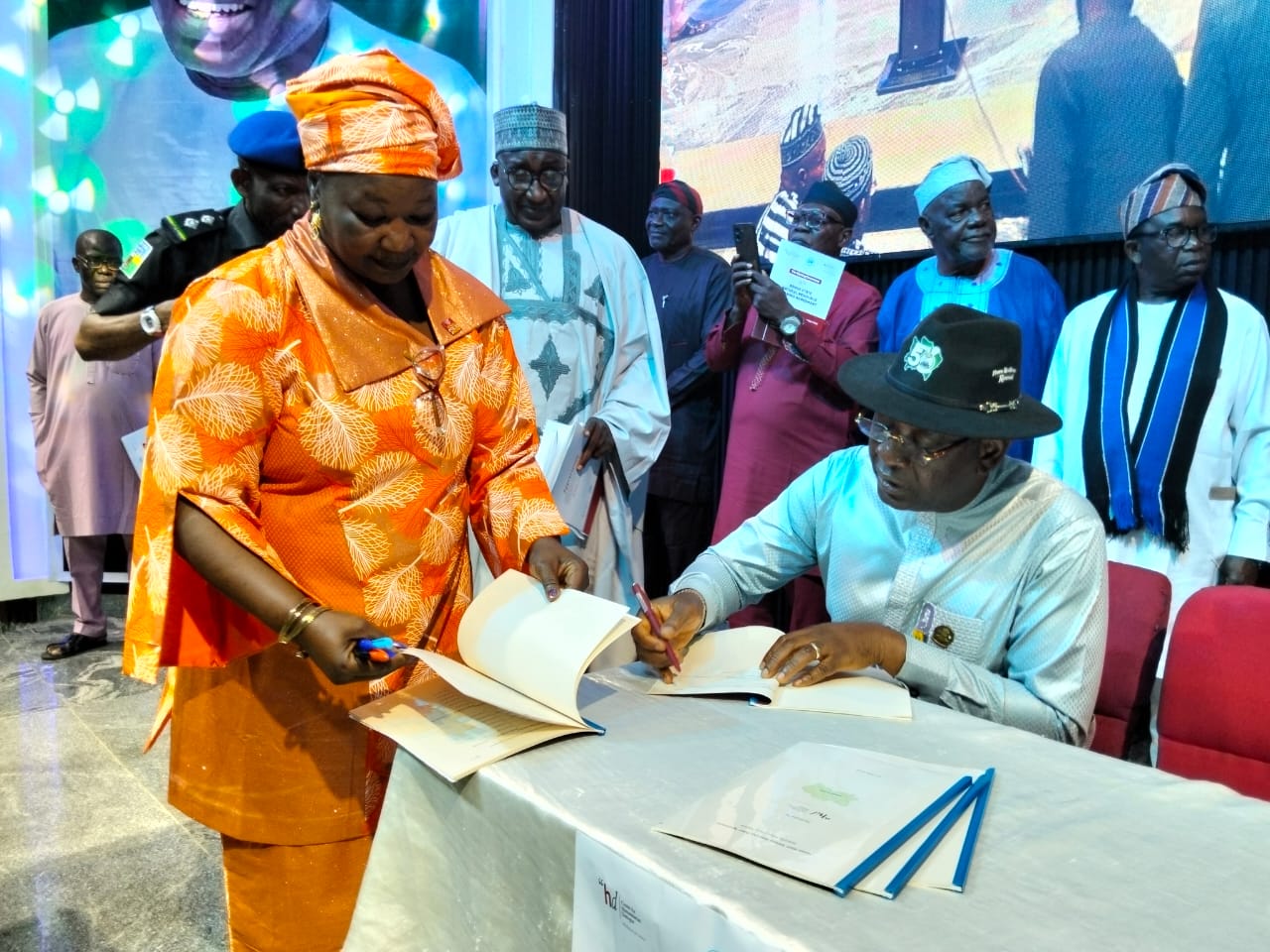
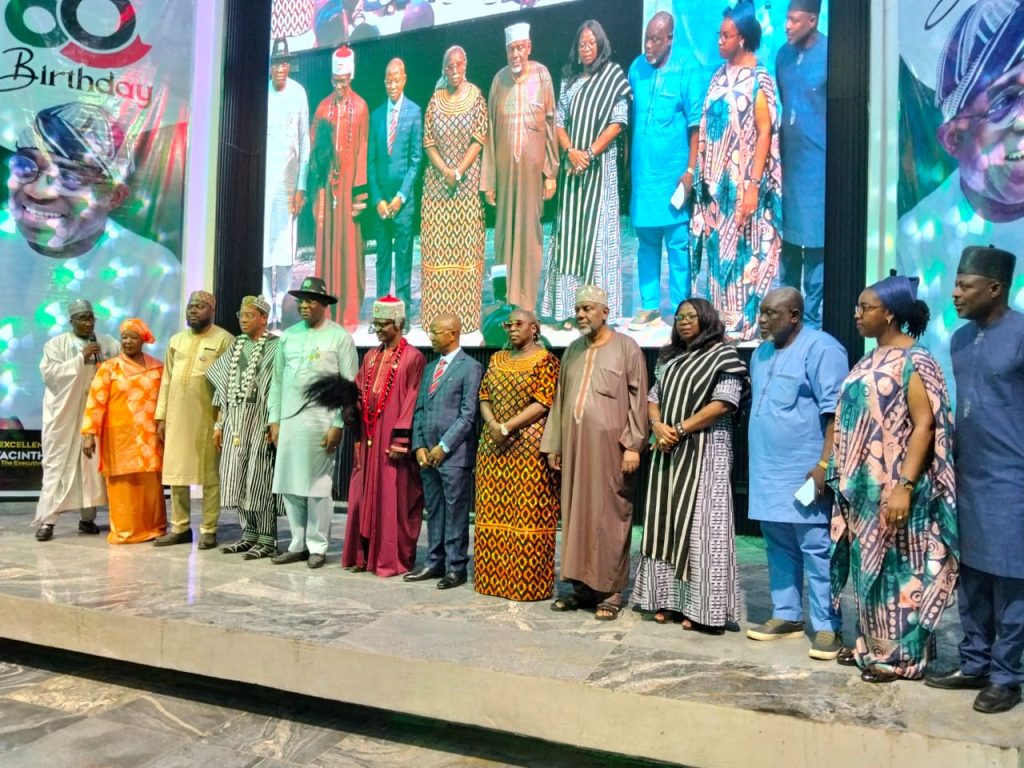
The Benue State Government on Monday signed a Natural Resource Sharing Agreement aimed at managing disputes over land, water, and forests, and fostering peaceful coexistence between farmers and pastoralists across the state.
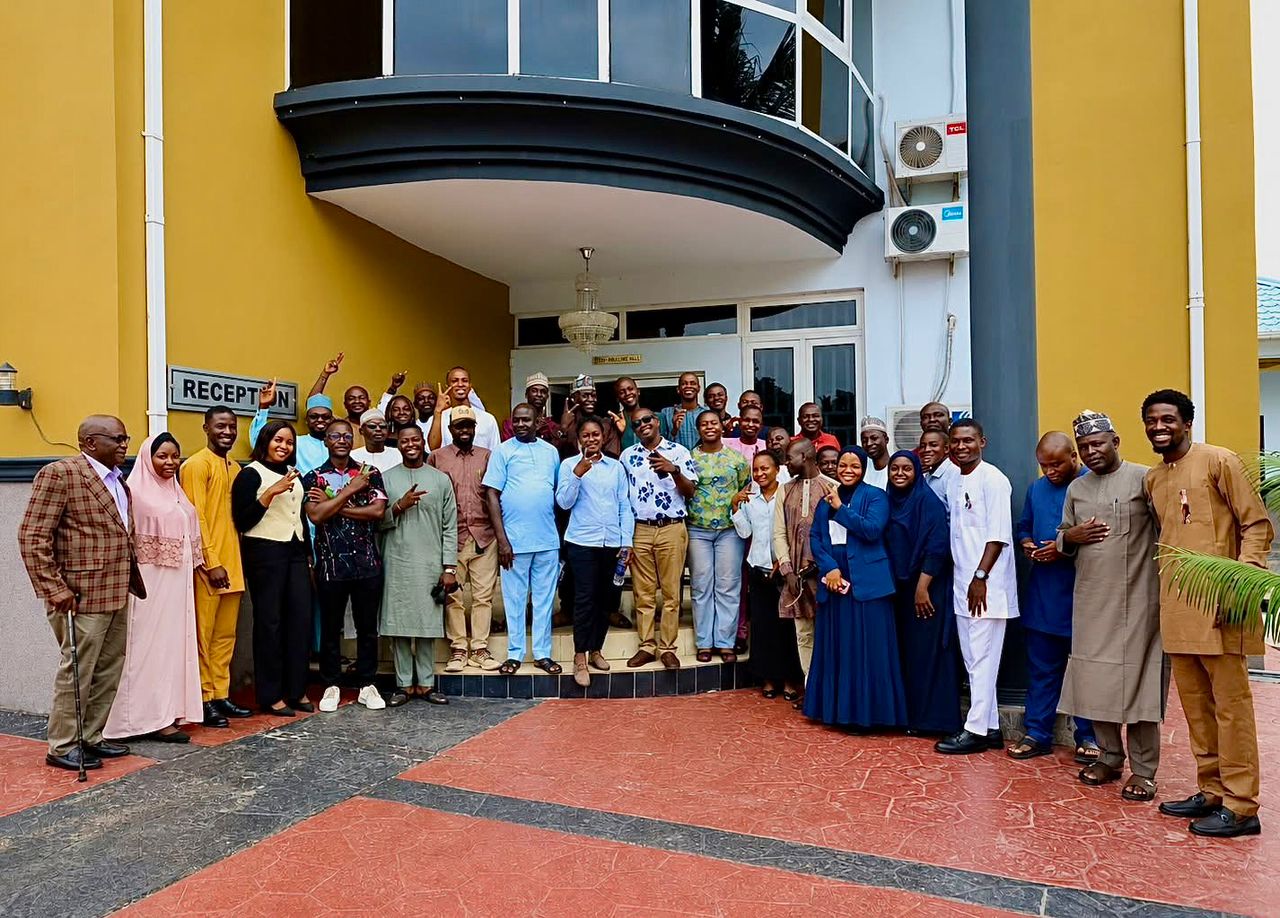
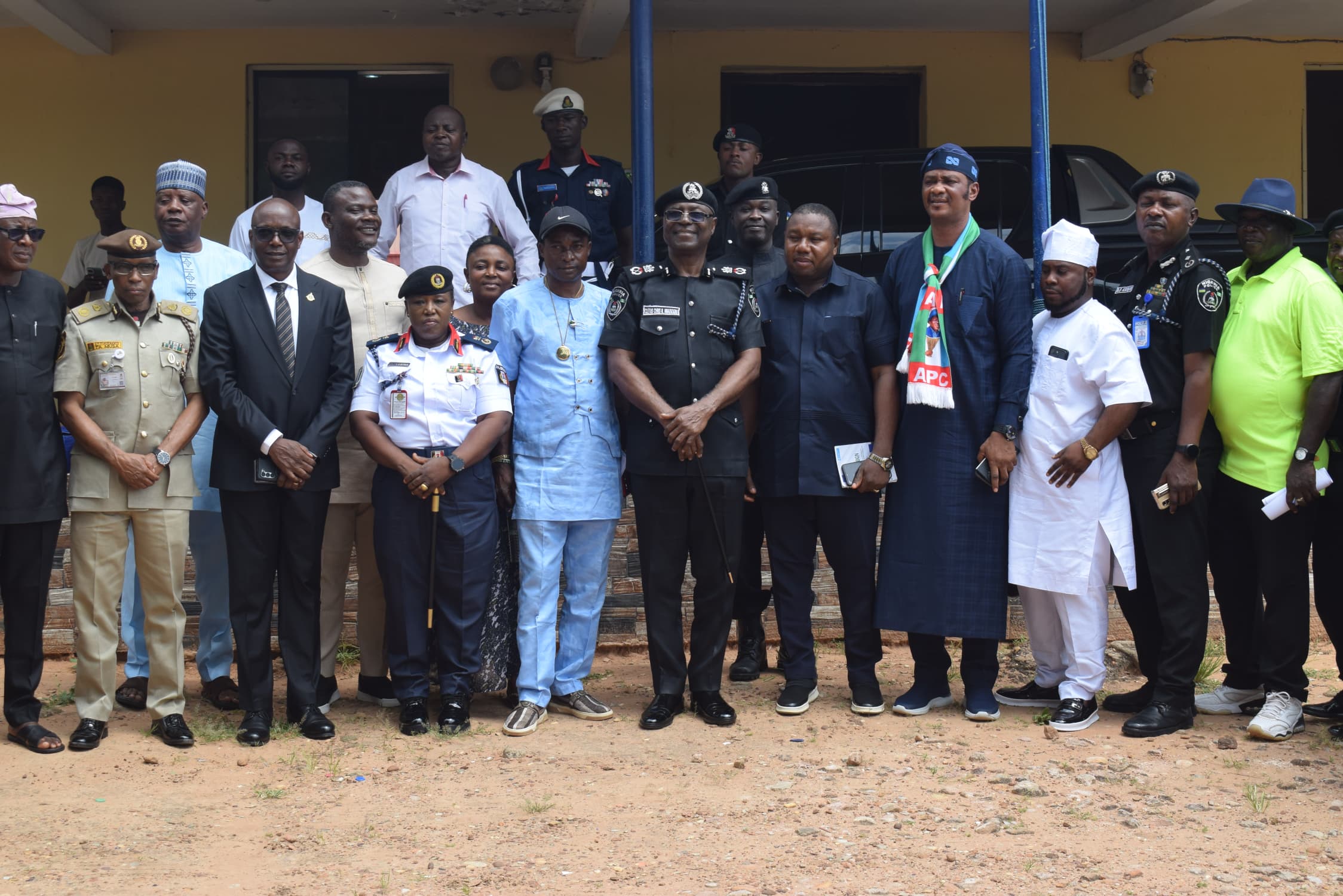
The ceremony was facilitated by the Centre for Humanitarian Dialogue, HD, alongside other development and peacebuilding partners. In attendance were traditional rulers, diplomatic missions, security agencies, women and youth groups, as well as community leaders.
Speaking at the event held at the Fr. Alia Conference Hall, Benue State Emergency Management Agency, Makurdi, Governor Hyacinth Alia, who was represented by his deputy, Dr. Sam Ode, said the document was “about renewing our collective commitment to peaceful coexistence” and not merely a ceremonial signing.
He noted that competition over natural resources, compounded by climate change and population pressure, had fuelled tensions in many communities. “Yet we are reminded today that conflict is not inevitable. Through dialogue, mutual respect, and fair governance, peace is achievable,” he said.
The governor described the agreement as a “practical framework for managing our shared resources, resolving disputes peacefully, and promoting justice and cooperation.” He added that it belongs to “every farmer, every pastoralist, every traditional institution, every woman, every young person, and every citizen committed to a peaceful Benue.”
The governor said the state would drive implementation through the Benue State Commission for Peace and Reconciliation, the Bureau for International Cooperation and Development, the SDGs Office, the Bureau for Homeland Security, and the Ministry of Humanitarian Affairs and Disaster Management. “Our administration will work with traditional institutions, security agencies, and development partners to ensure the agreement translates into lasting peace and sustainable development,” he said.
Governor Alia also conveyed the state government’s condolences over the killing of Alhaji Ardo Risku Muhammad, Chairman of the Miyetti Allah Cattle Breeders Association of Nigeria, MACBAN, Benue State Chapter, and his associate.
“We condemn this senseless act in the strongest terms and urge all our people to remain calm and allow security agencies to bring those responsible to justice. We must not allow acts of criminality to derail the peace we are working so hard to build,” he stated. He thanked the Federal Republic of Germany and the Centre for Humanitarian Dialogue for supporting peace and reconciliation in the state.
In his remarks, the Tor Tiv, His Royal Majesty, Prof. James Ayatse, cautioned that signing the agreement must not end on paper. He said past development blueprints had “gathered dust” and urged that the new pact become part of daily community life. Prof. Ayatse called on government to expand the training of traditional rulers in alternative dispute resolution, noting that monarchs are usually the first point of contact in local conflicts.
On his part, the Ochi’Idoma, His Royal Majesty, Dr. Elaigwu Odogbo, described the agreement as “the triumph of dialogue over violence.” He recalled the human and economic cost of resource disputes and said peace was “the inheritance we owe future generations.”
Dr. Odogbo urged all stakeholders to implement both the “letter and spirit” of the agreement, and offered a ‘BENUE’ framework: Build bridges, Encourage equal opportunity, Nurture trust, Unite under one vision, and Establish enduring peace through righteousness.
The keynote speaker, Deputy Vice Chancellor, Father Adasu University, Makurdi, Professor Member George-Genyi, said the deal’s credibility lies in practical, community-first mediation rather than theory, noting that it expands a model that has already saved lives and restored communities in Benue.
Speaking on sustainability, the Professor warned that the challenge is to ensure the agreements outlive political transitions, elite manipulation, and ecological shocks. She proposed a joint governance framework anchored on two key areas: building the capacity of traditional rulers in Alternative Dispute Resolution by blending indigenous mechanisms with modern mediation techniques, and driving rehabilitation and socio-economic re-engineering through investment in degraded water sources, modern agricultural hubs, and livelihood opportunities for displaced youths.
Country Manager, HD Nigeria, Dr. Chris Agoha, said the agreement marks a turning point toward institutionalizing multilateral cooperation among communities. He noted that HD, which has mediated conflicts from Aceh to Tigray and secured the 2022 Carnegie Wateler Peace Prize, is anchoring its Benue programme on mediation, conflict prevention, and sustainability using a bottom-up approach to address farmer-herder tensions, land disputes, climate pressures, and insecurity.
Dr. Agoha said the pact builds on HD’s earlier deals in Agatu in 2022 and Oju/Konshisha in 2023, both supported by the Benue State Commission for Peace and Reconciliation, BSCPR, under Director-General Josephine Habba. He explained that the agreement reflects communities’ commitment to cooperation over chaos and reconciliation over antagonism, and is aimed at restoring trust, social cohesion, and stability in conflict-affected areas.