

…record improved crop yields
Smallholder farmers in Nasarawa State are recording improved crop yields, healthier soils and better household nutrition following the adoption of climate-smart agricultural technologies and biofortified seed varieties.
The programme, introduced by the Sasakawa Africa Association (SAA-Nigeria) is under the SAA-NG programme and funded by the NIPPON Foundation of Japan.
During a media field day in the Tundun Adobu and Angwan Hamidu communities of Obi Local Government Area of the State, farmers showcased the practical impacts of regenerative farming, local seed multiplication, and nutrition-focused agriculture designed to boost productivity and combat micronutrient deficiencies.
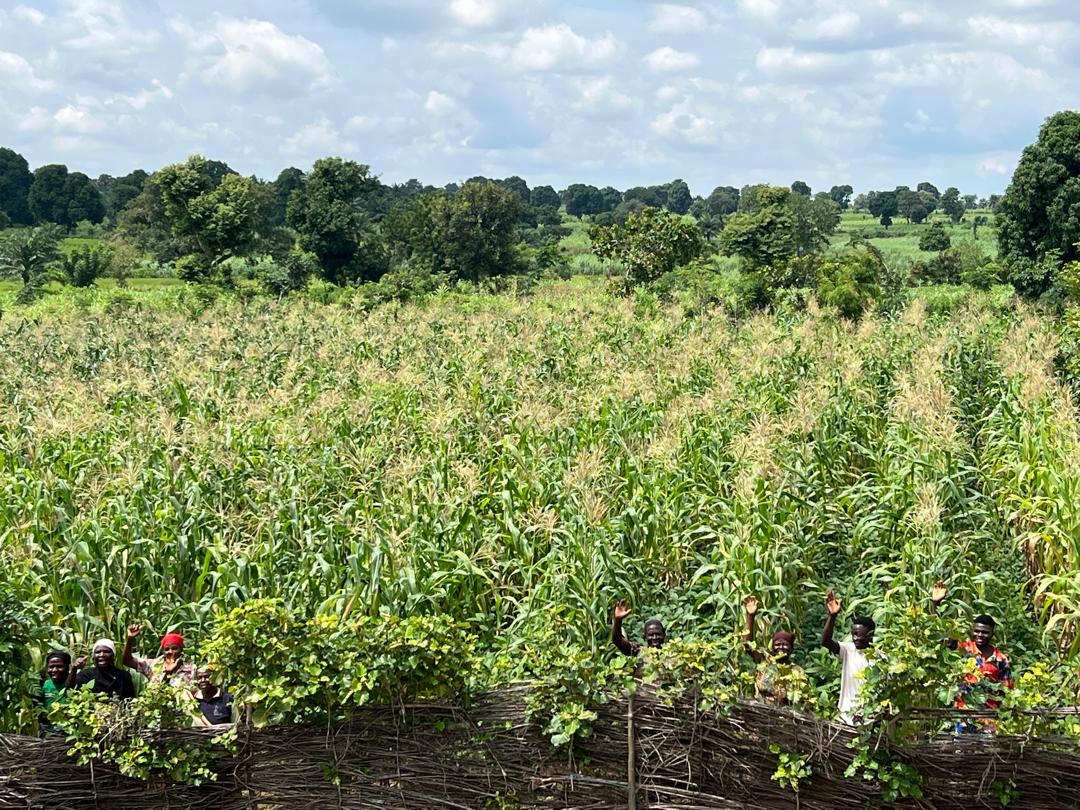
Jibril Elayo, one of the participating farmers, demonstrated how modern field management including precise plant spacing and biochar integration is yielding visible results despite late planting of maize and soyabeans occassioned by climate variability in rainfall patterns.
”Before now, you would hardly find a farmer planting just one seed per hole out of fear that it would not germinate.
“We adopted the SAA technology of planting one seed per hole at 25-centimeter spacing to achieve optimal plant density, which directly saves seeds, reduces cost and increases yield.”
Elayo highlighted the advantages of SAMMAZ 52, an early-maturing, Vitamin A-biofortified maize variety planted on June 26. In three weeks, this field will be ready for harvest. With varieties like this, farmers can cultivate two crop cycles within a single rainy season.”
Bashir Ogbole, Chairman of the Ayinewoza Farmers Group, contrasted traditional practices with SAA’s structured approach, noting a clear difference in crop performance.
He outlined his team’s timeline from receiving inputs in July and applying controlled pesticides for weed management to precision planting on August 11 with 75-centimeter spacing and split NPK/Urea fertiliser applications.
”There is a major difference,” Ogbole said, comparing his plot to unmanaged local farms in the cluster. Before, we paid little attention to spacing-we just planted. But anyone can see that this managed field is far better. If the government helps farmers adopt these techniques statewide, food scarcity will be significantly reduced,” he added.
Speaking on behalf of SAA Country Director, Dr. Godwin Atser, the Coordinator for Climate Resilience and Agrifood Systems Technical, Nathaniel Otene, emphasised that SAA acts as a link between agricultural research institutes and smallholders facing climate pressures.
”Our focus is to enhance productivity, which directly increases income and improves livelihoods. We collect improved varieties from research institutes that are drought-tolerant, early maturing, high-yielding, and resistant to pests and diseases,” he said.
Otene addressed common misconceptions regarding seed development, clarifying that the biofortified crops stem from conventional plant breeding rather than genetic modification (GMOs).
”We focus on improved varieties that mature within short windows some in 80 days compared to traditional 120-day varieties allowing farmers to secure a full harvest even if rain ceases or end early,” he explained.
He explained that to restore declining soil fertility, SAA was introducing regenerative techniques such as biochar application, organic composting, and cereal-legume intercropping.
“Biochar is produced through pyrolysis and when applied, it helps to retain soil moisture, while legume intercropping fixes nitrogen naturally into the soil. Rotating these crops restore and maintain long-term nutrient balance,” Otene added.
On public health, the Programme Officer for Nutrition-Sensitive Agriculture, Dr Moshood Sulaiman, explained SAA’s targeted effort to reduce “hidden hunger” in rural areas by promoting pro-vitamin A maize, particularly for pregnant women, nursing mothers, and children under five.
Mrs. Adama Rabiu, a beneficiary farmer, noted the practical benefits to her family’s diet. “Since Sasakawa arrived, the food we eat has improved. We now cultivate fluted pumpkins around our living compounds to supplement our regular meals, which has made a major difference in our daily lives,” she said.
To ensure long-term sustainability, Programme Officer for Market-Oriented Agriculture, Jonathan Yassah, stated that SAA is establishing decentralised seed production networks managed by local farmers using foundation seeds sourced from the Institute for Agricultural Research (IAR) in Zaria.
”Farming is a business,” Yassah noted. “Farmers sell these high-quality seeds to their neighbors right at their doorsteps rather than relying on external supply chains. This keeps high-yielding, disease-tolerant seeds accessible directly within rural communities.”
The Voice reports that SAA Nigeria, in partnership with support from the Nippon Foundation, officially kicked off its 2026 Media Field Days on Thursday in Nasarawa, aimed at bringing transformative, field-level agricultural results into the national spotlight.
The annual media initiative opens a direct channel for smallholder farmers and community beneficiaries to share first-hand accounts of how SAA’s interventions are redefining local farming.
Beyond public awareness, the initiative plays a strategic role in reinforcing institutional ties.
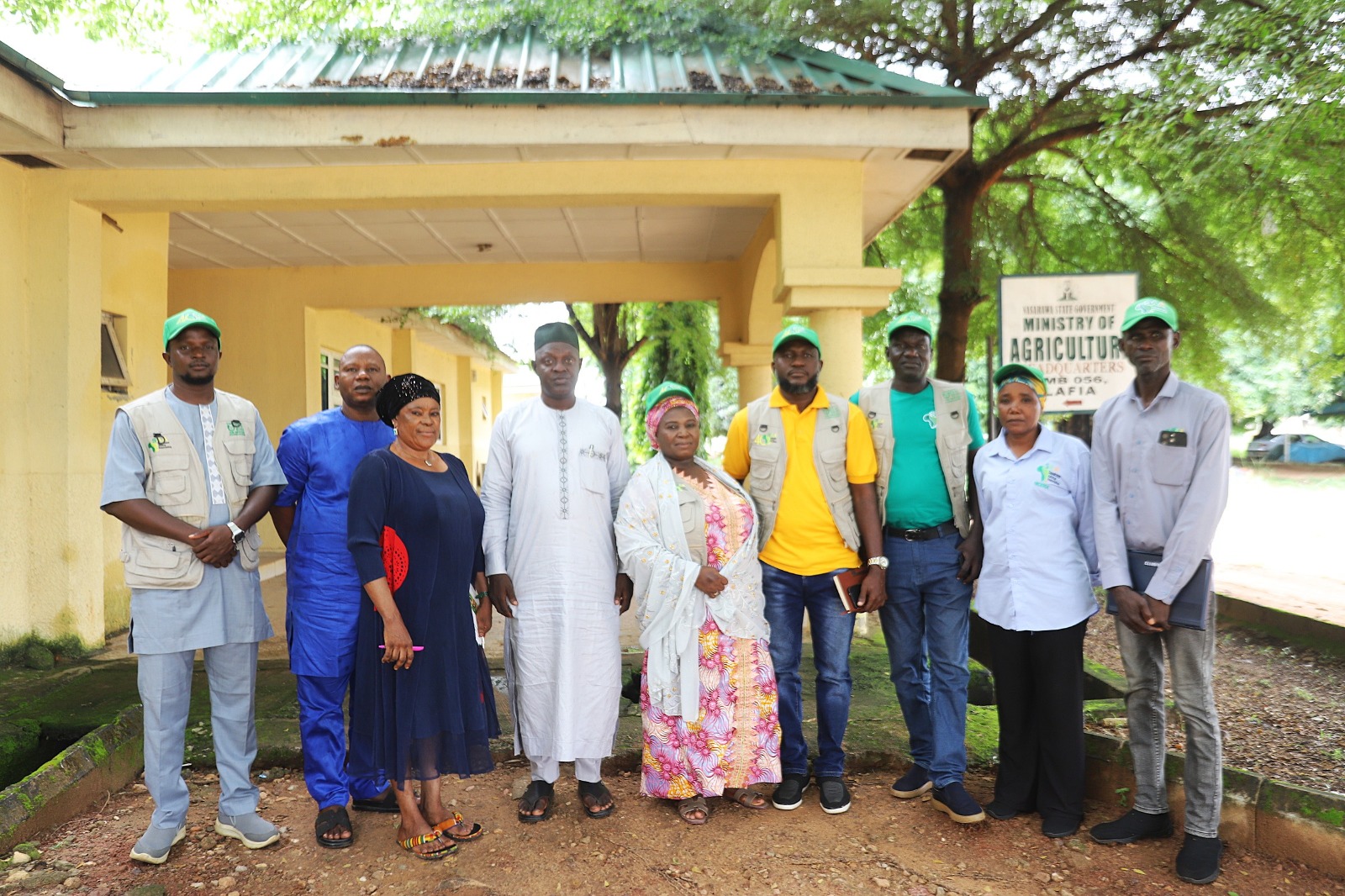
The field visits bring together key actors across the agricultural ecosystem, including State Ministries of Agriculture, Agricultural Development Programmes (ADPs), and local development partners to inspect field-based evidence of sustainable farming models.